Behind the Vulcan Mask: The Hidden Struggles of Leonard Nimoy
Leonard Nimoy spent a lifetime portraying one of television’s most logical and emotionally restrained characters.
Yet behind Spock’s composed exterior, Nimoy fought battles that few fans ever imagined.
Born on March 26, 1931, in Boston’s old West End, Nimoy was the son of Jewish immigrants who had fled violence in Soviet Ukraine.
His father crossed borders on foot in darkness; his mother was smuggled out hidden beneath hay.
Survival was not a story in his household—it was a memory.

That legacy of endurance shaped Nimoy’s sense of responsibility from childhood.
He grew up in a cramped tenement shared by three generations.
Money was scarce.
His father worked long hours as a barber; his grandfather labored in a leather factory and brought scraps home to craft small goods for extra income.
Nimoy absorbed the lesson early: everyone carried their share.
The rhythms of Yiddish speech and Orthodox tradition filled his childhood.

One synagogue ceremony left an indelible mark on him—men raising their hands in a split-fingered blessing.
Years later, that sacred image would become the Vulcan salute, one of the most recognizable gestures in television history.
But long before Spock, there was struggle.
As a boy, Nimoy sold newspapers, shined shoes, and took odd jobs to help his family.
At 17, he saved $600—money earned selling vacuum cleaners—to pursue acting in California.

Hollywood did not welcome him.
His early roles were uncredited.
He drove taxis, stocked vending machines, and worked as an usher to survive.
In 1954, he married Sandra Zober.
Together they would raise two children while Nimoy chased an uncertain career.
For years, he earned only a few thousand dollars annually from minor television appearances.
Success felt distant.
Then came Star Trek.
When Nimoy first played Spock in the 1964 pilot, he was already in his mid-30s—older than many emerging stars.
NBC executives resisted the character’s pointed ears, fearing backlash.
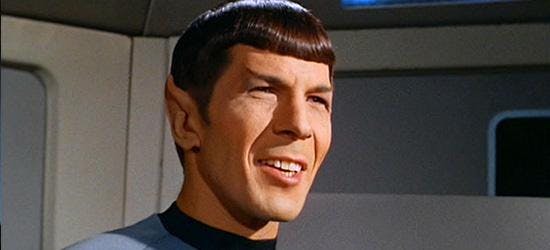
But creator Gene Roddenberry believed in Spock, and Nimoy infused the role with depth far beyond what was written.
Spock was not emotionless; he was emotionally disciplined.
That nuance came largely from Nimoy himself.
As one producer later observed, Spock was “60 percent Nimoy.”
Yet even as the character gained popularity, tension brewed behind the scenes.
Nimoy earned only a fraction of William Shatner’s salary during the first season.
Negotiations before season two nearly derailed the series entirely.
Demands for higher pay, equal billing, and profit participation led to a standoff with the studio.
For a moment, it seemed Spock might vanish.
A compromise was reached.
The show survived.
And Spock became a cultural icon.
But fame brought pressure Nimoy was unprepared to handle.
By the late 1960s, he had begun drinking heavily.
What started as a drink after long shooting days spiraled into dependence.
He admitted later that he would begin with beer in the morning and progress to hard liquor by afternoon.
He hid alcohol in paper cups on set.
The contrast was painful: the world saw unshakable logic; he felt himself unraveling.
The strain seeped into his personal life.
His 33-year marriage deteriorated under the weight of distance and addiction.
When he and Sandra divorced in 1987, the emotional toll was profound.
Nimoy would later acknowledge that his drinking masked insecurities and unresolved pain rooted deep in his upbringing.
Eventually, he reached a breaking point and entered rehabilitation quietly.
From that moment forward, he remained sober.
Recovery reshaped him.
He later remarried actress Susan Bay in 1989 and credited both sobriety and love with helping him rebuild his life.
There was another silent battle: smoking.
For 37 years, Nimoy smoked two packs a day.
Though he quit in 1985 after the birth of his first grandchild, the damage lingered.
In 2014, he publicly revealed he had chronic obstructive pulmonary disease (COPD).
“I quit smoking 30 years ago,” he wrote, “Not soon enough.”
Even in illness, he sought to teach.
Beyond acting, Nimoy proved himself a talented director.
He helmed Star Trek III and Star Trek IV, both major box-office successes, and later directed the hit comedy Three Men and a Baby, which became the highest-grossing film of 1987 in the United States.
He refused to be confined by typecasting, even after publishing his controversial 1975 memoir I Am Not Spock, a тιтle widely misunderstood as rejection of the role he cherished.
Two decades later, he clarified with I Am Spock, embracing the complexity of idenтιтy.
Off-screen, he championed fairness.
He advocated for equal pay for co-stars and insisted on diversity within the franchise.
Colleagues described him as the conscience of Star Trek, someone who quietly used influence to protect others.
In his later years, pH๏τography became his artistic refuge.
Projects like Shekhina and The Full Body Project challenged convention and celebrated hidden idenтιтies.
His lens focused on what society overlooked—much like his own life had often been misunderstood beneath the Vulcan mask.
Perhaps the most meaningful reconciliation came with his son Adam.
Their relationship endured painful rifts, including a deeply emotional letter in 2008 that forced both men to confront long-held resentments.
Through sobriety and honesty, they rebuilt their bond.
By the time Nimoy’s health declined in early 2015, father and son had found peace.
On February 27, 2015, Leonard Nimoy pᴀssed away at age 83, surrounded by family.
The man who taught generations about logic and restraint had lived a far more turbulent reality.
His legacy is not just the Vulcan salute or the phrase “live long and prosper.”
It is the courage to confront addiction, to admit vulnerability, and to grow beyond the roles others ᴀssign.
In the end, Leonard Nimoy was not divided between himself and Spock.
He was a human being who carried both strength and struggle—and finally allowed the world to see both.


