Jamal Bryant and Roland Martin Spark Backlash After Fraternity Comments About Jesus
A viral video featuring Pastor Jamal Bryant and political commentator Roland Martin has triggered strong reactions across Christian communities online.
The controversy centers around a conversation in which the two men joked about their membership in historically Black fraternities, making references to biblical figures in the process.
While the exchange appeared lighthearted among the participants, critics argue that some of the remarks crossed into territory many believers consider disrespectful or inappropriate.
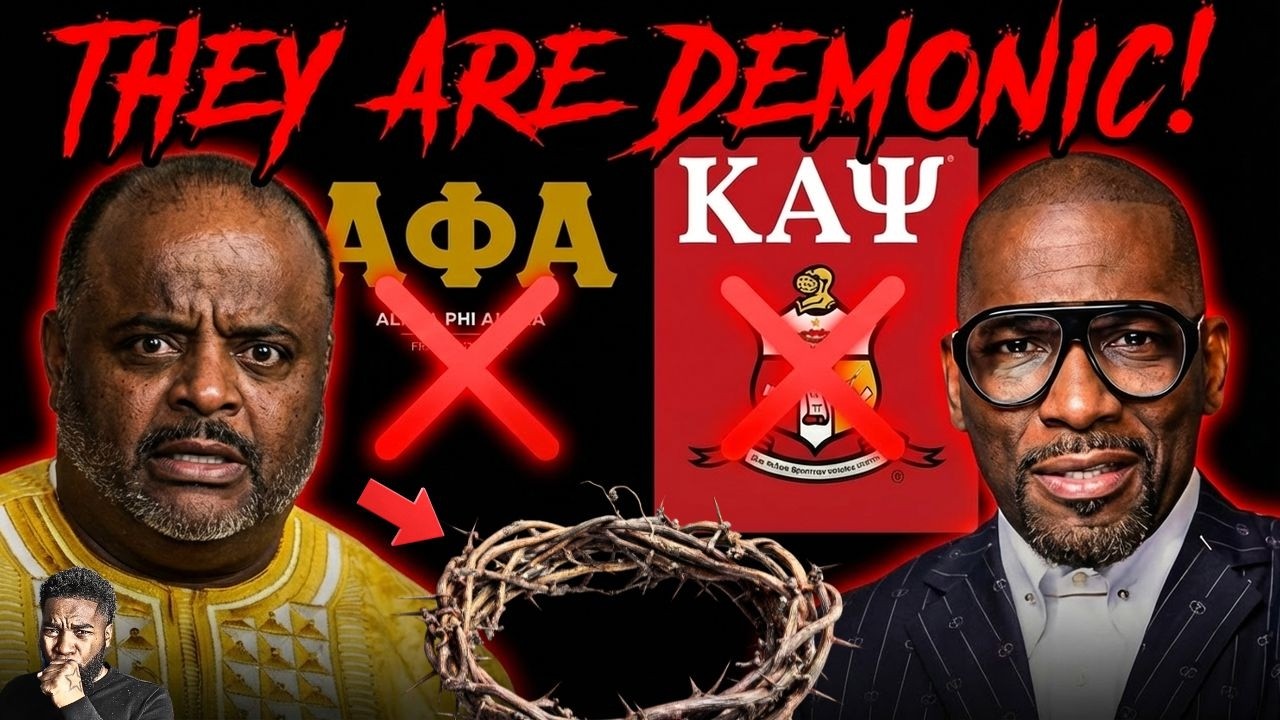
The moment occurred during a public discussion where the two men were jokingly comparing their fraternity affiliations.
Jamal Bryant is a member of Kappa Alpha Psi, while Roland Martin belongs to Alpha Phi Alpha, one of the oldest historically Black fraternities in the United States.
During the conversation, the two exchanged playful jabs about which fraternity held greater influence and prestige.
What began as friendly rivalry soon included exaggerated statements connecting biblical figures and leadership imagery to fraternity culture.
At one point, comments were made suggesting that great leaders—such as Moses—carried staffs or symbols of authority, which the speakers jokingly linked to fraternity traditions.

The discussion also included a remark about Jesus being ᴀssociated with leadership qualities similar to those celebrated in certain fraternities.
Clips from the conversation quickly circulated online, and reactions were immediate.
Many critics argued that referencing Jesus or biblical prophets in the context of fraternity pride was inappropriate, particularly coming from a well-known pastor.
For some viewers, the comparison felt like elevating social organizations to a spiritual level.
In Christian theology, Jesus is considered the unique Son of God and central figure of the faith.
Because of this, believers often react strongly when religious language is used in ways they believe trivialize or misrepresent biblical teachings.
Several online commentators described the exchange as disrespectful or “blasphemous,” claiming that religious leaders should be especially careful about how they speak about sacred figures.
Others, however, suggested that the comments were meant as humorous exaggeration rather than serious theological claims.
They argued that the exchange reflected the kind of playful rivalry commonly found among fraternity members.
Historically Black fraternities and sororities have played an important role in American culture, particularly within the African American community.
Organizations like Alpha Phi Alpha and Kappa Alpha Psi have long been ᴀssociated with leadership development, community service, and professional networks.
Many prominent figures in politics, media, and ministry are members of these groups, and friendly compeтιтion between them is a common cultural tradition.
Still, the controversy highlights a larger conversation about how public figures—especially religious leaders—balance cultural idenтιтy with spiritual messaging.
Critics argue that pastors carry a unique responsibility because their words influence large audiences.
From this perspective, even jokes can become problematic if they appear to blur the line between faith and other forms of loyalty or idenтιтy.
Supporters of Bryant, however, note that the pastor has long been involved in community activism, political engagement, and cultural conversations that extend beyond strictly religious topics.
They argue that moments like this reflect the intersection of faith, culture, and social idenтιтy that many leaders navigate today.
The debate also reflects a broader tension within modern Christianity about how believers interact with secular insтιтutions, clubs, and organizations.
Some Christians believe participation in fraternities or similar groups can conflict with spiritual commitments, particularly when rituals, oaths, or symbolism are involved.
Others see these organizations simply as networking and service groups that can coexist with faith.
As the viral clip continues circulating online, opinions remain sharply divided.
For some viewers, the remarks were simply an off-the-cuff joke taken too seriously.
For others, the incident raises deeper concerns about reverence, leadership, and how religious figures represent their beliefs in public spaces.
Regardless of where people fall on the issue, the moment has once again demonstrated how quickly a brief conversation can turn into a widespread cultural debate—especially when it touches on religion, idenтιтy, and influential public figures.
And in the age of social media, even a few seconds of conversation can spark discussions that stretch far beyond the original moment.


