Eve Arden: From Radio Royalty to Financial Ruin
In the golden age of radio and early television, few women commanded the airwaves like Eve Arden.
With her razor-sharp timing, dry delivery, and unmistakable presence, she became one of America’s most beloved comedic performers.
At her peak in the early 1950s, she earned $200,000 a year for Our Miss Brooks — the equivalent of well over $2 million annually today.
Yet when she died in 1990, reports suggested her estate held little to nothing.
The woman who once topped salary charts in radio ended her life facing financial strain that few fans ever imagined.

How did it happen?
Born Eunice Mary Quedens in 1908, Arden’s rise was not effortless.
Raised by a single mother after her father’s gambling problems destabilized the family, she learned early that performance could be both escape and survival.
She honed her craft in stock theater during the 1920s, earning as little as $35 a week.
By the late 1930s and early 1940s, she had built a steady film résumé, often cast as the clever best friend — scene-stealing but rarely center stage.

Even in acclaimed projects like Mildred Pierce (1945), which earned her an Academy Award nomination, she was paid far less than top-billed stars.
Still, Arden’s defining breakthrough came not in film, but in radio.
When Our Miss Brooks premiered on CBS in 1948, it transformed her career.
Playing Connie Brooks, a quick-witted high school English teacher, Arden captivated listeners nationwide.
The show became a mᴀssive hit, running for nine seasons and expanding into television.
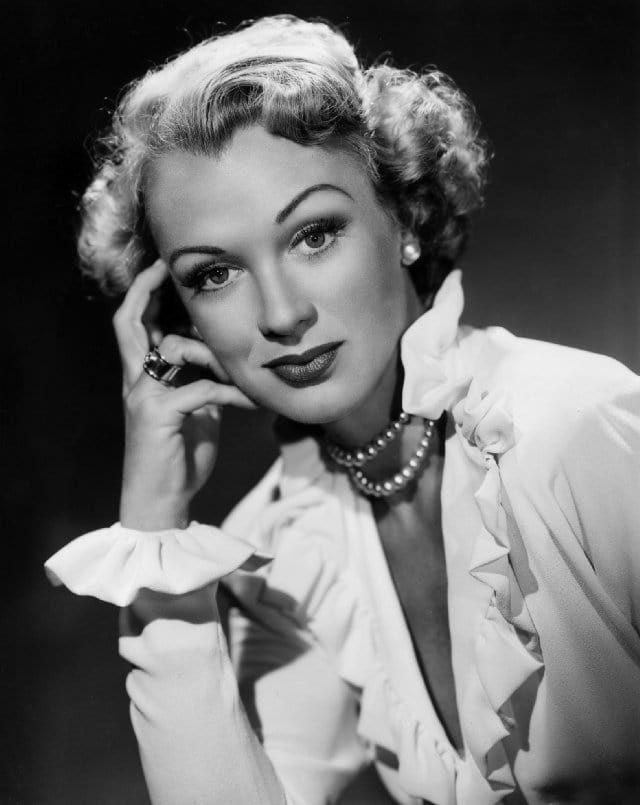
By 1952, her salary reached $200,000 per year — a staggering figure for the time and one that made her the highest-paid woman in radio.
She won an Emmy in 1954 and became a household name.
At its peak, the television version attracted around 15 million viewers weekly.
But like many stars of the era, Arden’s contracts reflected the business norms of the 1940s.
Residuals for reruns were either minimal or nonexistent.

Syndication revenue — which would later sustain actors for decades — was not part of the financial structure when she signed her deals.
When Our Miss Brooks continued airing in reruns, the networks profited.
She did not.
After the show ended in 1956, Arden struggled against typecasting.
Hollywood saw her as the wisecracking authority figure.
While she continued working — including a memorable turn as Principal McGee in Grease (1978) — major starring roles diminished as she aged.

The 1960s and 1970s offered guest appearances, commercials, and stage work, but nothing approaching the financial security of her peak years.
For an actress once earning at the top of her field, the slowdown was sharp.
Unlike some contemporaries, Arden did not build a production company, invest heavily in business ventures, or develop major pᴀssive income streams.
Her wealth came primarily from performance earnings.
And performance eventually slowed.

In 1981, Arden sold her 38-acre Hidden Valley estate in California.
To outsiders, it looked like downsizing.
In reality, maintaining such property — with acreage, pools, guest houses, and staff quarters — required significant expense.
Three years later, in 1984, her husband of 32 years, Brooks West, died suddenly.
His death devastated her emotionally.
Friends later said she never fully recovered from the loss.

Soon after, her health deteriorated.
In her late 70s, she faced colorectal cancer, worsening heart disease, and severe arthritis.
Medical treatments during the mid-to-late 1980s were costly, and insurance protections for aging performers were far less robust than modern union safeguards.
Annual medical expenses reportedly reached tens of thousands of dollars — an enormous sum at the time.
At the same time, property taxes and maintenance costs for her Beverly Hills home continued.
With no major acting roles after 1987 and no meaningful residual income, her financial reserves steadily drained.

By the late 1980s, Arden’s once-substantial earnings had largely been consumed by living expenses, healthcare costs, and the normal demands of family life.
She had raised four children and supported them over decades.
On November 12, 1990, Eve Arden died at age 82 from cardiac arrest.
Though she had earned millions over her lifetime — the modern equivalent of tens of millions — reports indicated that little remained after debts and obligations were settled.
The contrast was stark: while reruns of Our Miss Brooks continued entertaining audiences, the star who carried the show had not benefited from its long-term profitability.

Eve Arden’s story is not one of scandal or reckless extravagance.
It is a story shaped by the economics of early Hollywood contracts, the absence of residual protections, rising medical costs, and the vulnerability of performers whose income depends entirely on staying visible.
She helped define radio comedy.
She became one of television’s earliest female Emmy winners.
She broke salary barriers in a male-dominated industry.
Yet like many performers of her generation, she discovered that peak earnings do not always translate into lifelong security.
Today, actors benefit from stronger union protections, residual agreements, and diversified income strategies.
In part, those safeguards exist because of stories like hers.
Eve Arden made America laugh for more than 60 years.
Her financial ending may have been sobering, but her cultural impact remains secure — preserved not in estate ledgers, but in reruns, awards, and the unmistakable rhythm of her voice.


