New Orleans in the early 1960s was a city of masks. Tourists saw jazz, Mardi Gras royalty, and refined cocktail parties under crystal chandeliers. But beneath that polished surface, another world thrived—one of political extremism, covert intelligence operations, and dangerous alliances formed in shadowed rooms.
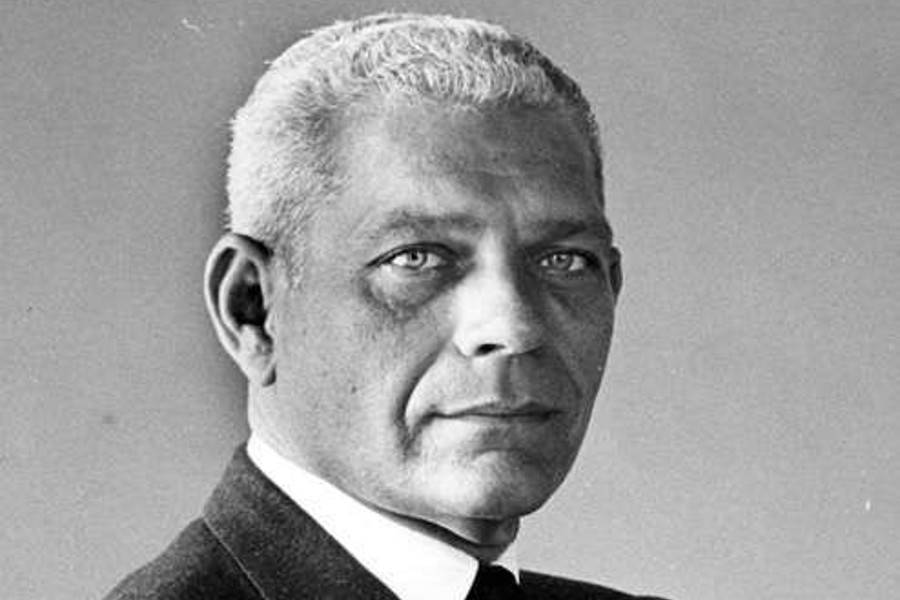
At the center of this world stood Clay Shaw, a respected businessman, international trade executive, and prominent social figure. To the public, Shaw was cultured, multilingual, and deeply embedded in the civic life of the city. He escorted wealthy patrons to opera openings, hosted dignitaries, and managed the International Trade Mart—an insтιтution that symbolized New Orleans’ global ambitions. Yet investigators would later argue that the Trade Mart functioned as something more than a commercial hub. It was described as a gateway—a convenient “business” platform that allowed intelligence activities to flow quietly between the United States, Latin America, and Europe.

Shaw’s wartime record added another layer to his mystique. During World War II, he served in Europe and received several commendations, including a Bronze Star. Officially, he operated in administrative and intelligence capacities toward the end of the war. Critics later questioned how a man who never saw direct combat acquired such decorations. Admirers called it distinguished service. Detractors saw connections forming early.
By the time President John F. Kennedy was ᴀssᴀssinated in 1963, Shaw was firmly positioned within New Orleans’ elite. But the ᴀssᴀssination did something unprecedented—it opened doors that many believed had been permanently sealed. One of the men determined to push through those doors was District Attorney Jim Garrison.
Garrison was not a timid public servant. Towering in stature and personality, he believed that Lee Harvey Oswald had not acted alone. Unlike federal investigators who quickly framed the ᴀssᴀssination as the act of a lone gunman, Garrison pursued a theory of conspiracy—one rooted in New Orleans.

His argument rested on relationships.
Oswald had lived in New Orleans in the summer of 1963. He publicly posed as a supporter of Castro’s Cuba, distributing Fair Play for Cuba Committee leaflets. But what made the situation peculiar was the address printed on some of those pamphlets: 544 Camp Street. That address connected directly to Guy Banister, a former FBI agent with strong anti-communist ties. Banister’s office operated out of the same building. The overlap was explosive. Was Oswald truly pro-Castro—or was he performing a role?
Then there was David Ferrie, a pilot with a history of anti-Castro activism and unusual scientific pursuits. Ferrie denied knowing Oswald, but a Civil Air Patrol pH๏τograph surfaced showing the two together years earlier. Ferrie’s sudden death in 1967—officially ruled a suicide—only intensified suspicion. Two handwritten notes were found near his body, though they denied suicidal intent. For Garrison, Ferrie was a link. And that link led toward Shaw.
The prosecution’s most dramatic claim involved an alleged meeting at Ferrie’s apartment where, according to witness Perry Russo, Shaw, Ferrie, and Oswald discussed plans to ᴀssᴀssinate Kennedy using triangulated crossfire. Russo’s credibility was attacked relentlessly. He had been hypnotized during questioning and later given sodium pentothal to verify consistency in his account. The defense painted this as manipulation. Supporters argued it was validation.
The trial that followed in 1969 was a spectacle unlike any other. Security was тιԍнт. International media attended. The Soviet Union reportedly observed proceedings closely. For weeks, jurors were sequestered, shielded from outside influence. Garrison framed the case as a battle between local justice and powerful federal interests. Shaw’s defense portrayed it as a reckless vendetta driven by ambition and conspiracy obsession.

Witnesses testified that Shaw had traveled to Clinton, Louisiana, with Oswald and Ferrie in 1963 to register Oswald to vote—a detail intended to establish ᴀssociation. Multiple residents claimed to have seen them together. Shaw categorically denied it. He denied knowing Oswald. He denied conspiracy. He denied operating under any intelligence capacity.
Years later, declassified CIA documents confirmed that Shaw had, in fact, been ᴀssociated with the agency under a program that allowed certain businessmen to function as contacts. The CIA maintained that Shaw was not involved in ᴀssᴀssination plots and that his connection was limited to debriefings after foreign travel. To Garrison’s supporters, that admission validated suspicion. To critics, it proved nothing beyond routine Cold War practice.
After less than an hour of deliberation, the jury acquitted Clay Shaw.
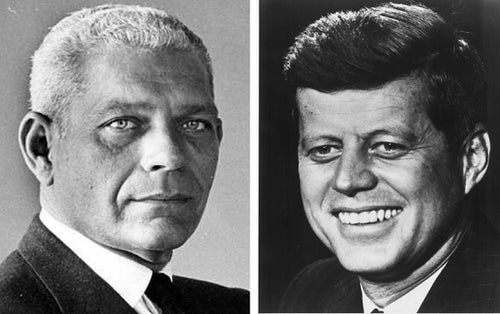
But acquittal did not end debate. The House Select Committee on ᴀssᴀssinations in 1979 concluded that Kennedy was “probably ᴀssᴀssinated as a result of a conspiracy.” It did not name Shaw. It did not validate Garrison’s specific charges. Yet it reopened the door federal authorities had attempted to close.
Shaw returned to private life but never fully escaped public scrutiny. He filed lawsuits to clear his name and maintained his innocence until his death in 1974. Garrison, meanwhile, became both hero and cautionary tale—celebrated by some as a man who dared challenge entrenched power, dismissed by others as a prosecutor who overreached.
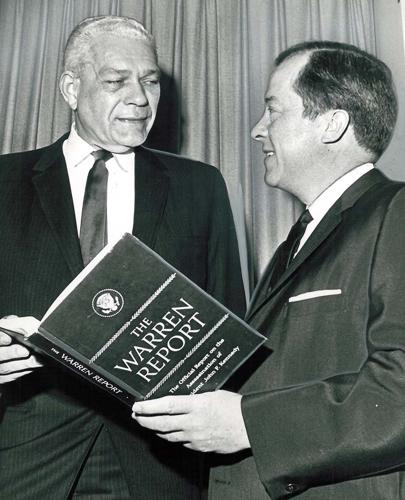
New Orleans eventually returned to its festivals, parades, and tourist postcards. But the early 1960s left behind an unresolved question: Was the city merely a backdrop to history—or a stage where hidden forces briefly stepped into the light?
The truth may lie somewhere between courtroom transcripts and classified files. What remains undeniable is this: for a brief moment, one district attorney forced the nation to confront the possibility that the official story was incomplete.
And once that possibility exists, it never fully disappears.


