King Richard III’s DNA Shocked the World — But What It Really Revealed Is Even Bigger
In 2012, beneath an ordinary parking lot in Leicester, archaeologists uncovered one of the most extraordinary discoveries in British history: the long-lost remains of King Richard III.
The last English monarch to die in battle, Richard III fell at Bosworth Field in 1485, ending the Plantagenet dynasty and ushering in the Tudor era. For more than five centuries, his burial place was unknown. Legends claimed his bones had been thrown into a river. Historians ᴀssumed they were lost forever.
They were wrong.
The excavation—sparked by the persistence of writer Philippa Langley—revealed a skeleton bearing unmistakable signs of a violent death. The man had suffered devastating head wounds consistent with battlefield execution. His spine showed severe scoliosis, confirming that while Tudor propaganda exaggerated his deformity, it had not invented it entirely.
But bones alone were not enough. To prove the idenтιтy, scientists turned to DNA.
Geneticists extracted mitochondrial DNA (mtDNA) from the skeleton’s teeth and compared it to living maternal-line descendants of Richard III’s sister, Anne of York. Because mtDNA pᴀsses virtually unchanged from mother to child, it provides a powerful lineage marker across centuries.
The result was extraordinary: a perfect match.
In 2013, the University of Leicester announced that, beyond reasonable doubt, the skeleton belonged to Richard III. The story captured global attention. A lost king had been found. Science had solved a 500-year mystery.
But while the world celebrated, another genetic test told a quieter—and more complicated—story.
Unlike mitochondrial DNA, which traces maternal lines, the Y chromosome pᴀsses directly from father to son. It carries the genetic signature of paternal lineage—the very foundation of medieval claims to royal blood.
When researchers compared Richard III’s Y chromosome to that of documented modern male-line descendants of the Plantagenet dynasty, the results did not match.
Somewhere in the chain of succession, a “false paternity event” had occurred—a polite scientific term meaning that at least one recorded father in the royal line was not the biological father.
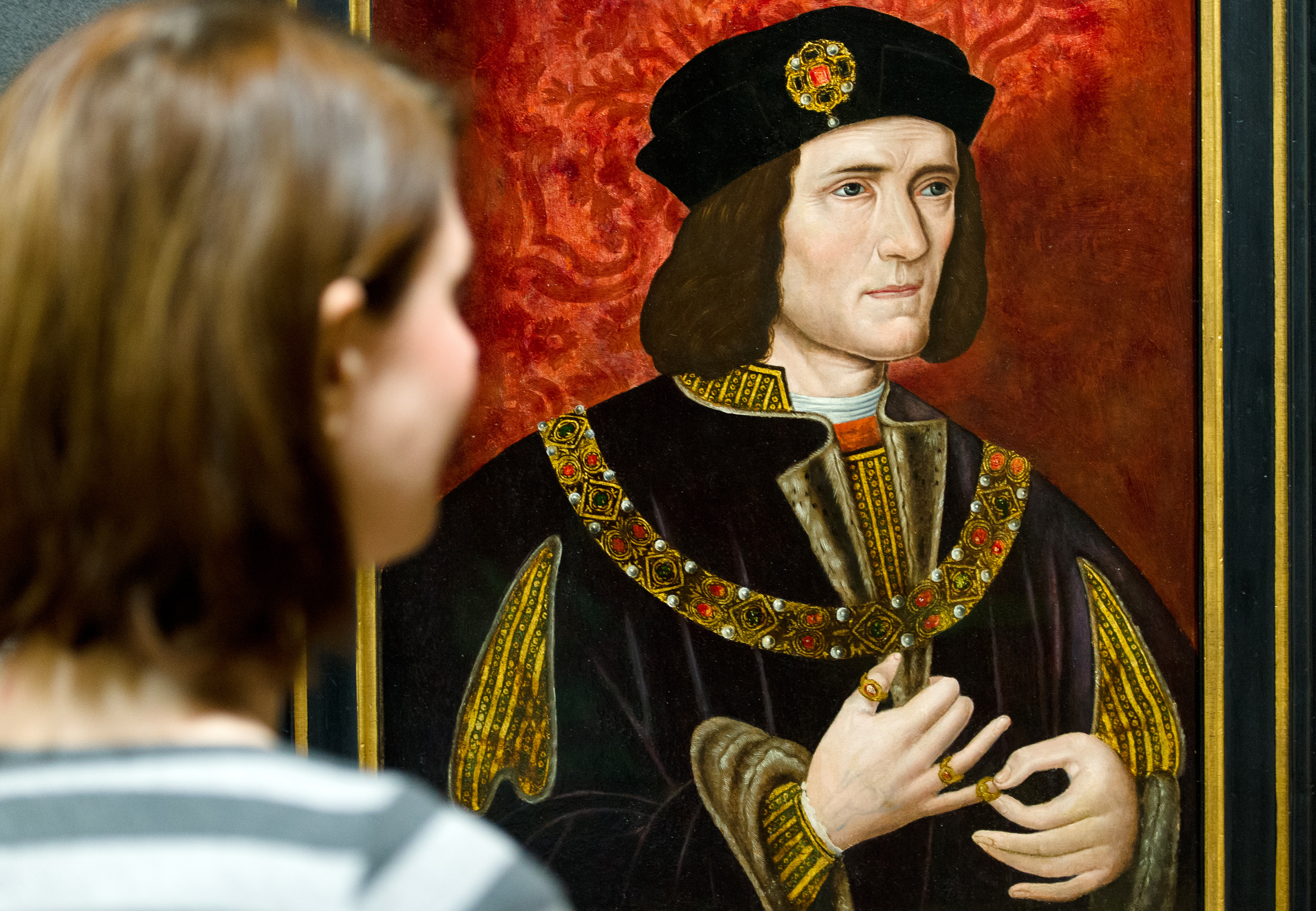
The 2014 research paper published in Nature Communications acknowledged this mismatch but presented two possibilities:
-
The break occurred after Richard III, somewhere in the modern descendant line.
-
The break occurred before Richard III, meaning his paternal ancestry did not match the Plantagenet line traditionally recorded in history.
At the time, the data could not determine which was correct. The ambiguity allowed historians to treat the finding as intriguing but inconclusive. The dominant narrative remained intact.
As of 2025, there has been no verified, peer-reviewed study overturning the original conclusions or definitively proving where the break occurred.
The Y chromosome mismatch remains real. But its precise location in the lineage remains uncertain.
Some researchers have speculated about possible breaks during the 15th century, particularly in the line of Richard’s father, Richard, Duke of York. Medieval rumors had questioned aspects of Yorkist legitimacy, but rumor is not proof. Without additional confirmed ancient DNA samples from securely identified Plantagenet males predating the suspected break, the question cannot be definitively resolved.
Importantly:
-
The mitochondrial DNA confirmation of Richard III’s idenтιтy remains solid.
-
The Y chromosome mismatch does not invalidate his idenтιтy.
-
It does not automatically invalidate the Wars of the Roses or Tudor succession.
-
It simply indicates that at some point in a long paternal line, biological and recorded fatherhood diverged—a phenomenon not uncommon in genealogical studies over many centuries.
In medieval England, royal legitimacy depended on bloodline—specifically, male-line descent. If a break occurred before Richard III, it could theoretically affect claims made during the Wars of the Roses.
But historians caution against oversimplification. Medieval kingship was not determined by DNA testing. It relied on recognition, power, political support, and military victory. Even if a biological discrepancy occurred generations earlier, it would not automatically nullify the political reality of the time.
The discovery instead highlights something deeply human: dynasties, like families, are more complicated than official records suggest.
The rediscovery of Richard III has done more than ignite genetic debates. It has reshaped his historical image.
Long vilified as Shakespeare’s scheming hunchbacked tyrant, Richard now appears as a complex historical figure—physically impaired but capable, violently killed in battle, buried hastily by enemies, and forgotten for centuries.
The DNA findings remind us that history is layered. Scientific tools can clarify idenтιтy, but they also reveal uncomfortable ambiguities. Royal bloodlines once treated as sacred and unquestionable are, in reality, subject to the same biological uncertainties as any family tree.
The king beneath the parking lot did not overturn English history. But he did expose how fragile certainty can be—even after 500 years.
And that may be the most powerful revelation of all.


