Excavators Just Opened a Sealed Chamber Under the Temple Mount — And One Detail Still Terrifies Experts
The Temple Mount in Jerusalem is one of the most contested and revered locations on Earth.
Sacred to Jews, Muslims, and Christians alike, it has stood at the center of faith, conflict, and mystery for thousands of years.
Yet despite its importance, one thing has remained almost entirely forbidden: excavation beneath its surface.
For generations, politics and religion ensured that no shovel could legally pierce the ancient bedrock.
That silence was finally broken—not by an official archaeological dig, but by an unauthorized construction project that would unleash one of the most controversial discoveries of modern history.
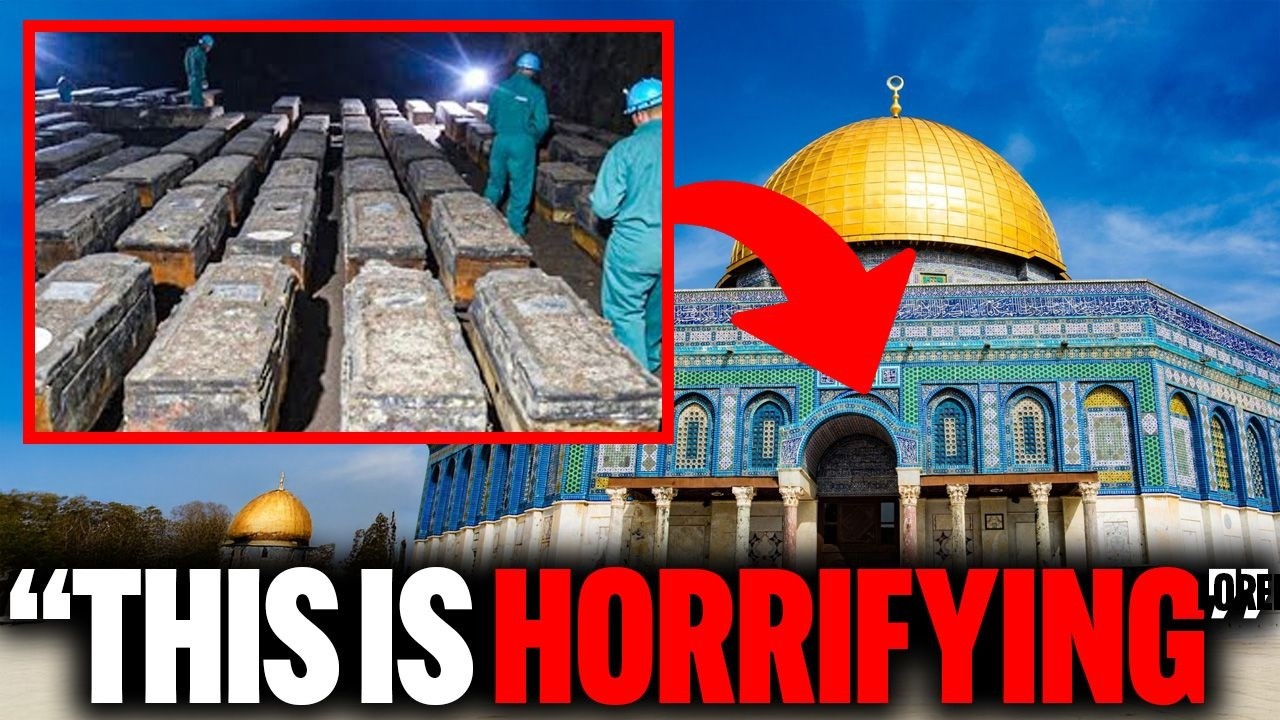
In 1999, heavy machinery was brought into the southeastern corner of the Temple Mount to create a new underground entrance.
Thousands of tons of earth and rock were ripped from the sacred hill without archaeological supervision.
Instead of being studied, more than 400 truckloads of soil were dumped into the Kidron Valley like construction waste.
To historians, it was a catastrophe.
That dirt contained layered history spanning more than 3,000 years.

Five years later, a group of Israeli researchers refused to accept the loss.
In 2004, they launched the Temple Mount Sifting Project, inviting volunteers to wash and filter the discarded soil by hand.
What many ᴀssumed would be pointless labor quickly turned into one of the richest archaeological efforts ever undertaken without a formal excavation.
Almost immediately, artifacts began to emerge.
Roman coins, Crusader arrowheads, and fragments of pottery told stories of conquest and worship.

But deeper layers revealed something far more explosive: Iron Age pottery dating to the period of the biblical kings of Israel.
For the first time, there was physical evidence that intense activity had taken place on the Temple Mount during the era traditionally ᴀssociated with Solomon’s Temple.
Among the most astonishing discoveries were tiny clay seals known as bullae.
Used to seal official documents, these objects often bear the names of real individuals.
One bulla carried the name “Geyahu son of Immer,” a priestly family mentioned directly in the Book of Jeremiah.

This was not symbolism or legend—it was a direct link to a person who lived and worked on the Temple Mount more than 2,600 years ago.
Dozens of similar seals followed, confirming the existence of royal officials and temple administrators long debated by scholars.
Other finds humanized the ancient priests: an ivory comb inscribed with a plea to rid its owner of lice, a bronze shovel still blackened from ritual fires, and delicate bone pomegranate carvings—symbols long ᴀssociated with the Temple.
Thousands of colorful stone tiles from the Second Temple period were also recovered, allowing scientists to reconstruct floors once walked upon by pilgrims and historical figures such as Jesus.
Yet the soil was only the beginning.

Between 2021 and 2024, researchers gained permission to use ground-penetrating radar along the outer walls of the Temple Mount.
They could not dig, but they could scan.
What appeared on their screens stunned everyone involved.
Beneath the stone platform were vast, perfectly shaped voids—man-made chambers with straight walls, sharp corners, and arched ceilings rising more than 30 feet high.
Radar data revealed stacked rooms, sealed staircases carved directly into bedrock, and blocked pᴀssageways leading toward the center of the Mount—precisely where the Holy of Holies was once believed to stand.
These were not natural caves.

They were intentional, monumental constructions.
Even more unsettling was what appeared beneath the Al-Aqsa Mosque: a completely sealed vault containing large, box-like objects, possibly stone chests.
No one knows what lies inside.
The chambers align with 19th-century maps drawn by British explorer Charles Warren, who was forced to halt his investigations before completing them.
Modern scans now suggest Warren only scratched the surface.
Layer by layer, the underground architecture tells a story of continuous rebuilding.

Mᴀssive stones from the time of Solomon form the foundation.
Roman and Byzantine additions sit above them like geological history frozen in architecture.
But the most extraordinary revelation lies in the water system.
Researchers have identified more than 30 enormous cisterns carved into the bedrock, one capable of holding over two million gallons of water.
These reservoirs are connected by a sophisticated network of channels and pipes coated with waterproof plaster that has survived for millennia.

Chemical analysis shows the water originated miles away in the Hebron hills, transported entirely by gravity through aqueducts.
This was not simple plumbing.
The system was designed to move, refresh, and control mᴀssive volumes of water daily—enough to purify thousands of worshippers and instantly clean ritual areas.
Astonishingly, much of this system still functions today, silently collecting rain beneath the feet of modern visitors.
Now, some researchers are asking a question that blurs the line between archaeology and science fiction: what if the Temple Mount was more than a religious site? The scale, precision, and integration of water, stone, and space suggest a kind of ancient machine—one that used water not just for cleansing, but possibly for cooling, acoustics, or even energy regulation.
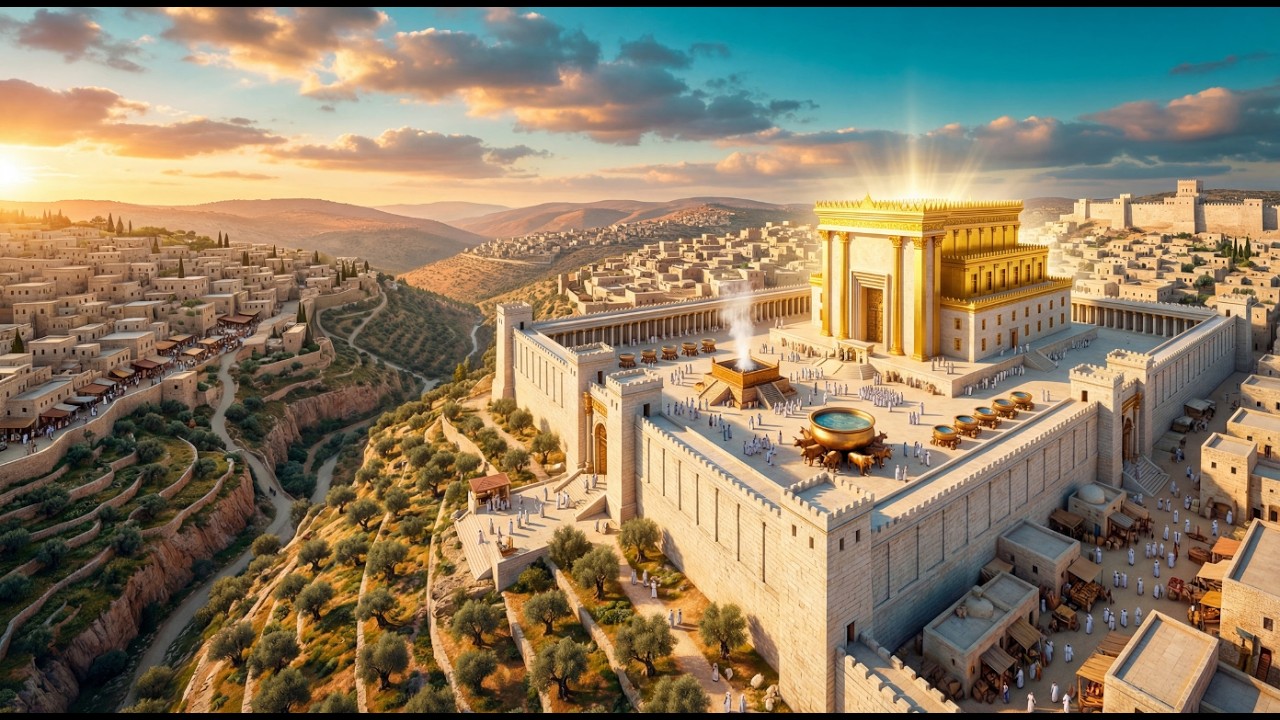
Theories range from acoustic resonance inducing religious awe, to water acting as a shield around deeper vaults, to the possibility that something powerful was once housed beneath the Holy of Holies.
While such ideas remain speculative, the engineering itself is undeniable—and deeply unsettling in its sophistication.
The Temple Mount, it seems, is not finished revealing its secrets.
And behind those sealed chambers, something may still be waiting.


