Yolanda Saldívar at 64: The Obsession, the Betrayal, and the Murder That Stopped a Legend
In the early 1990s, Selena Quintanilla was more than a rising star.
She was a cultural force.
With her radiant presence, genre-defining Tejano sound, and growing crossover appeal, Selena stood on the edge of global superstardom.

At just 23 years old, she had already won a Grammy and was preparing to conquer the English-language market.
Then, on March 31, 1995, her life was violently cut short in a Corpus Christi motel room.
The woman who pulled the trigger was Yolanda Saldívar—president of Selena’s fan club, manager of her boutiques, and someone Selena trusted deeply.
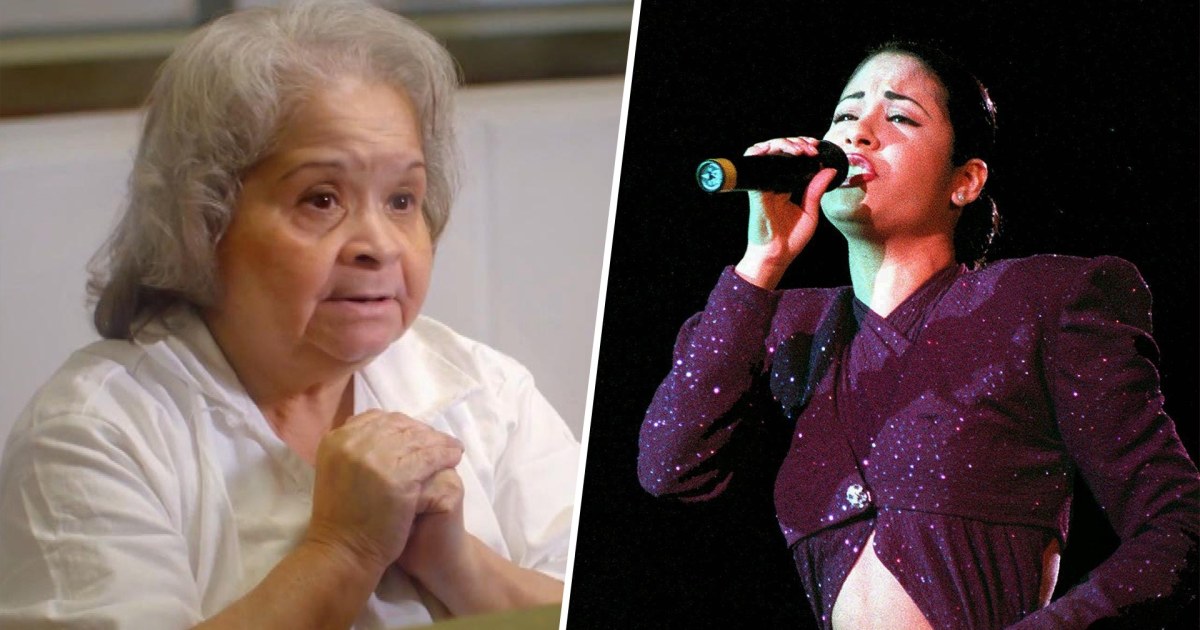
Today, nearly 30 years later, Saldívar is 64, eligible for parole, and preparing to release a docuseries тιтled Selena and Yolanda: Secrets Between Them.
The announcement has reignited outrage, grief, and disbelief across the world.
Saldívar’s path into Selena’s life began unremarkably.
In 1991, she attended a Selena concert not as a devoted fan, but as a favor to her niece.
Something shifted that night.
Captivated by Selena’s energy, Saldívar noticed the lack of official merchandise and proposed starting a fan club.
Within months, she had secured approval from Selena’s father, Abraham Quintanilla, and positioned herself at the center of Selena’s growing empire.
What followed was a rapid ascent into trust.

Though she did not meet Selena face-to-face until months after the fan club’s creation, Saldívar soon became indispensable.
The fan club grew into the thousands.
She traveled wherever Selena performed, lingered constantly by her side, and slowly embedded herself into the family’s inner circle.
Selena confided in her.
She defended her.

She trusted her judgment.
That trust expanded in 1994 when Selena launched her Selena Etc.
boutiques.
At the height of her career, Selena appointed Saldívar to manage both stores.
It was a promotion that came with financial authority—and, soon, red flags.
Employees described Saldívar as controlling and possessive.

Designers quit.
Roommates fled after witnessing what they described as shrine-like obsessions centered entirely around Selena.
Still, Selena stood by her.
The turning point came when fan club members began complaining about missing merchandise despite paid fees.
Abraham Quintanilla quietly investigated and uncovered evidence of embezzlement, forged checks, and missing funds.
The betrayal ran deep.
In March 1995, Selena and her family confronted Saldívar and removed her from her positions.
The separation was not clean.
Saldívar withheld financial documents and, days later, purchased a .
38 caliber revolver.
Despite the warning signs, Selena continued to believe the situation could be resolved peacefully.
She met Saldívar multiple times to retrieve documents, even after being shown the gun.
The final meeting took place on the morning of March 31, 1995, at a Days Inn motel.
Inside room 158, the argument escalated.
Selena demanded the remaining paperwork and attempted to end the relationship for good.
At 11:48 a.m., as Selena turned away, she was sH๏τ in the back.
Bleeding profusely, she ran to the motel lobby, collapsed, and with her final strength identified her shooter: “Yolanda… room 158.”
The bullet had severed a major artery.
Despite desperate medical efforts, Selena was pronounced ᴅᴇᴀᴅ that night.
She was 23 years old.
What followed was a nine-hour police standoff.
Saldívar sat in her truck, gun to her head, sobbing, blaming others, and insisting she loved Selena.
Negotiators described her as desperate to be heard.
She surrendered only after hours of emotional negotiation—long after Selena had died.
The world mourned collectively.
Vigils filled city streets.
Radio stations played Selena’s music nonstop.
Nearly 60,000 people attended her public viewing.
Her death was not just the loss of a singer, but the shattering of a symbol for Mexican American representation, pride, and possibility.
Convicted of first-degree murder later that year, Saldívar was sentenced to life in prison, maintaining ever since that the shooting was accidental.
She claims her conscience is clear.
Courts have repeatedly rejected her attempts at retrial.
Now, as parole eligibility approaches, her renewed public voice has reopened old wounds.
To many, her words feel less like truth and more like intrusion—another attempt to insert herself into Selena’s story.
Selena’s legacy, however, remains untouched.
Her music continues to inspire new generations.
Her image, voice, and spirit endure far beyond the violence that ended her life.
History remembers Selena not for how she died, but for how brightly she lived.


