The memorial had ended, the hymns faded, and yet the real reckoning had only just begun.
What followed Charlie Kirk’s death was not a unified period of reflection, but an immediate and relentless battle over how he should be remembered, who had the right to speak kindly of him, and what his life symbolized in a deeply divided age.
In the quiet aftermath of loss, voices rose not in prayer, but in accusation, revealing how grief itself has become politicized.
Almost immediately, certain commentators, including those identifying as Catholic, moved to condemn not only Charlie Kirk but anyone who dared to recall him with grace.
He was labeled dangerous, dishonest, even a false prophet.
The criticism did not stop with him.
Bishops, pastors, and church leaders who spoke of his faith or character were swiftly targeted, as if kindness itself were a moral failure.
This response was not accidental; it reflected a wider cultural reflex, one that punishes nuance and treats compᴀssion as complicity.
At the same time, secular media outlets played their familiar role, framing the story through the lens of power and elections.
Speculation swirled about political consequences, early voting shifts, and voter enthusiasm stirred by his death.
Yet focusing solely on politics misses the deeper and more unsettling reality: a convergence between secular outrage and religious rhetoric, where faith is used not to heal but to wound.
In this climate, Bishop Robert Barron’s response stood out precisely because of its restraint.
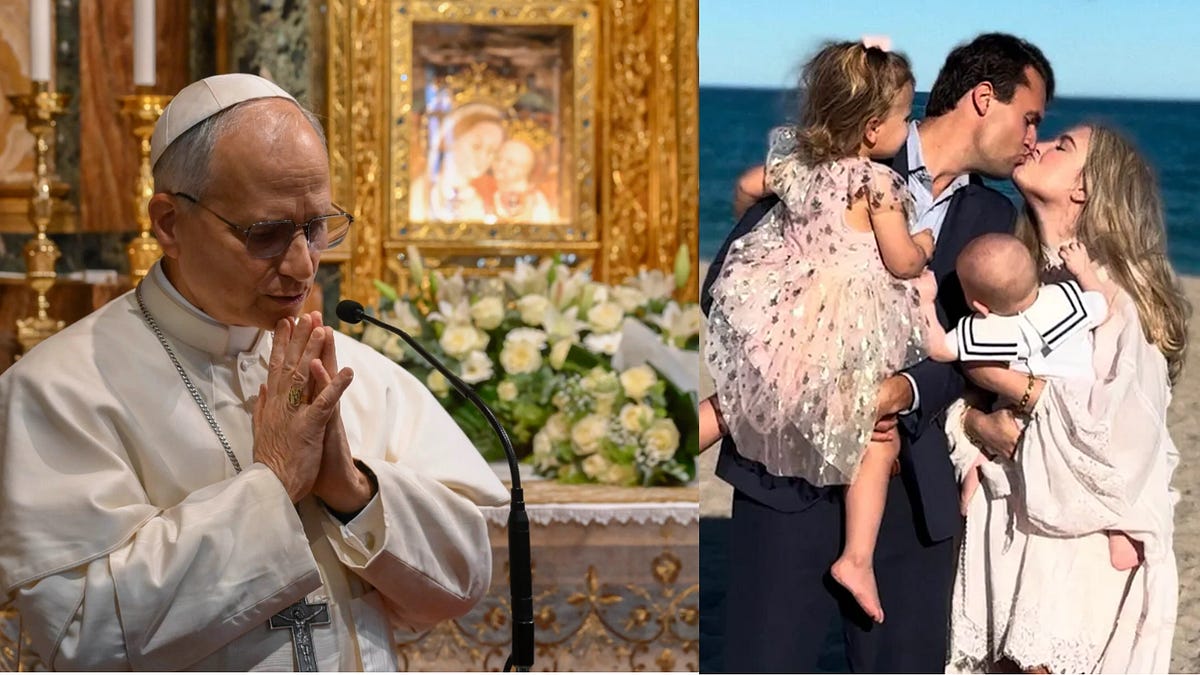
He did not argue policy or defend ideology.
He simply remembered Charlie Kirk as a man of faith, someone who loved Jesus Christ and sought civil discourse in an age of hostility.
That alone was enough to provoke outrage.
Barron’s words, rooted in personal encounters and spiritual memory, were twisted into accusations of political endorsement, as if acknowledging faith were equivalent to canonization.
Barron recalled meeting Charlie years earlier, not in a political arena but over breakfast, discussing theology rather than elections.
He described a man who was intelligent, warm, and sincere.
Later, he watched Kirk engage skeptics with patience and charity, maintaining composure under pressure.
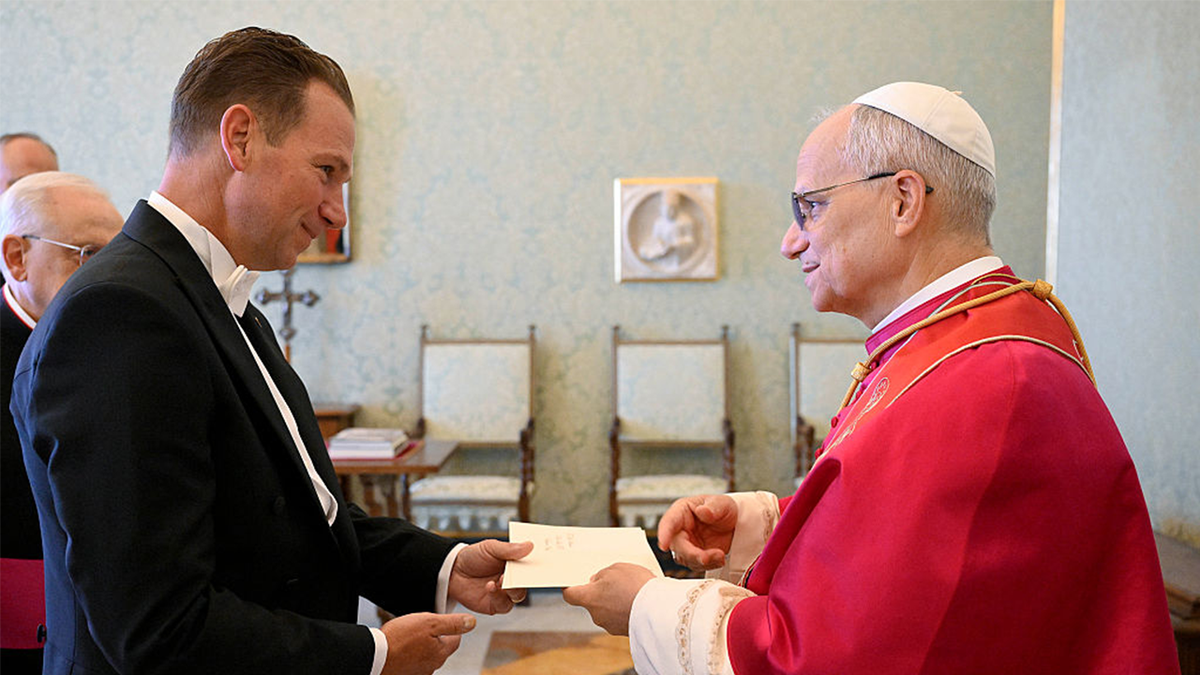
Their final exchange, just days before Kirk’s death, was spiritual, not strategic.
These details complicated the simplified narrative many preferred, and that complexity became intolerable.
At the memorial, Barron spoke again, this time highlighting forgiveness, especially the grace shown by Kirk’s widow toward the man who killed her husband.
Rather than being received as a powerful Christian witness, these words were criticized as weakness.
Compᴀssion was reframed as betrayal, and mercy as naivety.
The reaction revealed less about Charlie Kirk and more about the state of public discourse, where even forgiveness is suspect.
The backlash intensified when prominent Catholic publications entered the fray.
Some employed provocative cultural metaphors, likening Kirk to destructive fictional figures and implying he served a false messiah.
Such language inverted sacred concepts, replacing theological reflection with political allegory.
In doing so, it blurred the line between critique and mockery, turning faith into a rhetorical weapon.
Charlie Kirk’s own pastor offered a different perspective at the memorial, reminding attendees that Kirk viewed politics as a pathway, not a destination.
For him, civic engagement was a means to point people toward Christ, not a subsтιтute for faith.
This distinction, however, was dismissed by critics who insisted that any intersection of politics and religion must be corrupt by nature.
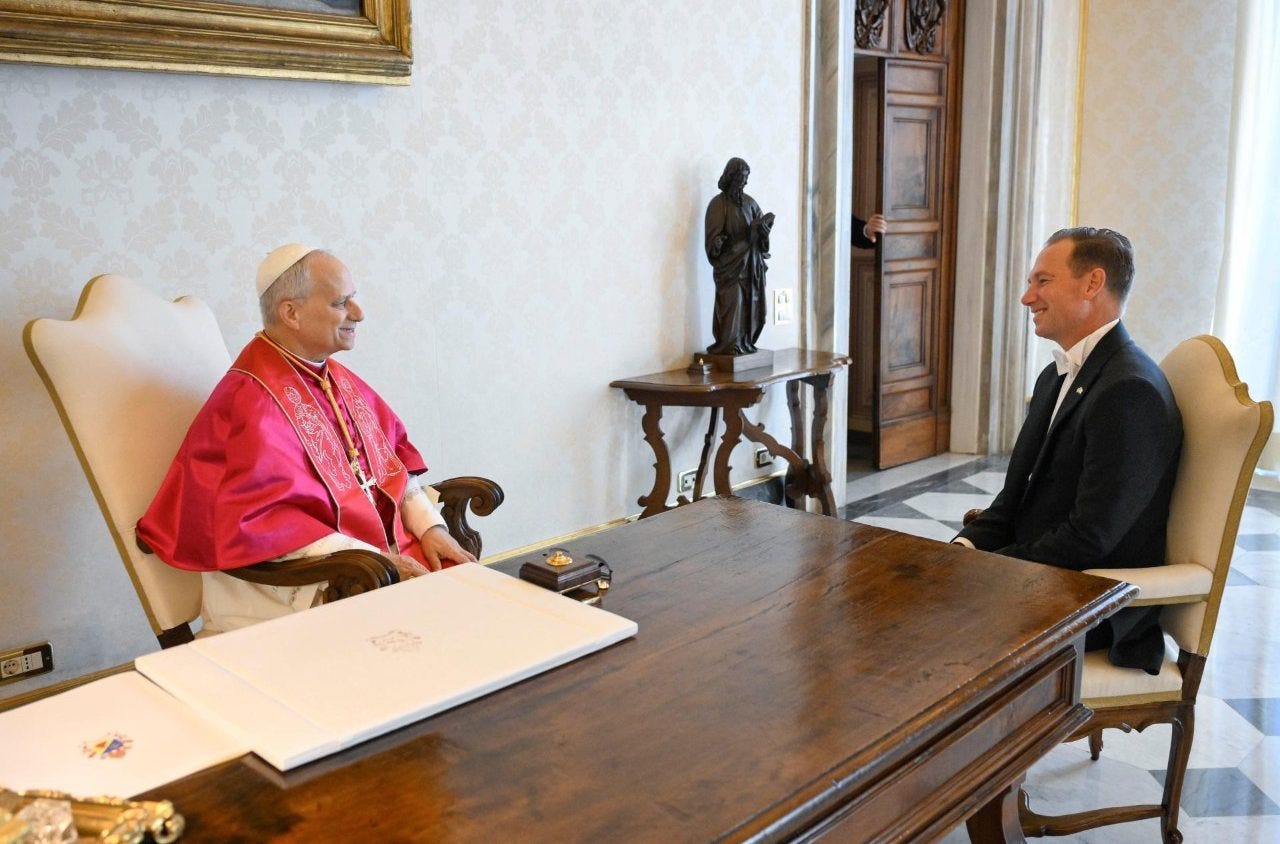
Other church leaders, including Cardinal Timothy Dolan, echoed similar sentiments, describing Kirk as an evangelist figure who lived his beliefs publicly.
While some found the language excessive, the intent was clear: to recognize a life shaped by conviction.
Yet once again, outrage followed, revealing an environment where praise is permitted only if it aligns with approved ideology.
Underlying much of the criticism was a selective invocation of Catholic social teaching.
Kirk’s views on family, life, and national responsibility were declared incompatible with Church doctrine, often without context or balance.
The tradition itself, rooted in concern for human dignity and moral order, was reduced to a partisan checklist.
Disagreement became grounds for exclusion, and complexity was replaced by condemnation.
As accusations escalated, the question shifted from who Charlie Kirk was to who gets to define virtue.
Old statements were unearthed, stripped of context, and presented as definitive proof of moral failure.
The possibility of growth, repentance, or grace was largely ignored.
Judgment became absolute, leaving no room for the Christian understanding that every life is a mixture of light and shadow.
Perhaps most striking was how quickly sympathy was rationed.
Prayers were offered with caveats, condolences followed by disclaimers.
In contrast, many ordinary people, including those who disagreed with Kirk politically, responded with simple human sorrow, recognizing the tragedy of a life cut short.
In the end, Charlie Kirk’s death exposed a deeper struggle within both society and the Church: whether faith will remain a source of mercy or become another tool of ideological enforcement.
His life, imperfect and public, forced uncomfortable questions about courage, conviction, and the cost of speaking openly about belief.
What remains is not a settled verdict but a challenge.
How we remember the ᴅᴇᴀᴅ says much about how we value the living.
And in the fierce arguments over Charlie Kirk’s legacy, one truth stands out clearly: the battle was never only about him.
It was, and still is, about the soul of a culture wrestling with truth, grace, and the fear of honest remembrance.


