SHOCKING: Pilate’s Letter Describes Jesus’ Skin Color and Face in Striking Detail
The enduring image of Jesus as a meek and humble figure belies a more complex and captivating truth about his appearance and influence.
Throughout history, artists have portrayed him in ways that reflect their cultural contexts, leading to a lingering question: How did Jesus Christ look in life?
Surprisingly, the man who condemned him to death may provide insight into this very question.
Behold as we witness the details of SHOCKING Pilate’s letter, which describes Jesus’ skin color and face in striking detail.

Before We Dive In: Pontius Pilate, The Man Who Condemned Christ
For many, Pontius Pilate is the arch-villain in the story of the Messiah, the man who condemned Jesus to death.
While this is true, it is essential to understand the history and context of his role as the fifth governor of the Roman province of Judea from approximately 26 to 37 AD during the reign of Emperor Tiberius.
Pilate is among the most documented governors of Judea, yet details of his life before his governorship remain shrouded in mystery.
Coins minted during his tenure and the Pilate Stone, a significant inscription, offer rare glimpses into his administration.
Jewish historian Flavius Josephus, along with the philosopher Philo of Alexandria and the Gospel of Luke, narrates various conflicts between Pilate’s administration and the Jewish populace, often highlighting his insensitivity to their religious beliefs.

The Crucifixion of the Promised Messiah
In the Christian gospels, Pilate emerges as a reluctant executor of justice, pressured by the mob to condemn Jesus.
The Western view of Pilate portrays him as a cowardly figure succumbing to political pressure.
He faced dismissal after violently quelling an armed Samaritan uprising at Mount Gerizim, which drew the attention of higher Roman authorities.
Summoned back to Rome to account for his actions, Pilate’s fate remained uncertain due to the death of Tiberius before he could arrive.
Pilate’s first encounter with Jesus was marked by a complex mix of curiosity, skepticism, and an underlying sense of duty.
As the Roman governor tasked with maintaining order in the volatile province of Judea, Pilate approached this unusual trial with keen awareness of the political implications surrounding it.
Before him stood a man accused of inciting insurrection, yet he presented himself with calmness and dignity, contrasting sharply with the fervent zealotry of the local religious establishment demanding his execution.
This piqued Pilate’s interest, leading him to probe deeper into the charges against Jesus.
Pilate’s exposure to Jesus’ teachings further complicated his perception of the situation.
Jesus spoke of love, forgiveness, and a kingdom transcending earthly power, themes that resonated with the moral sensibilities of many but bewildered Pilate, who was steeped in the pragmatic realities of Roman governance.

Jesus Christ and His Influence
Born between 6 and 4 BC, Jesus emerged as a pivotal figure in the first century.
He was a Jewish preacher and religious leader whose teachings formed the foundation of Christianity, the world’s largest religion today.
Jesus grew up in Nazareth, where he likely engaged in various trades, including construction.
He possessed a profound understanding of scripture, capable of reading, paraphrasing, and debating, despite not undergoing formal training as a scribe.
The Gospel of Luke recounts two significant journeys to Jerusalem during Jesus’ childhood.
During the first, Mary and Joseph presented Jesus at the Temple, where Simeon prophesied about his future.
The second journey, at the age of twelve, captures a pivotal moment when Jesus stayed behind in the Temple after Pᴀssover celebrations, astonishing teachers with his understanding and insightful questions.
Jesus’s ministry began with his baptism by John the Baptist in the Jordan River, where the Holy Spirit descended upon him in the form of a dove.
Following his baptism, Jesus retreated to the wilderness for forty days, resisting temptations from Satan.
His ministry, marked by teachings about the Kingdom of God and numerous miracles, drew crowds and disciples, culminating in pivotal moments like Peter’s confession of Jesus as the Messiah and the transformative event of the Transfiguration.

The Trial and Crucifixion of Jesus Christ
As Jesus approached Jerusalem, he entered the final phase of his ministry.
His triumphal entry on Palm Sunday was met with jubilation, but tensions escalated as he confronted the commercial practices in the temple.
This bold act foreshadowed the coming destruction of the temple and the tribulations faced by his followers.
Judas Iscariot, one of Jesus’s trusted apostles, betrayed him for thirty pieces of silver, leading to Jesus’s arrest in the Garden of Gethsemane.
Following his arrest, Jesus faced trials before the Sanhedrin and Pontius Pilate, ultimately leading to his crucifixion.
Pilate, recognizing the political implications, consented to the execution to maintain order, despite finding no fault in Jesus.
After a brutal scourging, Jesus was crucified alongside two criminals.
His last words and the events surrounding his death—darkness enveloping the land and the temple curtain tearing—signified the profound impact of his sacrifice.
Pilate’s Personal Reflections
Pilate recounted his experience with Jesus in multiple letters, including the Anaphora Pilati, which detailed the execution and the events that followed.
He acknowledged Jesus’s miracles, which surpᴀssed any feats attributed to the Roman pantheon.
Pilate portrayed the Jewish leaders as obstinate, choosing to demand Jesus’s execution despite the lack of valid accusations.
Following the crucifixion, Pilate described a miraculous light descending upon Jerusalem and an earthquake that shook the foundations of the mountains.
His letters offer rich insights into the aftermath of Jesus’s death and the resurrection.
The Resurrection
Three days after Jesus’s crucifixion, a group of women, including Mary Magdalene, discovered the empty tomb.
Jesus appeared to Mary, affirming his resurrection and instructing her to share the news with his disciples.
This event marked the beginning of the early Christian movement, as Jesus continued to appear to his followers, reaffirming their faith and commissioning them to spread his message.

The Physical Appearance of Jesus Christ
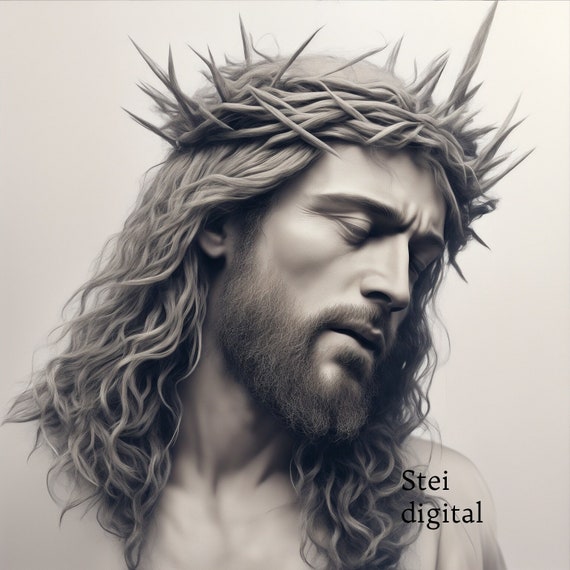
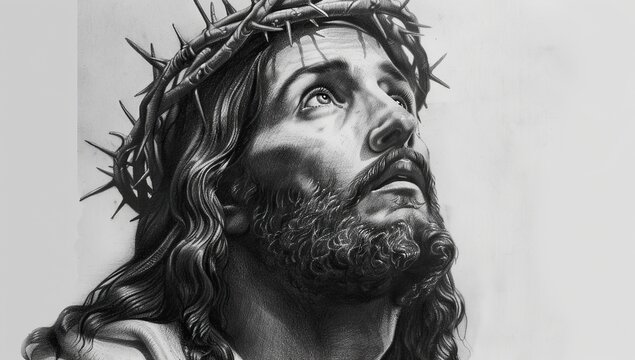
Among the letters attributed to Pilate is the Letter of Lentulus, which describes Jesus’s physical appearance in detail.
According to this text, Jesus had “a reverend countenance,” hair “the color of an unripe hazelnut,” and a beard that was “not thick, but somewhat like that of a Nazarite.”
His eyes were described as “bright and clear,” embodying compᴀssion and wisdom.
These descriptions highlight the juxtaposition between Jesus’s physical traits and the universal appeal of his teachings, which have transcended cultural boundaries.

Conclusion
The details of Pilate’s observations and letters shed light on the complex interplay between Jesus’s idenтιтy, his teachings, and the events leading to his crucifixion.
While the physical appearance of Jesus may remain a topic of speculation, his influence and the message of love and redemption continue to resonate with believers around the world.
As we reflect on these insights, we are reminded of the enduring legacy of Jesus Christ and the hope he represents for humanity.


