Before His Death, Demond Wilson Finally Left a Message That Changes Everything
To millions of Americans, Demond Wilson will always be Lamont Sanford—the patient, good-hearted son who endured his father’s insults with quiet dignity on Sanford and Son.
Week after week in the 1970s, Wilson entered living rooms across the country, becoming a symbol of family, humor, and familiarity.
Yet behind that beloved image lived a man carrying war trauma, addiction, betrayal, and profound disappointment with the very industry that made him famous.

Born in 1946, Wilson’s life was shaped early by performance and faith.
As a child, he appeared on Broadway and performed at the Apollo Theater, long before most children understood the concept of fame.
At the same time, religion played a central role in his upbringing.
He served in Catholic churches and attended Pentecostal services with his grandmother, once even considering the priesthood.
But before that calling could take shape, war intervened.
At just 19 years old, Wilson was drafted into the Vietnam War.

He served 13 brutal months in combat, was wounded, and received both the Bronze Star and the Purple Heart.
Those medals, however, could not heal the psychological wounds he brought home.
Nightmares, anxiety, and post-traumatic stress followed him into civilian life.
To cope, Wilson turned to drugs, beginning a battle with addiction that would shadow his rise to fame.
His breakthrough came in 1972 when he was cast as Lamont Sanford opposite Red Foxx.

Sanford and Son was groundbreaking—a sitcom led by Black actors that not only survived but dominated television ratings.
At its peak, more than 30 million viewers tuned in weekly.
Wilson was suddenly one of the highest-paid actors on television, earning around $40,000 a week.
He bought a 27-room mansion in Bel Air, drove a Rolls-Royce, and appeared to be living the American dream.
But fame did not heal him.

The trauma of war, combined with the pressure of being permanently identified with a single character, slowly eroded his sense of self.
Audiences loved Lamont Sanford, but few cared to know Demond Wilson.
As he later admitted, money brought comfort but not peace.
Drugs became anesthetics for memory, not indulgence.
At one point, he spent nearly $1,000 a week on cocaine, while his personal life unraveled through infidelity and emotional collapse.

Even professional relationships left scars.
When Red Foxx abruptly left the show over salary disputes, Wilson learned about it secondhand in an NBC hallway.
Though Foxx later returned and they reconciled, Wilson never forgot the sense of betrayal.
Later, the murder of his manager tied to criminal underworld dealings further shattered his faith in Hollywood’s glamour.
The breaking point came in May 1982.

Standing alone on a tennis court at his mansion, waiting for friends who never arrived, Wilson realized he was completely isolated.
In that silence, surrounded by wealth but devoid of connection, he fell to his knees and prayed.
It was not a theatrical moment—it was surrender.
Wilson later described it not as a miracle, but an awakening.
Within months, his life changed radically.
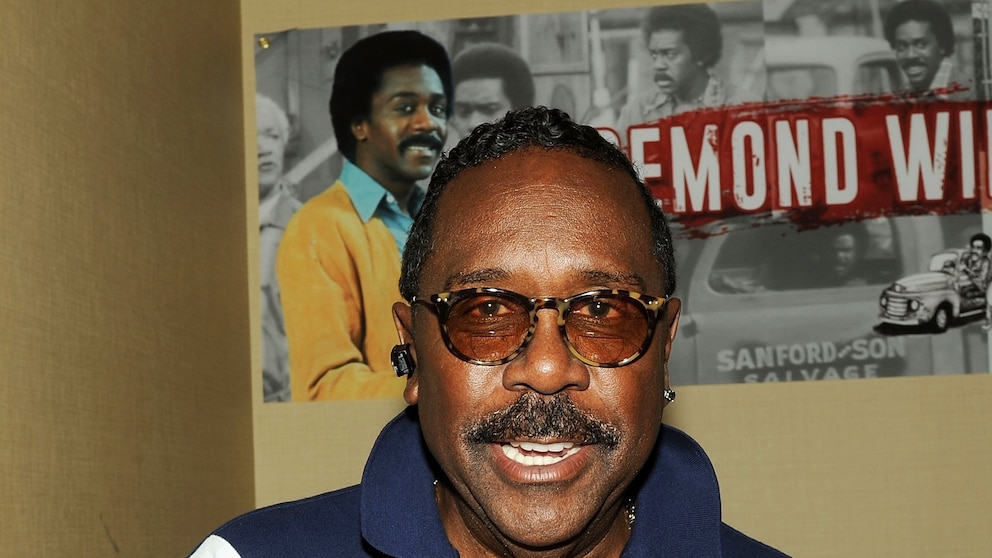
He quit drugs, immersed himself in faith, lost significant weight, and declared, “The old Demond Wilson is ᴅᴇᴀᴅ.”
In 1983, he shocked Hollywood by walking away entirely.
He sold his mansion, left Los Angeles, and moved his family to a quiet suburb.
Acting offers were rejected.
Fame was no longer worth the cost.
In 1984, Wilson was ordained as a minister and began a new life as a traveling evangelist.

He preached not with polish, but honesty, drawing on his own failures.
Though his celebrity opened doors, he refused to turn ministry into performance.
He charged no fees, sought no spotlight, and focused on service.
Later, he founded organizations to help former prisoners reintegrate into society, offering housing, job training, and counseling.
Wilson also became a writer, publishing more than a dozen books, including his memoir Second Banana, which exposed the darker realities behind sitcom success.

His message was consistent and unflinching: fame is an illusion, and without faith, family, and purpose, it destroys more than it gives.
When Demond Wilson pᴀssed away peacefully in January 2026 at age 79, there were no dramatic final words.
But his message was already complete.
For more than 40 years, he had lived it.
His final truth was not spoken—it was demonstrated.
He proved that redemption is not a moment, but a lifetime of choices.
And in the end, the man once known only as Lamont Sanford left behind something far more powerful than laughter: a question that lingers long after the applause fades.
Are we living our own lives—or merely playing a role?


