Cheryl Ladd and the Silent Feud That Changed Everything
When Cheryl Ladd first appeared on television, she seemed untouchable.
Her smile was bright, her presence effortless, and audiences quickly embraced her as the new Angel who helped keep Charlie’s Angels alive after Farrah Fawcett’s shocking departure.
To the public, her transition into one of America’s most watched shows looked smooth and triumphant.

Behind the scenes, however, Cheryl Ladd was quietly enduring one of the most emotionally exhausting periods of her life.
Taking over in Charlie’s Angels was never just another acting job.
Farrah Fawcett’s exit had left the series vulnerable, and the pressure on the production was enormous.
Cheryl was cast not as a replacement, but as Farrah’s on-screen younger sister—a creative decision meant to ease fans into the change.
While it worked on paper, it placed Cheryl in an impossible position.

She was expected to win over millions of loyal viewers while stepping into a cast already shaped by strong personalities and unspoken power struggles.
At the time, Cheryl Ladd was not a Hollywood heavyweight.
She had built her career slowly through voice work, singing, and small television roles.
This opportunity felt like her one real chance.
Determined to succeed, she showed up prepared, professional, and unfailingly polite.

Ratings held steady, fans gradually accepted her, and the press celebrated the transition as a success.
But inside the studio walls, the atmosphere told a very different story.
Almost immediately, Cheryl sensed she was not welcome.
Conversations stopped when she entered a room.
Breaks felt awkward and cold.

What should have felt like joining a team instead felt like walking into hostile territory.
The tension wasn’t loud or explosive—it was quiet, controlled, and isolating.
And at the center of it stood Kate Jackson.
Kate Jackson was more than just a co-star.
She viewed herself as the emotional backbone of Charlie’s Angels, the serious actor anchoring a show that was becoming increasingly glamorous and lightweight.
Cheryl’s arrival symbolized a shift Kate deeply disliked.
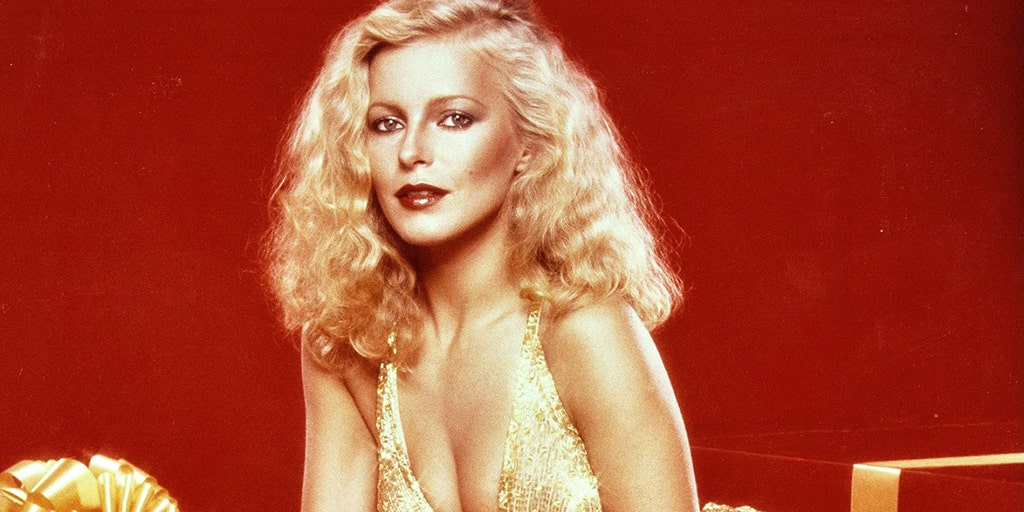
Blonde, polished, and heavily marketed, Cheryl came to represent a version of the show Kate no longer believed in.
There were no public arguments, no shouting matches—just a chilling absence of warmth.
Kate rarely spoke to Cheryl unless the script required it.
When she did, her tone was clipped and distant.
Attempts at small talk were met with short answers that ended conversations before they could begin.
The crew noticed.
Over time, the tension became normalized.
Directors adjusted blocking to limit interaction.

Long scenes between the two were quietly avoided.
No one said it out loud, but everyone understood the unspoken rule.
For Cheryl, the silence was crushing.
She questioned herself constantly—what she had done wrong, how she could fix it, why she never seemed to belong.
On paper, she was doing everything right.
Emotionally, she was unraveling.
Jacqueline Smith often found herself caught in the middle, friendly with both women but unable to bridge the growing divide.

The set felt colder each day.
What made the situation even harder was Cheryl’s personal life.
During this period, she had just become a mother and was privately struggling with postpartum depression.
Family pressures, long working hours, and the constant emotional isolation on set combined into something overwhelming.
She wasn’t just trying to be professional—she was trying to survive.
The breaking point came quietly.

As the show evolved, Cheryl began receiving more emotional material and increased screen focus.
To her, it felt like recognition.
To Kate, it felt like displacement.
Creative disagreements intensified behind closed doors.
Voices were raised, trust dissolved, and whatever fragile connection remained was severed.
After that, Cheryl stopped trying altogether.

Communication became strictly professional.
No greetings.
No warmth.
No repair.
When Kate Jackson eventually left the show, the public saw it as a creative decision.
Those behind the scenes knew the truth: the situation had become unbearable.
Yet Kate’s departure brought Cheryl no relief—only confirmation that the silence had never been accidental.
Years later, when reunion opportunities arose, Cheryl declined any that would require reopening old wounds.
Some mistook her refusal for bitterness or pride.
In reality, it was self-preservation.
She had learned the cost of silence and chose never to pay it again.
Decades later, Cheryl finally spoke openly about that time, revealing the depth of her mental health struggles and the emotional toll of the hostility she endured.

Her silence, she explained, was never about punishment or ego.
It was about safety.
Some relationships, she learned, are not meant to be repaired—only survived.


