The conversation unfolded the way many of the most revealing discussions about November 1963 do: informally, almost playfully at first, before veering sharply into territory that feels anything but light.
A missing tape, a joke about being “done now,” and then suddenly the weight of history settles in.
At the center of it all was Rex Bradford, president of the Mary Ferrell Foundation, a man whose life’s work has quietly shaped how researchers, journalists, and the public access the documentary record of the JFK ᴀssᴀssination.
Bradford was introduced not as a celebrity or polemicist, but as a custodian—someone who inherited a mission that began with Mary Ferrell herself.
Ferrell, a Dallas legal secretary turned obsessive archivist, became the connective tissue of ᴀssᴀssination research in the decades after Kennedy’s death.
Researchers slept in her home, authors dedicated books to her, and her painstaking index cards evolved into one of the most important private collections of government documents in the country.
She never wrote a book, but she made countless others possible.
Bradford’s own entry into this world was almost accidental.
A software developer by trade, he fell down the JFK rabbit hole in the late 1990s after catching Oliver Stone’s film on television.

Like so many others, one book led to another, certainty gave way to confusion, and confusion hardened into obsession.
When he began attending conferences like COPA and Lancer, he was struck by how researchers pᴀssed around pH๏τocopies of newly declassified documents as if they were contraband.
His instinct was not to argue theories, but to digitize everything.
That instinct changed the landscape.
What began as CD-ROMs of scanned FBI and CIA files eventually became History Matters, and later the Mary Ferrell Foundation as it exists today.
Bradford described hauling boxes of documents across states in rented Penske trucks, storing hundreds of boxes marked “JFK,” “CIA,” and “FBI” in garages and condos, quietly scanning millions of pages while neighbors politely pretended not to notice.
Today, the Foundation hosts nearly three million pages of ᴀssᴀssination-related records, freely browsable and searchable, a fact that still surprises people who ᴀssume it is a government-run archive.
The discussion moved fluidly between archival logistics and historical bombshells.
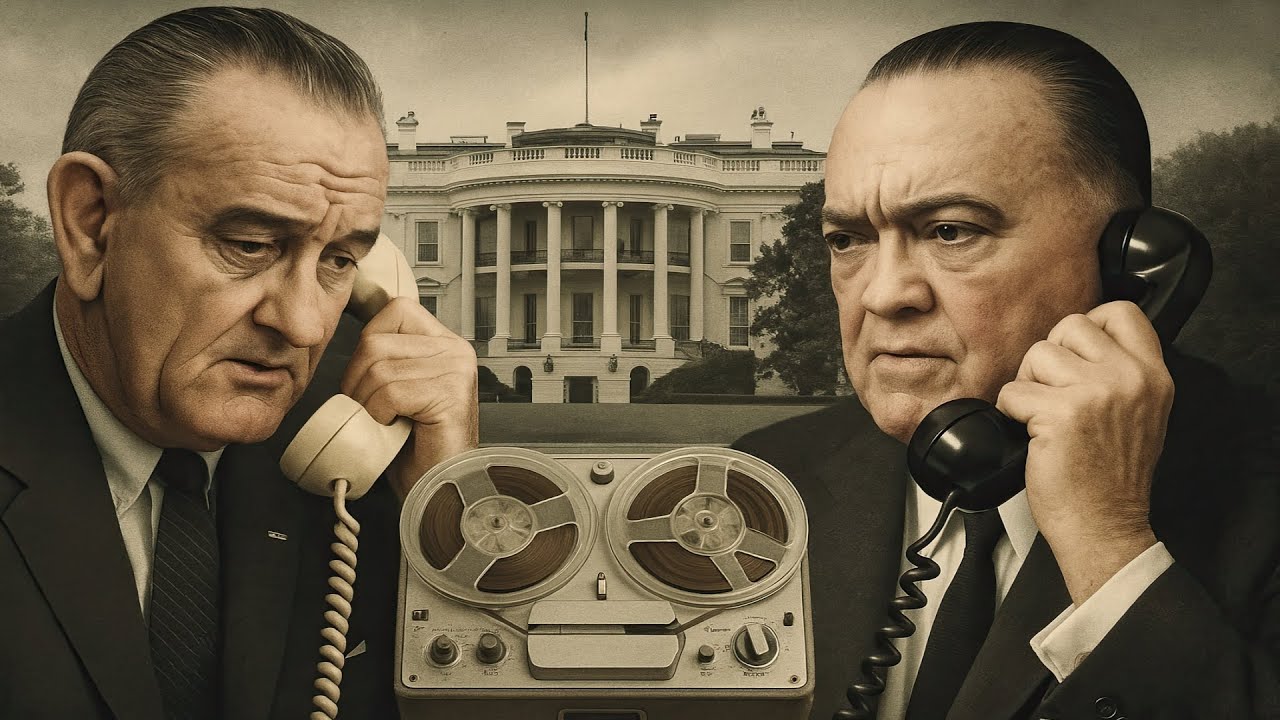
One of the most striking episodes revisited was Bradford’s discovery of what he famously called the “14-minute gap” on an LBJ tape—a conversation between Lyndon Johnson and J. Edgar Hoover on the morning after the ᴀssᴀssination.
While transcripts of the call existed, the audio itself had been effectively erased.
The explanation offered by the LBJ Library—that the vice-presidential recording equipment was faulty—collapsed under scrutiny when the calls immediately before and after were crystal clear.
What made the erasure significant was not just the act itself, but the content of the transcript.
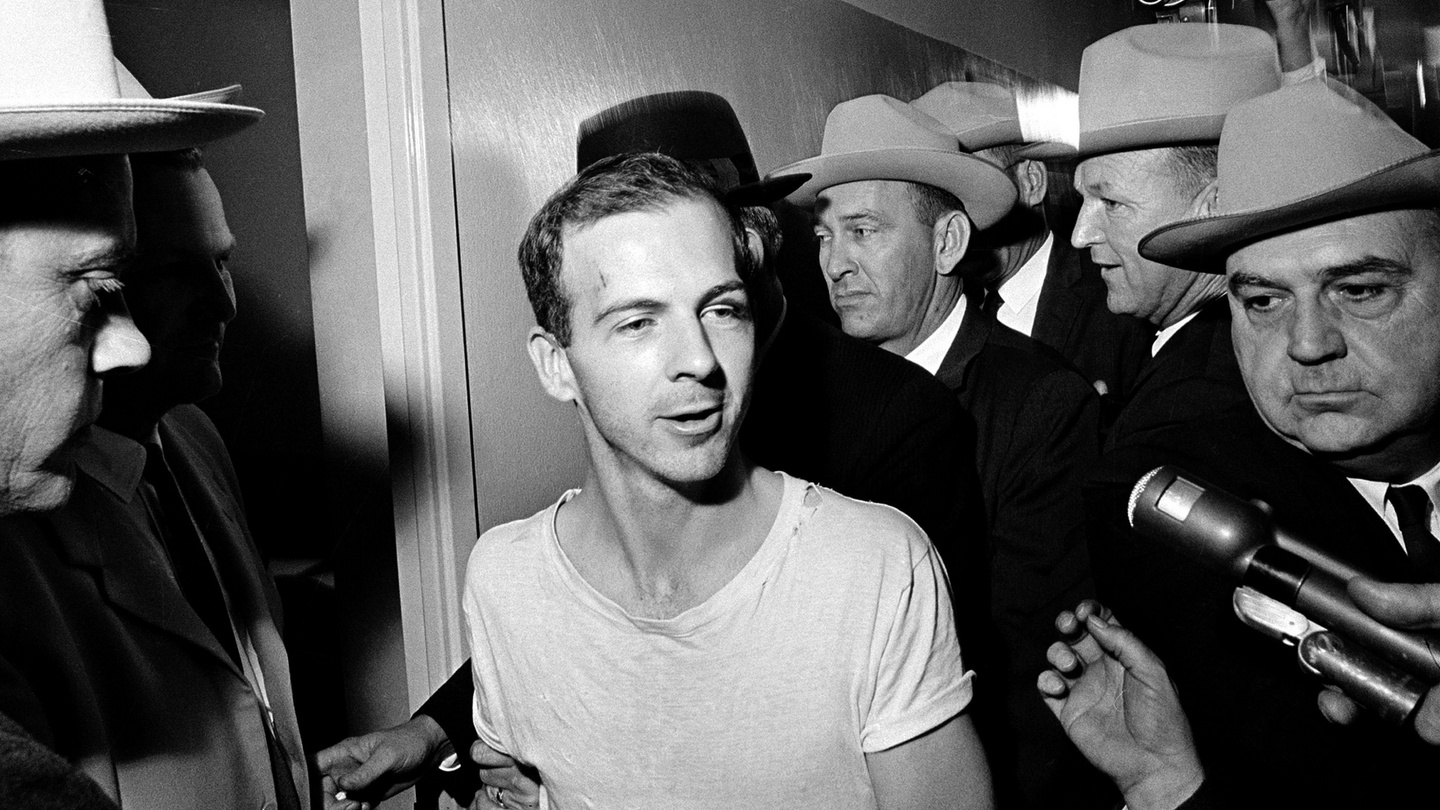
Johnson’s first question to Hoover was not about Dallas or Oswald’s arrest, but Mexico City.
Hoover responded with a statement that should have detonated history: the man using Oswald’s name at the Soviet embᴀssy did not match Oswald’s voice or appearance.
This single exchange opened a cavern of unresolved questions about impersonation, intelligence operations, and what Washington knew—and when.
From there, the conversation plunged into the Mexico City labyrinth.
Tapes that may or may not have existed, pH๏τographs of a “mystery man” who was clearly not Oswald, and competing accounts from CIA, FBI, and Mexican intelligence formed a narrative so tangled that even seasoned researchers hesitate to draw firm conclusions.
Bradford acknowledged years spent deep in this maze, only to emerge without certainty, convinced of one thing above all: whatever happened there mattered enormously, and it terrified officials in Washington.
The Mexico City story fed directly into the formation of the Warren Commission.
As the discussion emphasized, the Commission’s true mission was not simply to solve a crime, but to prevent a geopolitical catastrophe.

With rumors swirling about Cuban and Soviet involvement, Johnson repeatedly invoked the specter of nuclear war to pressure reluctant figures like Earl Warren and Richard Russell into serving.
Whether this fear was sincere, exaggerated, or opportunistically deployed remains unresolved—but its effectiveness is undeniable.
Equally unsettling was the examination of the medical evidence.
The autopsy at Bethesda Naval Hospital, overseen by military personnel within a rigid chain of command, clashed irreconcilably with the observations of doctors at Parkland Hospital in Dallas.
George Burkley, Kennedy’s personal physician, stood uniquely positioned as the only medically trained witness present at both locations.
Yet the Warren Commission never interviewed him.
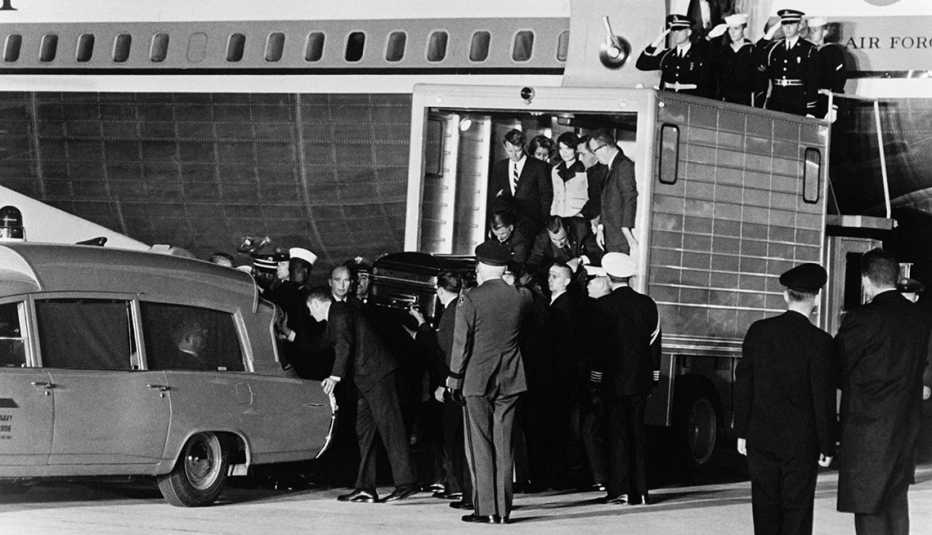
Bradford recounted how Burkley later attempted, through intermediaries, to tell investigators that others besides Oswald were involved—efforts that mysteriously went nowhere.
This pattern repeated itself throughout the conversation: crucial witnesses sidelined, evidence altered or withheld, and official explanations that collapsed under even modest scrutiny.
From press conference footage quietly removed, to late-night phone calls pressuring doctors to change their descriptions of wounds, the discussion painted a portrait not of a single conspiracy, but of a sprawling, improvised cover-up driven by fear, self-preservation, and insтιтutional loyalty.
Bradford was careful not to overreach.
He expressed skepticism that the case would ever reach a clean consensus about who pulled the trigger or how many shooters were involved.

Yet he was unequivocal about one conclusion: the documentary record proves beyond doubt that the federal government covered up key aspects of the ᴀssᴀssination.
That truth, he argued, remains largely unknown to the broader public, even decades later.
As the conversation wound down, the tone shifted from forensic analysis to reflection.
The ᴀssᴀssinations of John F. Kennedy, Robert Kennedy, and Martin Luther King Jr.
were framed not just as individual tragedies, but as a collective rupture from which the country has never fully recovered.
The work of preserving and sharing the historical record, Bradford suggested, is not about settling arguments, but about ensuring that future generations can see what was hidden—and decide for themselves.


