The Most Expensive Gemstone in the World — And Why It Isn’t a Diamond
For centuries, diamonds have been marketed as the pinnacle of luxury.
Yet beyond the familiar sparkle of clear stones lies a far more exclusive world—one where rarity, color, and geological miracles determine value far beyond diamond standards.
The most expensive gemstones ever discovered are not simply beautiful; they are freaks of nature, born from conditions so extreme they may never occur again.

10. Black Opal – Fire in the Shadows
Deep in Lightning Ridge, Australia, black opals emerge like galaxies trapped in stone.
Unlike common opals, these gems flash vivid reds, blues, and greens against a dark, inky base that amplifies their brilliance.
The finest specimens can reach $15,000 per carat, with legendary stones like the Aurora Australis selling for over $750,000. Each one feels less like jewelry and more like frozen starlight.

9. Padparadscha Sapphire – The Lotus Gem
Neither pink nor orange, padparadscha sapphires exist in a perfect balance between the two.
Named after the lotus flower in Sri Lanka, these stones are so rare that many gem dealers never see one in their lifetime.
Unheated examples with ideal color can command $50,000 per carat, and collectors treat them almost as myth rather than mineral.

8. Paraíba Tourmaline – The Electric Stone
Discovered in Brazil in 1989, Paraíba tourmaline stunned the gem world with its neon blue-green glow.
Its color comes from trace amounts of copper—an almost unheard-of element in gemstones.
With deposits found only in Brazil, Nigeria, and Mozambique, top-quality stones can exceed $100,000 per carat, making them more valuable than most diamonds.

7. Burmese Ruby – Pigeon Blood Red
Rubies are plentiful, but true pigeon blood Burmese rubies are almost sacred.
Mined in Myanmar’s Mogok Valley, these gems glow with an intense crimson fire.
The Sunrise Ruby shattered records in 2015, selling for $30.4 million, or over $1.2 million per carat, proving that the right red can rival any diamond.

6. Colombian Emerald – Green Fire of the Andes
Revered for over 5,000 years, emeralds from Colombia’s Muzo and Chivor mines remain unmatched.
Their vibrant green color seems alive, even with the inclusions emeralds naturally contain.
Exceptional stones have reached $100,000 per carat, and the Rockefeller Emerald sold for $5.5 million in 2017, cementing Colombia’s dominance in green gemstones.

5. Alexandrite – The Chameleon Gem
Alexandrite changes color dramatically—green in daylight, red under incandescent light.
Discovered in Russia’s Ural Mountains in the 1830s, natural alexandrite above one carat is extraordinarily rare.
Prices can reach $70,000 per carat, and large, clean stones are considered museum-level treasures.
4. Imperial Jadeite – The Stone of Emperors
Far removed from souvenir-shop jade, imperial jadeite is revered in Chinese culture as a symbol of purity and power.
Its vivid emerald-green color and glᴀssy texture make it rarer than diamonds.
The Hutton-Mdivani Jadeite Necklace sold for $27.4 million, proving jade’s cultural and financial supremacy.

3. Red Diamond – Once-in-History Rare
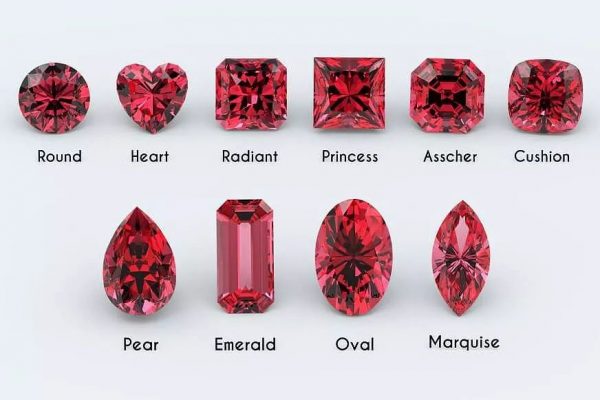
Fewer than 30 natural red diamonds are known to exist.
Their color comes from atomic lattice distortions rather than chemical impurities, making them one of geology’s greatest mysteries.
The Moussaieff Red Diamond, at 5.11 carats, is valued at over $20 million, or roughly $4 million per carat.
2. Pink Diamond – Soft Color, Brutal Price
Pink diamonds, once sourced primarily from Australia’s Argyle Mine, have soared in value since the mine’s closure.
The Pink Star Diamond sold for $71.2 million, while smaller vivid pink stones can reach $2.5 million per carat. Their beauty is gentle—but their price is ruthless.
1. Blue Diamond – The True King of Gemstones
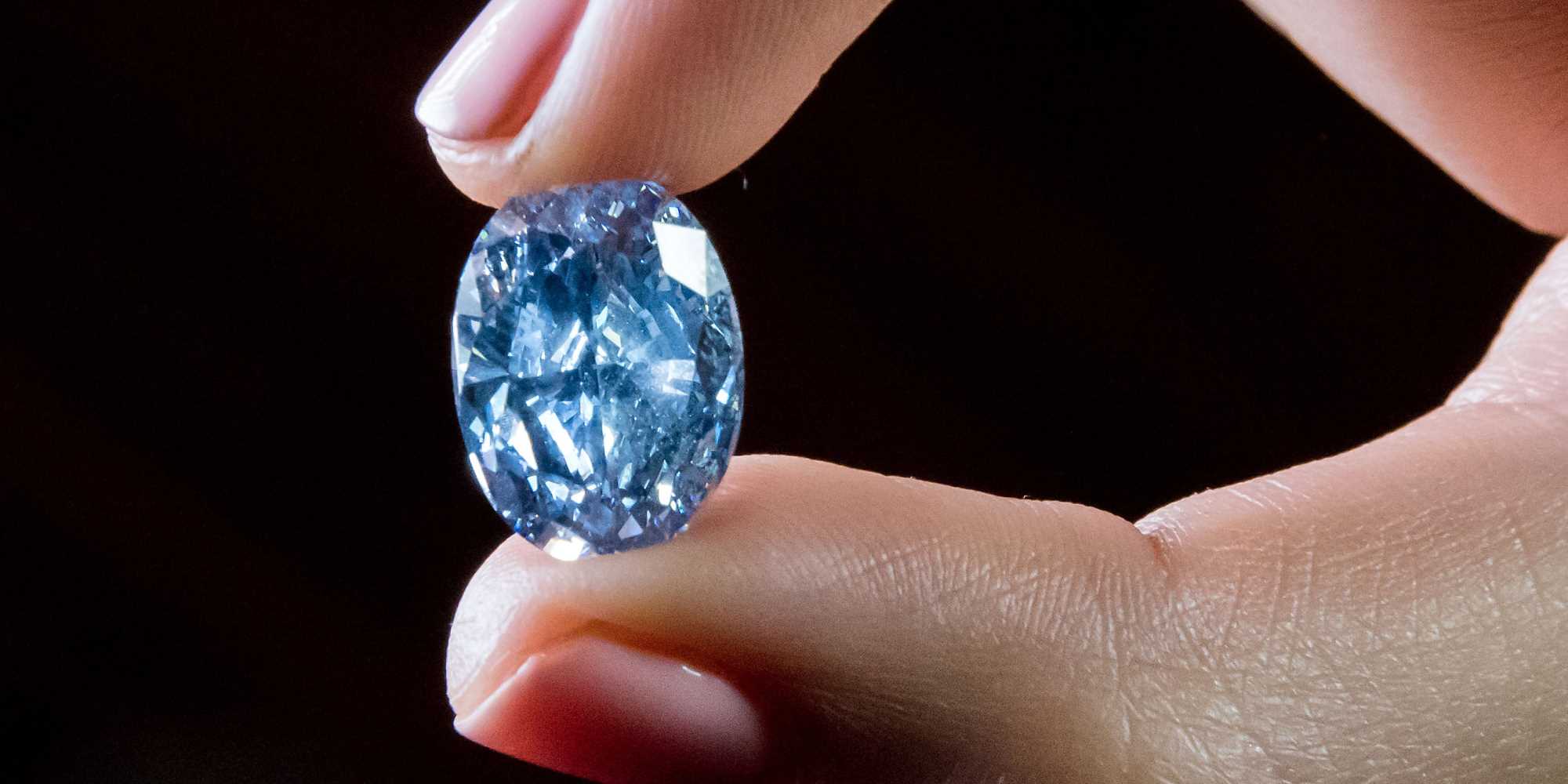
The most expensive gemstone in the world is the blue diamond.
Formed with trace boron under unimaginable pressure, these diamonds are rarer than pinks and more coveted than reds.
The Oppenheimer Blue sold for $57.5 million, nearly $4 million per carat, while legendary stones like the Hope Diamond remain priceless.
To own a blue diamond is to possess Earth’s rarest light, frozen forever.
These gemstones are not just luxury items—they are geological miracles.
Once the Earth gives up its last examples, no technology can replace them.
Gold can be mined again.
Diamonds can be manufactured. But these stones? When they’re gone, they’re gone forever.


