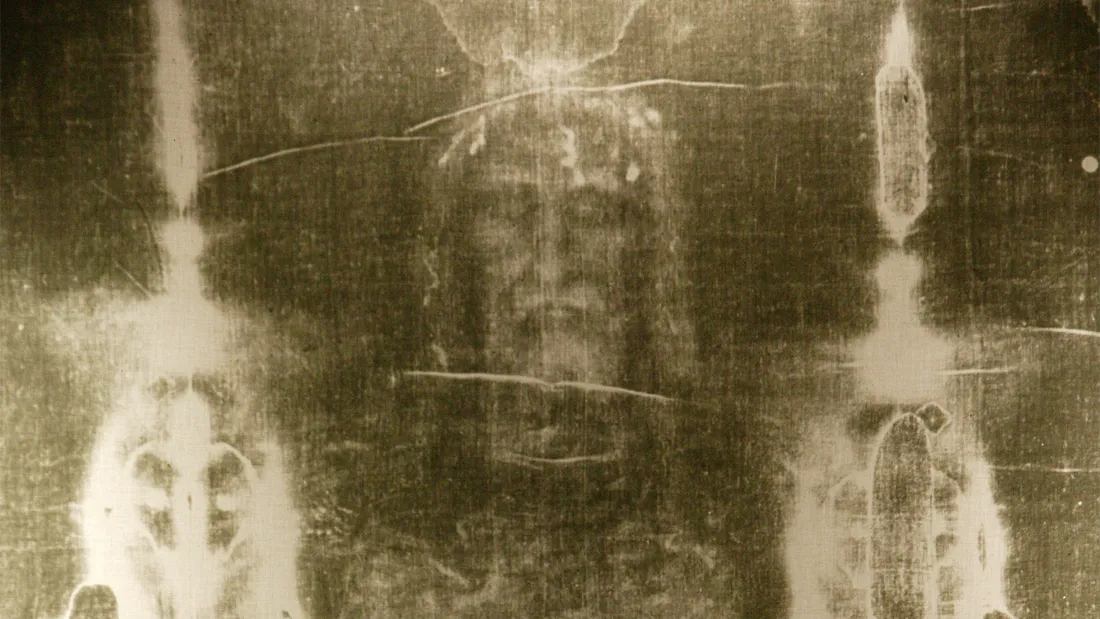
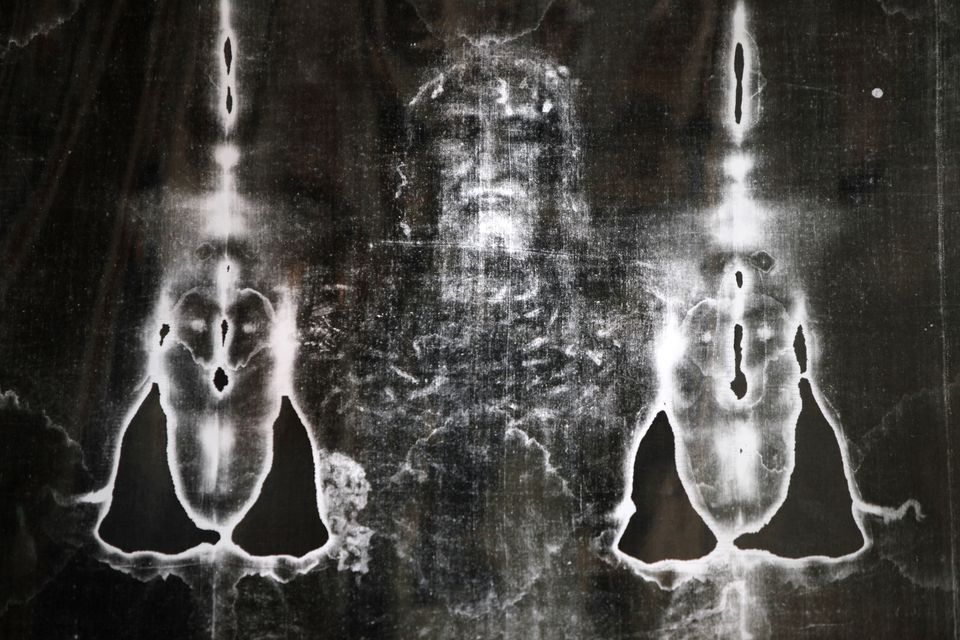
For centuries, the Shroud of Turin has remained one of the most debated religious artifacts in history.
Believed by many to be the burial cloth of Jesus, and questioned by others as a medieval creation, the Shroud has been tested, scanned, and analyzed more times than almost any relic on Earth.
But now, scientists have taken the investigation further than ever before.

Using advanced DNA sequencing and forensic analysis, researchers extracted microscopic biological traces embedded within the fibers of the ancient linen.
What they uncovered was far more complex than expected — genetic material from multiple geographic regions, plant species, and human lineages.
The findings revealed DNA signatures linked to populations from the Middle East, Europe, and even parts of Asia — raising new questions about the Shroud’s journey through history.
Was this contamination from centuries of public display?
Or does it point to a far more intricate story of origin and movement across continents?
A Historical Enigma
The Shroud of Turin has long been a source of fascination and controversy.
Dating back to the Middle Ages, it has been revered by many as the authentic burial cloth of Jesus Christ.
However, skeptics argue that it is a medieval forgery, a product of artful craftsmanship rather than divine intervention.
Despite the ongoing debate, the Shroud has endured as a symbol of faith for millions around the world.
Now, with the latest scientific advancements, researchers are revisiting this ancient artifact with fresh eyes and cutting-edge technology.
The Breakthrough Study
In a groundbreaking study, scientists utilized advanced DNA sequencing techniques to analyze the Shroud.
This method allowed them to identify and characterize the genetic material present in the fabric, providing insights that were previously unattainable.
The research team meticulously collected samples from various areas of the Shroud, ensuring a comprehensive analysis of its fibers.
What they found was astonishing: a diverse array of DNA, suggesting a complex history of contamination and interaction over the centuries.
Genetic Findings
The analysis revealed genetic signatures from several geographic regions.
Among the most significant discoveries were traces of DNA linked to Middle Eastern populations, which could support the Shroud’s claim to authenticity as a burial cloth of Jesus.
However, the presence of European and Asian genetic material complicates the narrative.
Could these findings indicate that the Shroud has traveled extensively throughout history, or are they simply the result of contamination from countless visitors?
The researchers are left grappling with these questions, which only deepen the mystery surrounding the Shroud.
The Role of Contamination
One of the primary debates surrounding the Shroud involves the issue of contamination.
For centuries, the cloth has been displayed in various locations, attracting millions of pilgrims and tourists.
Each interaction could potentially introduce foreign DNA into the fabric, obscuring its true origins.
This raises a critical question: how much of the DNA found in the Shroud is original, and how much is the result of centuries of public exposure?
The researchers acknowledge this challenge, emphasizing the need for careful interpretation of their findings.

Revisiting Carbon Dating
Previous carbon dating tests conducted in 1988 suggested that the Shroud dated to the medieval period, specifically between 1260 and 1390.
However, newer chemical and structural studies have challenged that conclusion, indicating that the Shroud may be much older than previously thought.
With modern genetic tools, the mystery deepens once again.
The combination of genetic analysis and advanced dating techniques could provide a more comprehensive understanding of the Shroud’s history.
Implications for Christianity
The implications of these findings extend far beyond the realm of science.
For many believers, the Shroud represents a tangible connection to Jesus Christ and the events of his crucifixion.
If the DNA analysis supports the Shroud’s authenticity, it could reignite faith and interest in this ancient relic.
Conversely, if the findings suggest that the Shroud is merely a product of medieval artistry, it could challenge long-held beliefs and spark further debate within the Christian community.
Conclusion
As scientists continue to unravel the complexities of the Shroud of Turin, the world watches with bated breath.
Is this breakthrough evidence of the Shroud’s authenticity, or just another layer in a centuries-old puzzle?
The data may be more complicated than anyone anticipated, leaving both believers and skeptics to ponder the true story behind this enigmatic relic.
In the coming years, further research and analysis will likely shed more light on the Shroud’s origins and its significance in the context of history and faith.
The journey of discovery is far from over, and the Shroud of Turin remains a captivating subject for scientific inquiry and theological reflection.
As we await more answers, one thing is certain: the Shroud will continue to inspire curiosity, debate, and reverence for generations to come.


