When the Cameras Never Switched Off
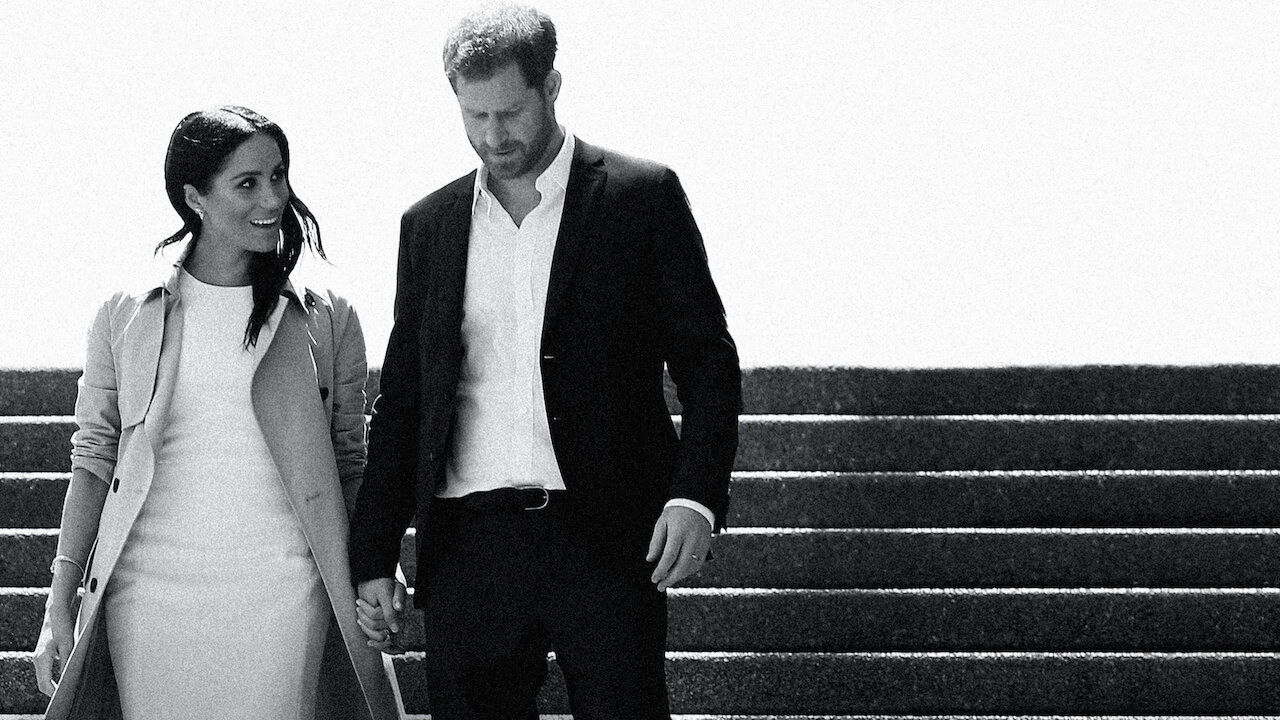
In 2022, Harry & Meghan premiered on Netflix to unprecedented attention.
Nearly 29 million households tuned in, making it the platform’s biggest documentary debut ever.
For six episodes, the Duke and Duchess of SusSєx told their love story, their grievances, and their version of events surrounding their dramatic exit from royal life.

It was intimate, emotional, and explosive.
And according to many royal watchers, it may also be the moment that will haunt them forever.
What made the documentary so shocking wasn’t just what was said—but the fact that it existed at all.
Royals do not film themselves during personal crises.
They do not record tears on mobile phones or narrate family breakdowns in real time.
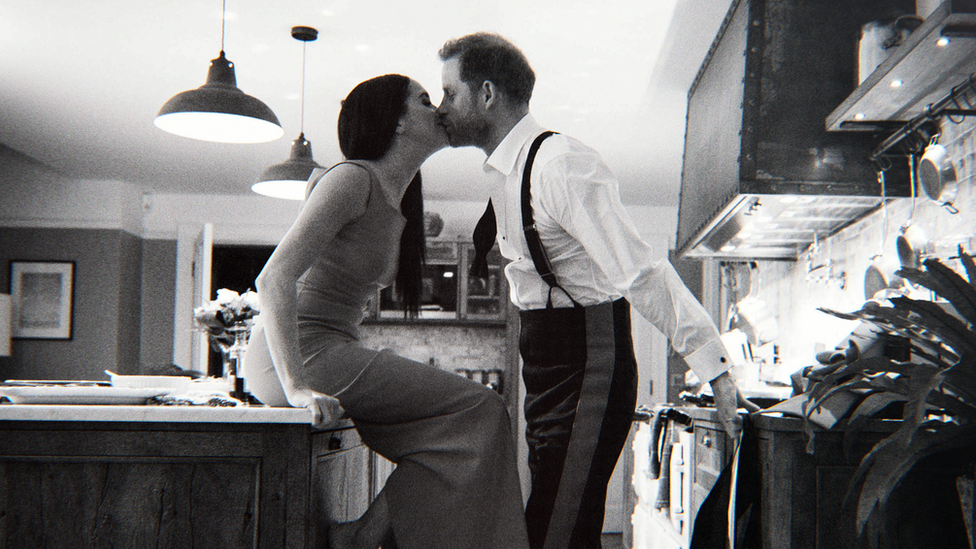
Yet the series revealed that Harry and Meghan had been documenting their lives from the very moment everything began to unravel in early 2020.
Viewers saw Harry filming himself before boarding what he famously called his “freedom flight” to Canada.
They saw Meghan recording herself crying, alone, as the pressure mounted.
To many commentators, this raised an unsettling question: were they so fearful and paranoid about events unfolding around them that they felt compelled to record everything—or were they already thinking about how this footage might one day be used?
The couple has repeatedly insisted that they never planned to leave the royal family entirely, claiming they hoped to carve out a partial role.
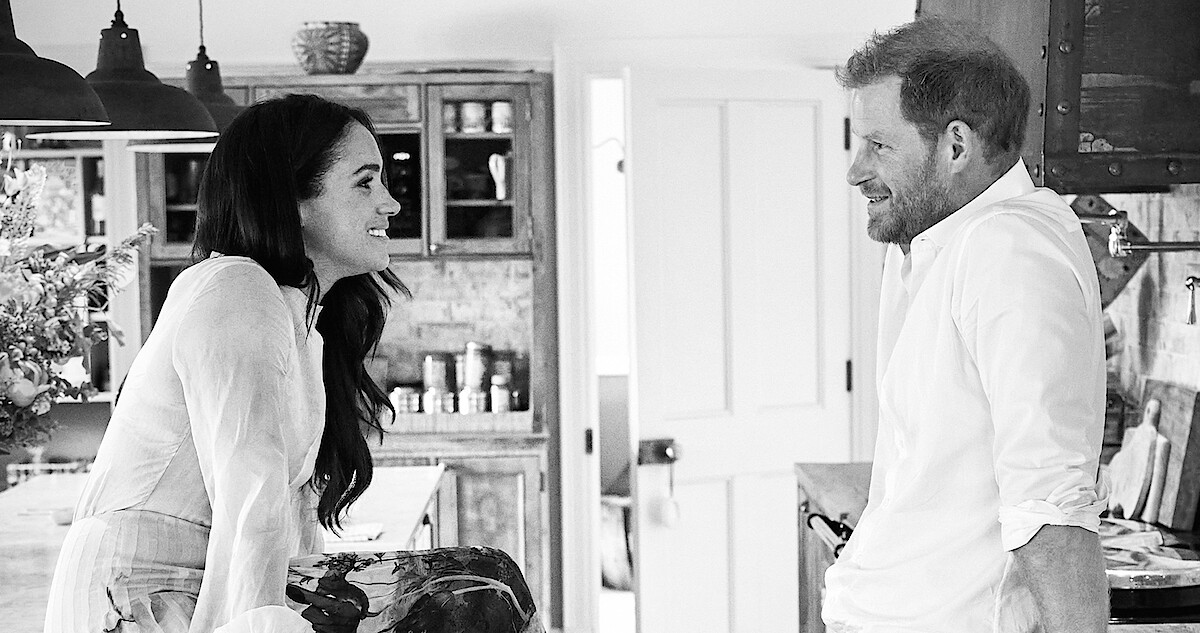
Yet that explanation sits uneasily alongside the existence of a meticulously filmed archive that would later underpin a lucrative Netflix deal.
It created the impression, fair or not, that the endgame may have been forming long before the final decision was announced.
The documentary also crossed a line that the royal family had never crossed before: airing intensely private family moments.
Text messages between brothers, emotional reactions to arguments, and deeply personal conversations were laid bare for a global audience.
In one scene, Harry receives a message from Prince William.
Meghan gently reminds him, “He’s your brother.”
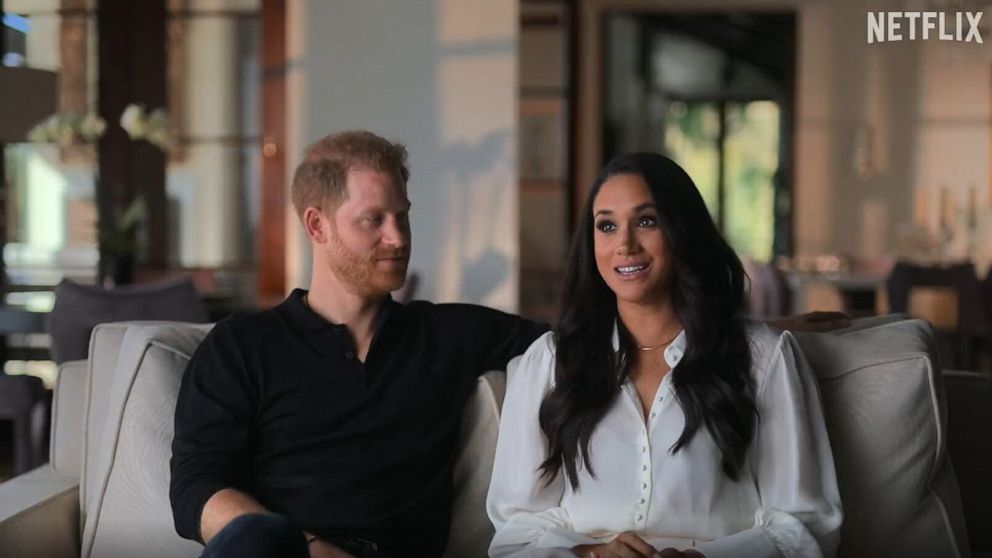
Moments like this were unprecedented—and deeply uncomfortable.
But no single clip caused as much backlash as Meghan’s now-infamous curtsy scene.
Recounting her first meeting with Queen Elizabeth II, Meghan performed an exaggerated, theatrical bow, likening royal protocol to an American medieval-themed dinner show.
The reaction was immediate and brutal.
Critics called it cringeworthy, tone-deaf, and disrespectful.

For many in Britain, this moment was unforgivable.
Whatever criticisms might be leveled at the insтιтution, the late Queen remained a figure of profound respect.
The curtsy appeared to mock not only the monarchy, but Harry’s grandmother herself.
Even Harry’s facial expression during the scene suggested discomfort, as if he knew instantly how badly it would land.
What made the moment even more damaging was its contradiction of the couple’s broader message.

Throughout the series, Harry and Meghan stressed that their criticisms were aimed at “the insтιтution,” not the Queen personally.
Yet as head of that insтιтution, Elizabeth II could not be separated from it.
To critics, the curtsy undermined claims of respect and exposed a disconnect between intent and impact.
Beyond the spectacle, the documentary was meant to signal a new chapter—freedom, independence, and life beyond royal constraints.
Instead, much of the series remained anchored in the past.

Allegations of racism, failures around mental health support, and tensions with Prince William dominated the narrative.
Brexit, tabloid culture, and Meghan’s treatment by the press were woven into a sweeping indictment of Britain itself.
Some observers felt this was a missed opportunity.
American audiences, in particular, tend to favor redemption arcs—stories of reinvention and optimism.
Yet Harry & Meghan often felt like a continuation of unresolved grievances, following closely on the heels of the Oprah interview and preceding Harry’s memoir Spare.
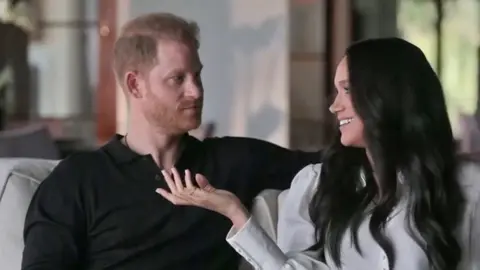
Rather than moving forward, the couple appeared to fire all their emotional ammunition at once.
Commercially, the gamble paid off.
The documentary was a global hit and delivered exactly what Netflix wanted: drama, intimacy, and headlines.
But the long-term cost may be far higher.
Since 2022, Harry and Meghan have struggled to replicate that level of engagement.
Critics argue they “poisoned the well,” revealing too much, too fast, and leaving little mystery—or goodwill—behind.

Perhaps the most lasting damage has been personal.
Harry has spoken publicly about wanting reconciliation with his father and brother.
Yet trust, once broken, is difficult to rebuild—especially when private family conflicts have been turned into permanent, monetized content.
From Prince William’s perspective, the fear remains that any conversation could one day become episode material.
In the end, Harry & Meghan was undeniably compelling television.
Even its harshest critics admit it was gripping, emotional, and impossible to ignore.
But entertainment value does not erase consequences.
Years later, the documentary still shadows every attempt at reconciliation, every new project, and every claim to privacy.
The cameras captured everything—but they may also have captured the moment the door quietly closed behind them.


