Pope Francis: The Final Days, The Prophecies, and The Future of the Catholic Church
The world watched with hope as Pope Francis made his last public appearance on Easter Sunday, April 20, 2025. Smiling and waving from his wheelchair, he blessed the faithful gathered in St. Peter’s Square, showing a spirit undimmed by the severe health challenges that had shadowed his final years. Yet, behind the scenes, Vatican insiders reveal that warnings about his worsening condition had been raised but went largely unheeded. His pᴀssing the very next day plunged the global Catholic community into grief—and reignited ancient questions about the fate of the papacy itself.
Born Jorge Mario Bergoglio on December 17, 1936, in Buenos Aires, Argentina, Pope Francis was the son of Italian immigrants. Known for his humility and devotion, he chose simplicity over grandeur, living modestly and riding public transportation even as pope. His papacy, beginning in 2013, marked a historic shift: the first Jesuit pope, the first from the Americas, and the first non-European leader in over 1,200 years.

Francis championed mercy, social justice, and environmental stewardship. His 2015 encyclical Laudato Si’ urged care for the planet, while his outreach to marginalized groups—including the LGBTQ+ community—signaled a more inclusive tone for the Church. His famous phrase, “Who am I to judge?” captured the spirit of compᴀssion that defined his leadership.
However, his tenure was not without controversy. Conservative factions within the Church resisted some of his reforms, and critics argued he did not adequately address clerical abuse scandals. Still, Francis remained a moral beacon on the world stage, engaging with leaders and refugees alike, advocating peace and dignity.
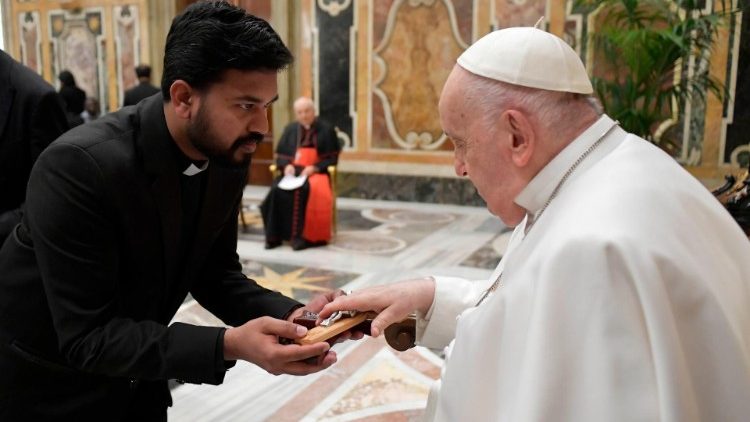
In his later years, Pope Francis faced serious health issues. A lung infection in youth left lasting damage, and by the 2020s, respiratory problems, sciatica, and surgeries increasingly limited his mobility. His hospitalization in early 2025 for bilateral pneumonia was a critical moment. For weeks, the Vatican provided cautious updates as the pope battled life-threatening complications, including kidney problems. Despite moments of improvement, his condition remained fragile.
The day before his death, his public appearance gave many hope. But on April 21, 2025, the Vatican announced he had died peacefully at Casa Santa Marta. The news sent shockwaves worldwide. Leaders and laypeople mourned a pope who had become a symbol of hope and reform.

Amid the grief, whispers of ancient prophecies resurfaced. Nostradamus, the 16th-century French seer, and St. Malachy, the 12th-century Irish archbishop, both left cryptic predictions that some interpret as foretelling Pope Francis’s death and the coming of a final pope.
Nostradamus’s quatrains speak of a “foreign pope,” an “old pope,” and a mysterious “black pope” who would preside over tumultuous times. Many see Pope Benedict XVI as the foreign pope, Francis as the old pope, and speculate that the next leader—possibly from Africa—could be the black pope, signaling a dramatic new chapter.
St. Malachy’s prophecy lists 112 popes, each described in brief Latin phrases. The 111th is linked to Francis, while the 112th, “Peter the Roman,” is said to guide the Church through its ultimate trials, possibly heralding the end of the papacy.
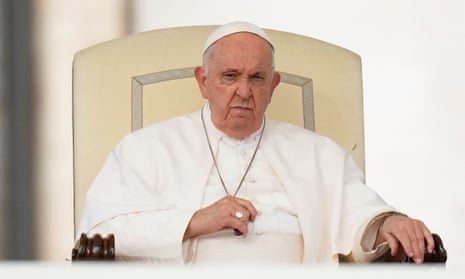
While scholars caution that these prophecies are vague and open to interpretation, believers find meaning in the timing and sequence of recent events. With 33 African cardinals eligible to vote in the next conclave, the possibility of an African pope looms large—adding weight to the prophetic speculation.
The Church now stands at a crossroads. The death of Pope Francis closes a historic chapter, but the future remains uncertain. Will the next pope continue Francis’s path of mercy and reform, or will a new era of upheaval begin?
As millions pray and watch, the legacy of Pope Francis endures—a testament to faith, humility, and the complex dance between tradition and change.


