Justin Baldoni THEORY Could Be a Big Winner – Did They Trap Blake Lively?!
In the age of viral outrage, digital footprints, and instant judgment, legal battles no longer play out solely inside courtrooms.
They unfold online—across Reddit threads, Wikipedia edits, anonymous tips, and media narratives that shape public perception long before a judge weighs in.
That reality sits at the heart of a rapidly spreading theory surrounding Justin Baldoni and Blake Lively: that Baldoni’s team may have intentionally stayed quiet while an alleged smear narrative grew louder, all to document it in real time.
This theory, emphasized in recent online commentary and dissected across social platforms, does not claim proven wrongdoing.
Instead, it suggests a calculated legal approach—one rooted in restraint rather than retaliation.
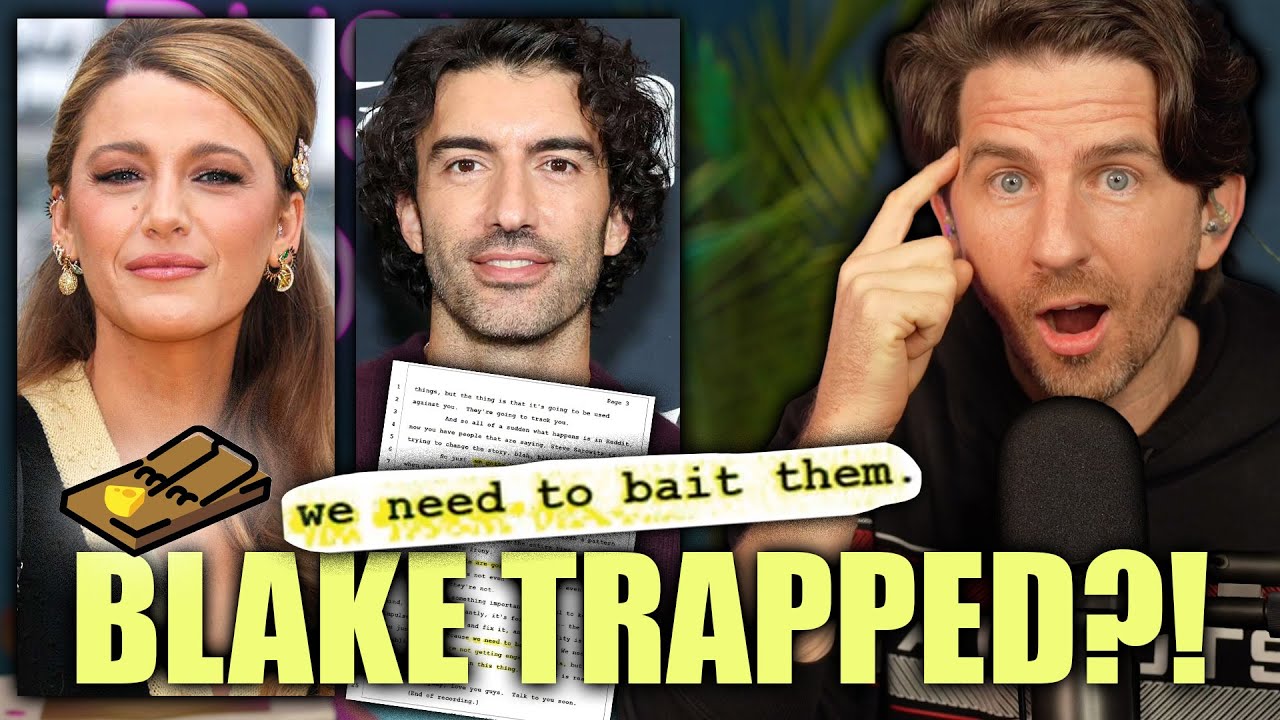
According to the theory, Baldoni’s camp resisted the natural impulse to push back publicly.
Rather than correcting headlines, disputing online claims, or editing digital records, they allegedly chose to observe.
The idea is simple but risky: every digital action leaves a timestamp.
Every edit, post, or planted story creates a trail.
By doing nothing, Baldoni’s team could later argue they neither initiated nor participated in any coordinated smear effort.
Supporters of the theory point to alleged monitoring efforts rather than engagement.

Monitoring, they argue, is not manipulation—it’s documentation.
If true, this approach would allow legal teams to later present patterns rather than isolated incidents, which courts tend to find more persuasive.
What gives this idea oxygen is a basic question many observers keep asking: Why would Justin Baldoni sabotage a film he directed and financially depended on—especially one starring Blake Lively? From a strategic standpoint, initiating a smear against the film’s lead actress would seem self-defeating.
That question fuels speculation that Baldoni’s side may have believed time—and the internet—would do the work for them.
In this framing, the longer they stayed silent, the clearer any alleged patterns would become.

Wikipedia, Reddit, and online media play an outsized role in shaping reputations.
The theory highlights how difficult it can be for public figures to correct misinformation without appearing reactive or manipulative.
On platforms like Wikipedia, even legitimate edits can backfire if flagged as “conflicted,” leaving original narratives untouched while scrutiny intensifies.
In this context, silence could be interpreted not as surrender, but as discipline.
Of course, this strategy—if it exists—comes with enormous risk.

Public perception hardens quickly.
Online narratives can become “truth” long before facts are tested.
By staying quiet, Baldoni’s team may have allowed reputational damage to spread unchecked.
Critics of the theory argue that ᴀssuming control through inaction is a gamble that only works if concrete evidence later emerges.
Without verified forensic data, subpoenas, or court findings, the strategy remains speculative—and potentially dangerous.
:max_bytes(150000):strip_icc()/blake-lively-justin-baldoni-feud-timeline-split-020425-2c797f9ad2ad4f91ba7f0041ed941675.jpg)
It’s critical to draw clear lines.
This theory does not prove that Blake Lively orchestrated a smear campaign.
It does not establish innocence or guilt on either side.
And it does not replace the role of courts, evidence, or due process.
What it does reflect is how modern legal conflicts now intersect with digital ecosystems.
Silence, engagement, and even timing have become tactical decisions, not just PR choices.
If this theory holds any truth, the real reveal wouldn’t happen on social media—it would happen in court, through forensic timelines, documented communications, and sworn testimony.
Until then, everything remains interpretation layered atop interpretation.
For now, one thing is certain: in a world where every click leaves a trace, sometimes the loudest move may be choosing not to make one at all.


