“Homes Swept Away in Brazil’s Minas Gerais After Relentless Rains”
Torrential rains have unleashed catastrophic flooding and landslides across parts of Minas Gerais, leaving neighborhoods submerged, homes reduced to rubble, and thousands of residents displaced.
Authorities describe the situation as one of the most severe weather emergencies to hit the region in recent years.
The crisis began after days of relentless rainfall saturated already fragile hillsides.
Rivers overflowed rapidly, transforming streets into fast-moving channels of muddy water.
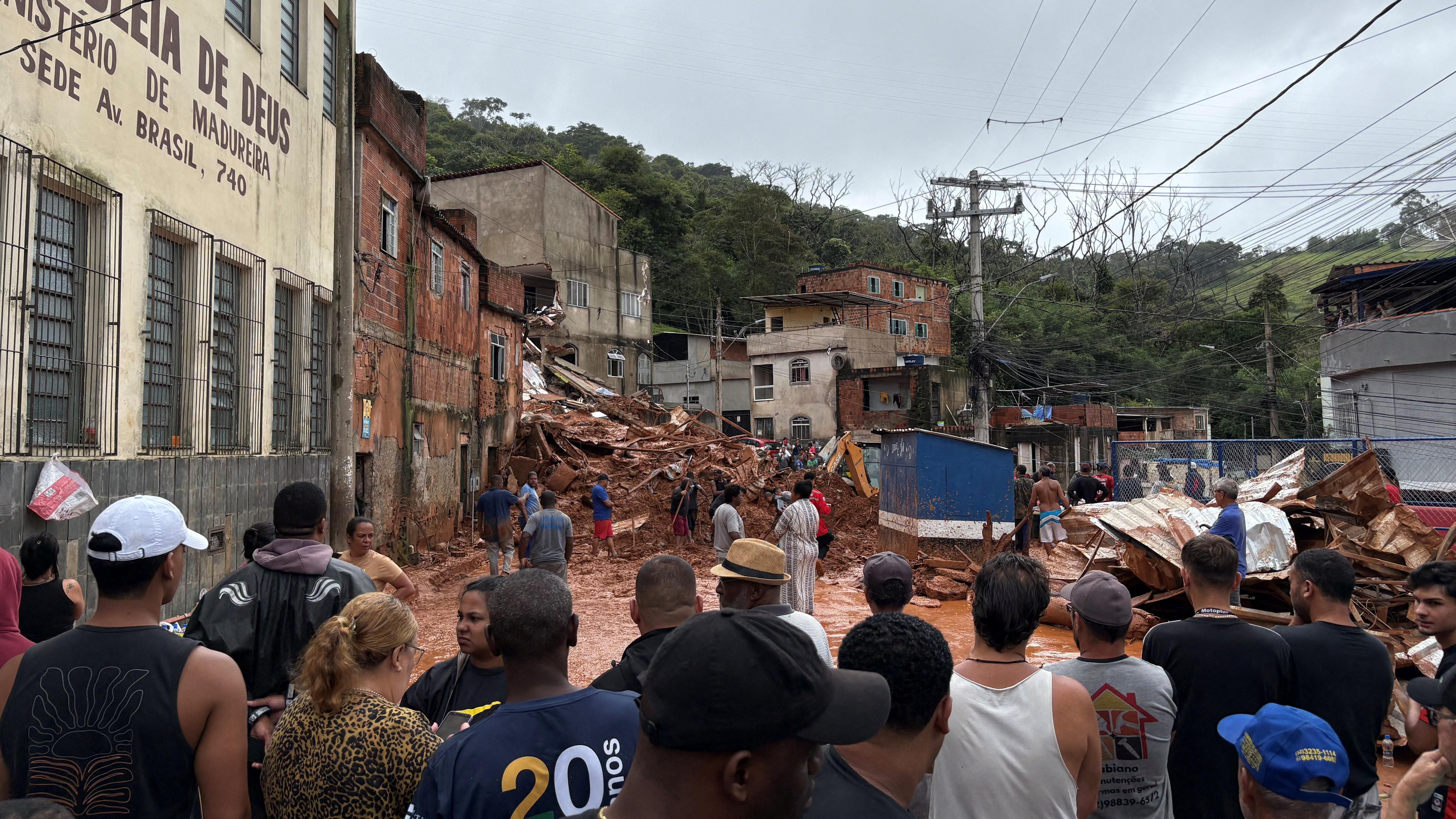
In hillside communities, the soaked earth gave way without warning, triggering landslides that tore through houses in the early hours of the morning.
Emergency services were overwhelmed with calls for help as residents scrambled to escape rising water levels.
In several municipalities, families climbed onto rooftops awaiting rescue while others fled through waist-deep water carrying children and essential belongings.
Civil defense teams deployed boats and heavy equipment to extract those trapped in flooded areas.
Local officials confirmed multiple fatalities and warned that the number could rise as search-and-rescue operations continue.
Firefighters and volunteer responders are combing through debris piles where entire structures collapsed under the force of sliding mud.
In some districts, roads have been cut off entirely, complicating access for emergency crews.
The hardest-hit zones include smaller towns and semi-urban neighborhoods built along riverbanks and steep slopes.
Experts say a combination of unplanned urban expansion and deforestation has heightened vulnerability to extreme weather events.
When heavy rains strike, unstable soil and insufficient drainage systems can accelerate disaster conditions.
Authorities in Brazil have declared states of emergency in multiple municipalities, unlocking federal resources for relief and reconstruction.
Temporary shelters have been established in schools and community centers to house displaced families.
Volunteers are distributing food, water, blankets, and hygiene supplies as relief convoys move into affected areas.
Meteorologists report that a persistent weather system stalled over southeastern Brazil, funneling intense rainfall into Minas Gerais over a short period.
The accumulated precipitation overwhelmed natural waterways and urban drainage networks, leading to flash floods in low-lying neighborhoods.
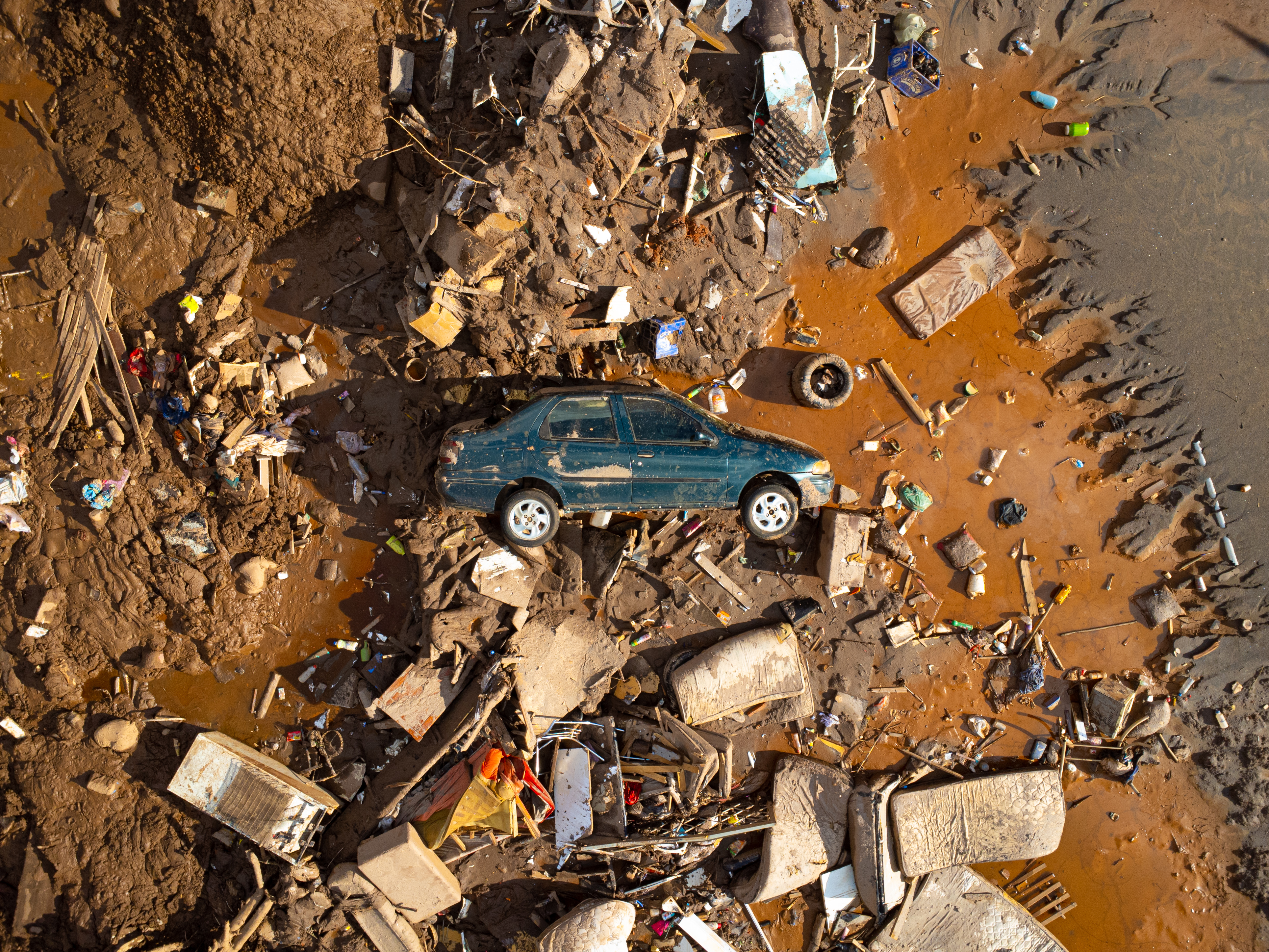
Images from the disaster zones show vehicles half-submerged, bridges damaged or washed out, and thick layers of mud coating once-busy streets.
In hillside regions, large scars of exposed earth mark where landslides sheared away sections of terrain, carrying buildings and trees downhill.

Public infrastructure has suffered significant damage.
Power outages were reported in several municipalities as utility lines were downed.
Water treatment facilities faced contamination risks due to debris and overflow.
Authorities urged residents to avoid contact with floodwaters because of potential health hazards.
Community members described scenes of chaos as alarms and sirens echoed through the night.
“We heard a loud rumble, and within seconds the hillside collapsed,” said one resident whose home was destroyed.
“There was no time to grab anything.”
Rescue operations remain ongoing, with search teams using trained dogs and specialized equipment to detect survivors beneath rubble.
Helicopters have been deployed to survey inaccessible areas and coordinate relief efforts from above.
Environmental specialists warn that extreme rainfall events are becoming more frequent and intense in parts of Brazil, amplifying the risk of flash floods and landslides.
Urban planning challenges, including informal settlements on unstable slopes, can increase exposure during severe weather.
Government officials pledged swift support for rebuilding efforts once immediate rescue operations conclude.
Engineers are ᴀssessing structural damage to roads, bridges, and public buildings to determine the scale of reconstruction required.
Meanwhile, weather forecasts suggest that intermittent rain may continue in some areas, raising concerns about additional landslides in already weakened terrain.
Authorities are advising residents in high-risk zones to remain vigilant and follow evacuation orders if issued.
Humanitarian organizations are coordinating with local governments to deliver emergency aid.
Donations of essential goods are being collected in nearby cities, and volunteers are mobilizing to ᴀssist families who lost homes and possessions.
The emotional toll is palpable.
Families sift through debris searching for salvageable items, while others wait anxiously for updates on missing loved ones.
Counselors and social workers have been deployed to provide psychological support to those traumatized by the sudden destruction.
As floodwaters gradually recede in some districts, the full extent of the devastation is becoming clearer.
Entire blocks stand buried in mud, and reconstruction could take months or even years.
The economic impact will likely be significant, affecting small businesses, agriculture, and local industries.
For now, the priority remains saving lives and ensuring displaced residents have safe shelter.
The unfolding disaster in Minas Gerais underscores the vulnerability of communities facing extreme weather and the urgent need for resilient infrastructure and environmental management.
What began as heavy rain has escalated into a humanitarian crisis—one that has reshaped landscapes and left thousands confronting an uncertain path forward.


