There has never been a single, universally agreed-upon Bible.
That statement unsettles many believers, not because it is scandalous, but because it disrupts a quiet ᴀssumption. The Protestant canon contains 66 books. The Catholic canon holds 73. Eastern Orthodox traditions include several more. Yet the Ethiopian Orthodox Tewahedo Church, one of the oldest continuous Christian bodies in the world, recognizes 81 books as Scripture. In their tradition, texts long absent from Western Bibles were never removed, never hidden, never rediscovered. They were simply preserved.
Ethiopia’s connection to early Christianity is not marginal. The Book of Acts recounts the baptism of an Ethiopian court official by the Apostle Philip. By the fourth century, the Axumite Empire had declared Christianity its official religion, making it one of the earliest Christian kingdoms in history. Around that same era, biblical texts were translated into Ge’ez, a Semitic language that remains the liturgical tongue of the Ethiopian Church. When those translations were made, they included writings that later Western councils would leave aside.
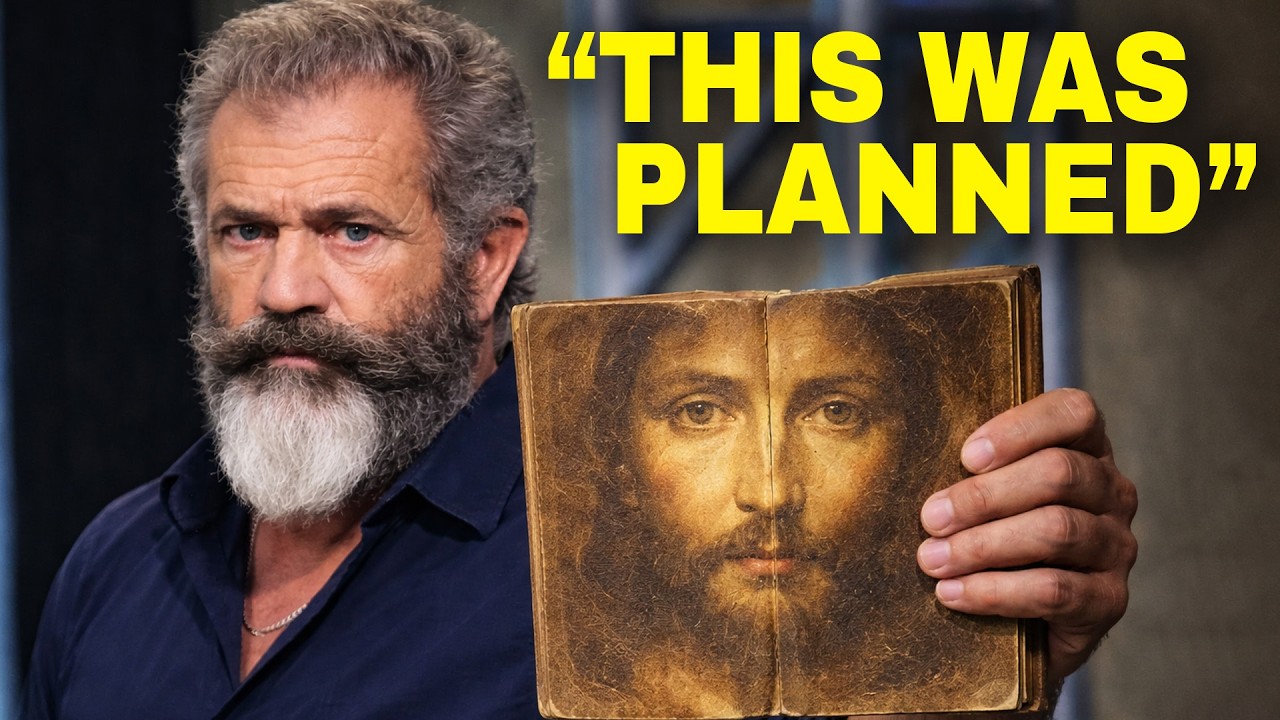
Among them stands the Book of Enoch.
Genesis gives Enoch only a pᴀssing mention: he “walked with God, and he was not, for God took him.” A mysterious disappearance, seven generations from Adam. Yet First Enoch, preserved completely only in Ge’ez for centuries, expands that silence into a sweeping cosmic drama. It describes fallen angels known as the Watchers descending to earth, teaching forbidden knowledge, and fathering the Nephilim—giants who devastate humanity. It recounts Enoch’s ascent through heavenly realms, his vision of divine judgment, and his encounter with a pre-existent figure called the “Son of Man.”
That тιтle should sound familiar.

In the Gospels, Jesus refers to Himself as the Son of Man more than any other designation. In Enoch’s visions, the Son of Man is enthroned in glory, hidden before creation, revealed at the end of days to judge kings and nations. The parallels are striking. The Epistle of Jude in the New Testament directly quotes from First Enoch, attributing prophecy to “Enoch, the seventh from Adam.” Early Christian writers such as Tertullian treated the text with reverence. Others were cautious. Over centuries of debate, as Western canon lists solidified, Enoch fell outside the boundaries of accepted Scripture.
Then, in 1947, fragments of First Enoch were discovered among the ᴅᴇᴀᴅ Sea Scrolls at Qumran. Aramaic copies dating centuries before Christ confirmed that the text was not a medieval curiosity but part of Jewish theological discourse in the period just before the birth of Jesus. Enoch had shaped the imaginative and theological vocabulary of the world into which Christianity emerged.

Ethiopia had never let it go.
The Book of Jubilees, sometimes called “Little Genesis,” also remains within the Ethiopian canon. It retells the narratives of Genesis and Exodus as revelations dictated by an angel to Moses, expanding on covenants, sacred calendars, and the unseen spiritual dimensions of history. The Ascension of Isaiah offers an even more astonishing vision: a prophet taken upward through seven heavens, witnessing angelic hierarchies and cosmic conflict, and beholding a divine figure who descends through each heavenly layer in disguise before being born, suffering, dying, and ascending again in unveiled glory.
This is not the restrained narrative style of the four Gospels. It is cosmic theology rendered in visionary form.

In the Ascension, resurrection is not merely a return from death; it is a reclamation of the universe. The Beloved descends through layered realities, unrecognized, then ascends triumphantly as every realm acknowledges His authority. It is a story that magnifies the crucifixion and resurrection into an event that reverberates across dimensions.
Such texts were known in early Christian centuries. Church fathers referenced them. But canon formation was not a single moment of decree. It was gradual, complex, and influenced by geography, language, theological priorities, and insтιтutional authority. Lists circulated. Debates unfolded. Regional councils affirmed collections. By the late fourth century, the 27-book New Testament familiar today had gained broad recognition in the Western Church. Yet this recognition was never absolutely universal. The Syrian Church, the Armenian tradition, and the Ethiopian Church each preserved distinct trajectories.

In the highlands of Tigray, isolation became preservation.
Monasteries such as Debre Damo, perched atop sheer cliffs accessible only by rope, maintained manuscript traditions for over 1,500 years. Monks copied texts onto parchment prepared from goatskin, using methods unchanged across centuries. While wars reshaped empires and libraries burned elsewhere, Ethiopian communities continued reading, preaching, and transmitting these broader scriptural collections.
Scholars estimate that hundreds of thousands of Christian manuscripts remain scattered across Ethiopian churches and monasteries, many uncatalogued. The Garima Gospels, radiocarbon dated to between the fourth and sixth centuries, may be among the oldest surviving complete illuminated Christian manuscripts in existence. Their survival owes less to climate-controlled vaults than to generations of careful hands turning pages in prayer.

Recent conflict in the Tigray region has endangered this heritage. Reports of looted manuscripts and damaged monasteries underscore how fragile such preservation can be. Yet even amid instability, the Ethiopian Church continues its liturgical life, reading from texts that much of the Western world has forgotten.
Into this context steps modern culture.
Mel Gibson’s 2004 film The Pᴀssion of the Christ demonstrated that audiences would engage with a raw, unflinching portrayal of the crucifixion. Discussions of a sequel centered on the resurrection have included hints of exploring what occurred between death and rising—what ancient creeds describe as Christ’s descent into the realm of the ᴅᴇᴀᴅ. Such themes resonate strongly with the cosmic descent traditions found in texts like the Ascension of Isaiah and echoed in centuries of Christian imagination from early apocrypha to medieval epics.

If mainstream cinema were to visualize Christ moving through layered heavens and shadowed realms, confronting powers and ascending in unveiled authority, viewers might find themselves encountering theological ideas older than the canon they know. The visual language would be dramatic—angels of overwhelming strangeness, realms of escalating light and terror, a universe trembling at divine pᴀssage.
Yet beyond spectacle lies a deeper question.
What kind of Christianity might have developed had texts like Enoch and the Ascension of Isaiah remained central across all traditions? Would believers speak more readily of cosmic warfare, angelic hierarchies, and multidimensional redemption? Or would such imagery have complicated doctrinal clarity?

The formation of the canon was not conspiracy but discernment shaped by context. Criteria such as apostolic connection, doctrinal coherence, and widespread usage guided decisions. Communities prioritized unity and stability in the face of divergent teachings. But history inevitably amplifies some voices while others grow quiet.
Ethiopia did not experience the same narrowing. Its Church preserved a broader inheritance, not as a challenge to other Christians, but as continuity within its own story. For Ethiopian believers, these books are not lost scriptures resurfacing in defiance. They are living texts, woven into liturgy and devotion.
:max_bytes(150000):strip_icc():focal(750x266:752x268)/mel-gibson-milo-lucia-lars-123025-30216f007b684429a0b8372896b4cbba.jpg)
We often ᴀssume that in the digital age nothing remains hidden. Yet entire theological landscapes have existed beyond the horizon of Western awareness. When fragments of Enoch surfaced in desert caves, they did not introduce something new; they confirmed something ancient. When scholars examine Ethiopian manuscripts, they are not uncovering inventions but rediscovering continuity.
The real tension is not whether these texts survived. They did.
The tension lies in whether modern readers—accustomed to a defined canon—can engage with the broader imaginative universe of early Christianity without fear. To encounter Enoch’s Watchers or Isaiah’s seven heavens is not to abandon the Gospels. It is to glimpse the wider symbolic world from which the Gospels emerged.
:max_bytes(150000):strip_icc():focal(749x0:751x2)/mel-gibson-jim-caviezel-passion-of-the-christ-011025-b56ede5f38984f29a55e61b745af7d8f.jpg)
Perhaps the most unsettling realization is this: what feels like hidden knowledge may simply be unfamiliar inheritance. The Ethiopian highlands remind us that Christianity was never culturally or geographically singular. It spread across languages and landscapes, carrying texts with it, sometimes leaving them behind in one place while safeguarding them in another.
If renewed interest—through scholarship, film, or simple curiosity—draws global attention to these ancient writings, the question will not be whether they should replace the Bible people know. The question will be whether readers are prepared to wrestle with a Christianity that once imagined the cosmos as layered, alive, and charged with spiritual drama.
:max_bytes(150000):strip_icc():focal(1089x315:1091x317)/Passion-of-The-Christ-Jim-Caviezel-Mel-Gibson-arrives-for-the-Art-of-Elysiums-12th-annual-Gala-032625-434f07310ff8457aa868b30bf925a382.jpg)
The books were not erased. They were read in another language, on another mountain, by another community that never ᴀssumed history flowed only through Rome or Wittenberg.
And now that the wider world is beginning to look again, the issue is no longer preservation.
It is recognition.


