Anointed or Authentic? The Hard Truth Behind Bishop S.Y. Younger’s Father’s Rebuke
In a world where viral praise breaks and prophetic declarations often define spiritual visibility, Bishop S.Y. Younger shared a story that cut straight through the noise. It was not a tale of miracles or dramatic revival. Instead, it centered on a simple yet piercing rebuke delivered by his Southern Baptist father during a church service.
While others were caught up in a moment of exuberant worship, a family member urged his father to join the dance. His response was immediate and disarming: “Well, you need to stop letting your boyfriend stay at your house. That’s what I’m looking at.”
The room may have been moving, but his father was watching something deeper.
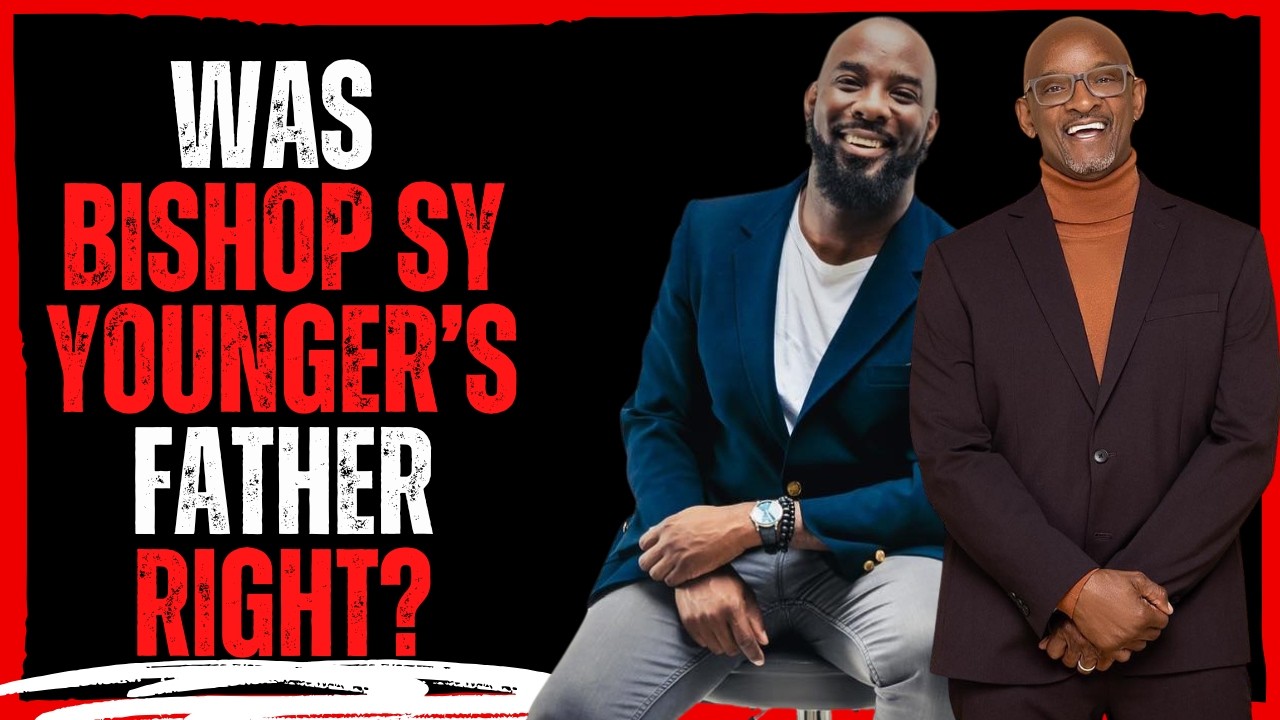
That statement has since ignited discussion: Was Bishop Younger’s father right?
To understand the weight of the moment, one must first understand the tension it exposed. Younger describes his father as a man who genuinely loves the Lord but expresses his faith differently. Rooted in the Southern Baptist tradition, he is less animated in worship and more attentive to preaching. While others may shout and run, he listens carefully to what is being said—and even more carefully to how people are living.

The contrast is not about denominational preference. It is about substance versus display.
Younger used the story to confront a modern spiritual dilemma: the elevation of outward expression above inward transformation. Churches today can overflow with prophetic words, tongues, and visible anointing. But the pressing question remains—has there been a real encounter with God that produces holiness?
“People want to know if you really had an experience,” Younger emphasizes. “Show me that in your living. Show me that in your consecration.”

It is a message that challenges both charismatic and traditional believers alike. Emotional worship is not wrong. Pᴀssionate praise is not condemned. But when spiritual display becomes disconnected from personal integrity, something has gone terribly wrong.
The bishop went further, offering what he called “lessons Satan taught me.” It is possible, he warned, to start well and lose purity along the way. Leaders especially face this danger. When frustration with people replaces compᴀssion, when language toward the ᴀssignment becomes cynical, when condescension replaces mentorship—that is the moment to “pull yourself in.”
Leadership, he argues, comes with heightened responsibility.

Visionaries see what others do not. They carry burdens others may never fully grasp. But that insight is not permission to belittle those who are still growing. Instead of creating barriers, leaders are called to impart vision patiently until others catch it.
Perhaps the most sobering point Younger made was this: anointing and integrity are not the same thing.
“Don’t just be anointed,” he declared. “Be a person of integrity.”
He acknowledged knowing individuals undeniably gifted by God—powerful, effective, even miraculous—yet lacking trustworthiness. The oil rested on their head, but it never matured their character. Their gift opened doors, but their integrity could not sustain influence.
This is not a new tension. Scripture itself speaks to it. The Apostle Paul, Younger reminded the congregation, experienced profound revelations—mysteries he was forbidden to share. To guard him against arrogance, a “thorn in the flesh” was allowed. The revelation was real, but so was the risk of pride.
Spiritual experience, then, is not a badge of superiority. It is a call to humility.
Younger challenged believers who have been exposed to deeper teaching and richer revelation. There are Christians, he noted, who remain in spiritual infancy not by choice but by cultural limitation. They receive “milk” because that is all their environment provides. But for those who have tasted what he called “the epicurean cuisine of God’s Word,” the responsibility is greater.

To whom much is given, much is required.
You cannot encounter glory and then live casually. You cannot shout on Sunday and disregard holiness on Monday. Exposure to truth increases accountability.
This is where his father’s rebuke resurfaces in sharp focus. The issue was not dancing. It was consistency. It was the dissonance between public praise and private compromise.
Holiness, Younger explained, also eliminates unnecessary secrecy. Whispering, manipulation, and divided loyalties fracture churches. Integrity means speaking truth openly—even when uncomfortable.

It means refusing to perform spirituality while hiding behavior that contradicts it.
In today’s culture, authenticity is often confused with vulnerability alone. But biblical authenticity demands alignment—speech, worship, leadership, and lifestyle harmonized under the same standard.
So, was Bishop S.Y. Younger’s father right?
If the goal of faith is transformation rather than performance, then yes—his father was guarding something sacred. He was reminding the church that emotion without obedience is incomplete. He was insisting that worship must be reflected in character.

The story ultimately is not about a Southern Baptist father resisting a praise break.
It is about a timeless spiritual principle: God is not impressed by volume if there is no virtue.
Anointing may draw attention. Integrity sustains legacy.
In an era where visibility can be mistaken for validation, Bishop Younger’s message is both corrective and necessary.

Dance if you must. Shout if you feel led. But let your life testify louder than your praise.
Because at the end of the day, the question is not how high you jumped in worship.
It is how straight you walked afterward.


