Historic Flood Disaster Strikes Portugal, Infrastructure Crumbles Amid Relentless Storms
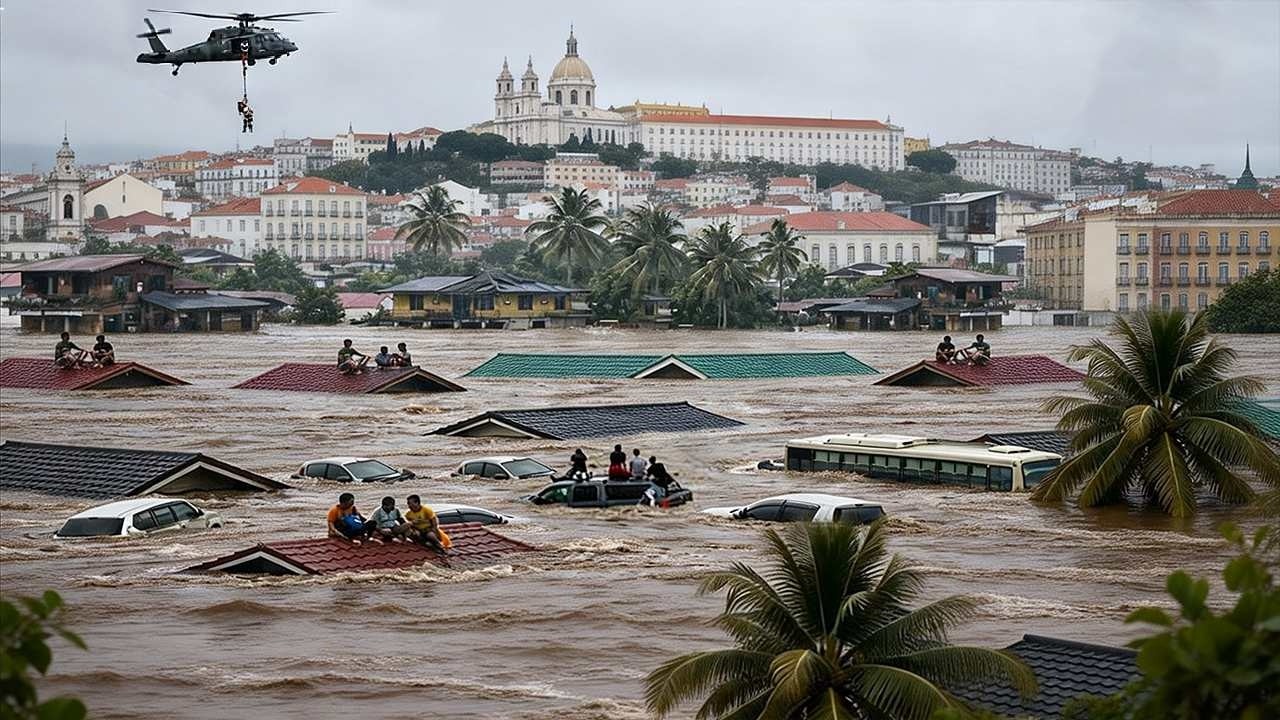
Portugal is facing one of the most severe flooding disasters in recent memory, as relentless torrential rains have overwhelmed drainage systems, collapsed highways, and left entire neighborhoods submerged under murky, fast-rising waters.
What began as an intense weather system quickly escalated into a national emergency, disrupting transportation, displacing families, and testing the limits of infrastructure across multiple regions.
Meteorological agencies had warned of heavy rainfall, but few anticipated the sheer volume that would fall within such a short period.
Rivers swelled beyond their banks, reservoirs filled to critical levels, and flash floods surged through urban streets with alarming speed.
In some areas, water levels rose within minutes, catching residents off guard and forcing emergency evacuations.
Several major highways were partially destroyed as floodwaters eroded their foundations.
Sections of roadway gave way, leaving deep fractures and collapsed spans that cut off key transport routes.
Authorities closed dozens of roads as a precaution, warning drivers to avoid travel unless absolutely necessary.
Rail services were also disrupted, with tracks submerged or damaged by debris carried downstream.
In cities hardest hit by the deluge, vehicles floated helplessly through streets transformed into rivers.
Underground parking garages filled rapidly, trapping cars and forcing emergency crews to conduct rescues.
Emergency responders deployed boats in neighborhoods where ground-level access was no longer possible.
Local officials described the event as “unprecedented in intensity.”
Drainage systems, many built decades ago, were unable to handle the extraordinary rainfall rates.
Water backed up through sewers and storm drains, flooding homes from below even as rain continued to pour from above.
Power outages compounded the crisis, leaving thousands without electricity as utility crews worked to secure damaged infrastructure.
Emergency services have been operating around the clock.
Firefighters, civil protection units, and volunteer responders coordinated rescues of stranded residents, particularly the elderly and those with limited mobility.

Temporary shelters were opened in schools and community centers to accommodate displaced families.
Authorities have urged caution, emphasizing that floodwaters can conceal dangerous hazards such as submerged debris, open manholes, and unstable ground.
Public advisories stressed avoiding unnecessary travel and staying informed through official communication channels.
Economic impacts are already becoming apparent.
Small businesses in flooded districts face extensive property damage, while agricultural areas report crop losses due to waterlogged fields.
Insurance claims are expected to surge as ᴀssessments begin once waters recede.
Climate experts note that extreme weather events are becoming more frequent and intense in parts of Southern Europe.
Warmer atmospheric conditions can hold more moisture, increasing the potential for heavy rainfall episodes.
While individual storms cannot be attributed solely to broader climate trends without detailed analysis, scientists caution that infrastructure resilience must adapt to evolving risks.
Government officials have pledged rapid ᴀssistance and recovery support.
National emergency funds are being mobilized, and damage ᴀssessments are underway to determine the scale of reconstruction needed.
Engineers are inspecting bridges and roadways to ensure structural safety before reopening major routes.

Residents describe scenes of both devastation and solidarity.
Neighbors formed human chains to move belongings to higher ground, while local businesses provided food and supplies to evacuees.
Volunteers arrived with sandbags in an effort to reinforce vulnerable entry points.
As rainfall begins to ease in some areas, authorities warn that risks remain.
Saturated soil increases the potential for landslides, and river levels may stay elevated for days.
Cleanup operations will require careful coordination to restore utilities, clear debris, and repair damaged infrastructure.
For now, Portugal stands in the midst of a challenging recovery effort.
The immediate priority remains public safety — ensuring that those displaced are sheltered and that critical services are restored.
Beyond the immediate response lies the longer-term task of rebuilding highways, reinforcing flood defenses, and reᴀssessing preparedness strategies for future extreme weather events.
The images emerging from submerged streets and fractured highways serve as a stark reminder of nature’s force.
As communities begin the slow process of recovery, the focus shifts from survival to rebuilding — with resilience and preparedness at the forefront of national conversation.


