R/V Petrel: From Legendary Deep-Sea Discoveries to a Shocking Drydock Accident in Scotland
The research vessel Petrel has long been considered a rock star in the world of underwater archaeology.
Since 2016, it has roamed the world’s oceans, diving deeper than almost any privately operated exploration ship in history.
Built in 2003 as the offshore support vessel Seaway Petrel, it was purchased and transformed by Microsoft co-founder Paul Allen into a state-of-the-art deep-sea exploration platform capable of operating at depths of nearly 6,000 meters—close to 20,000 feet.
But in early reports out of Edinburgh, Scotland, the ship made headlines for an entirely different reason.

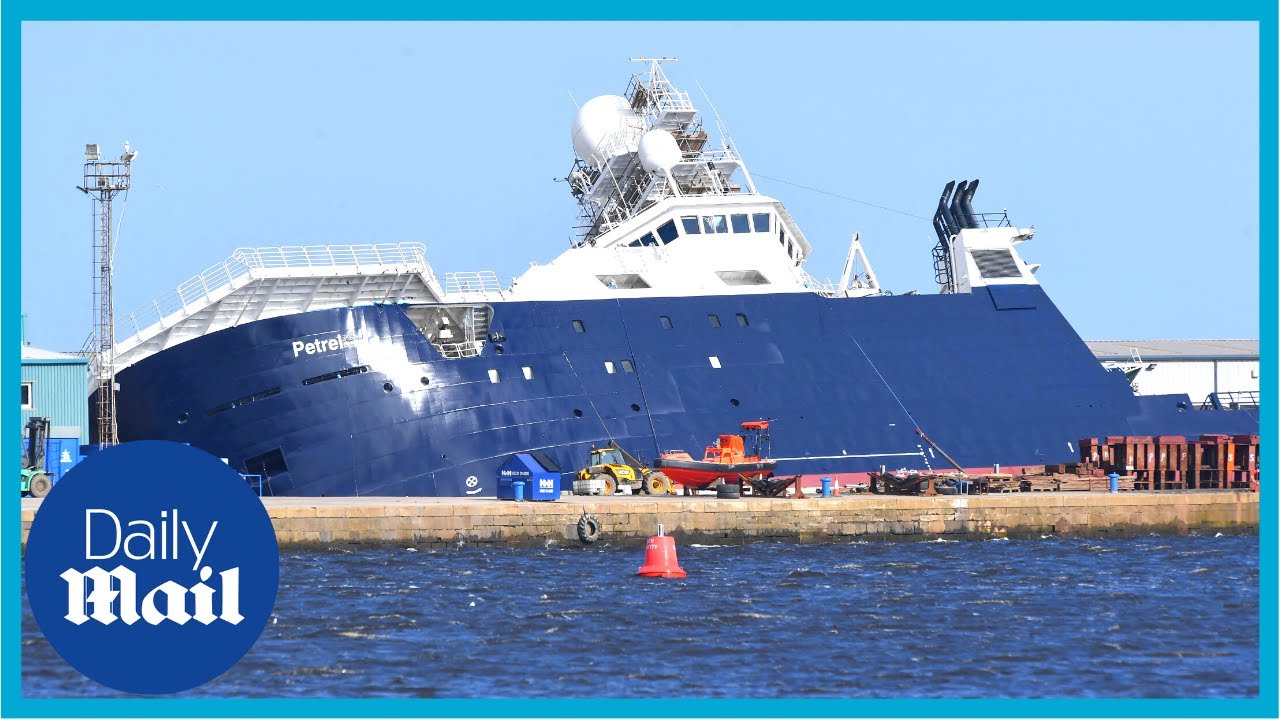
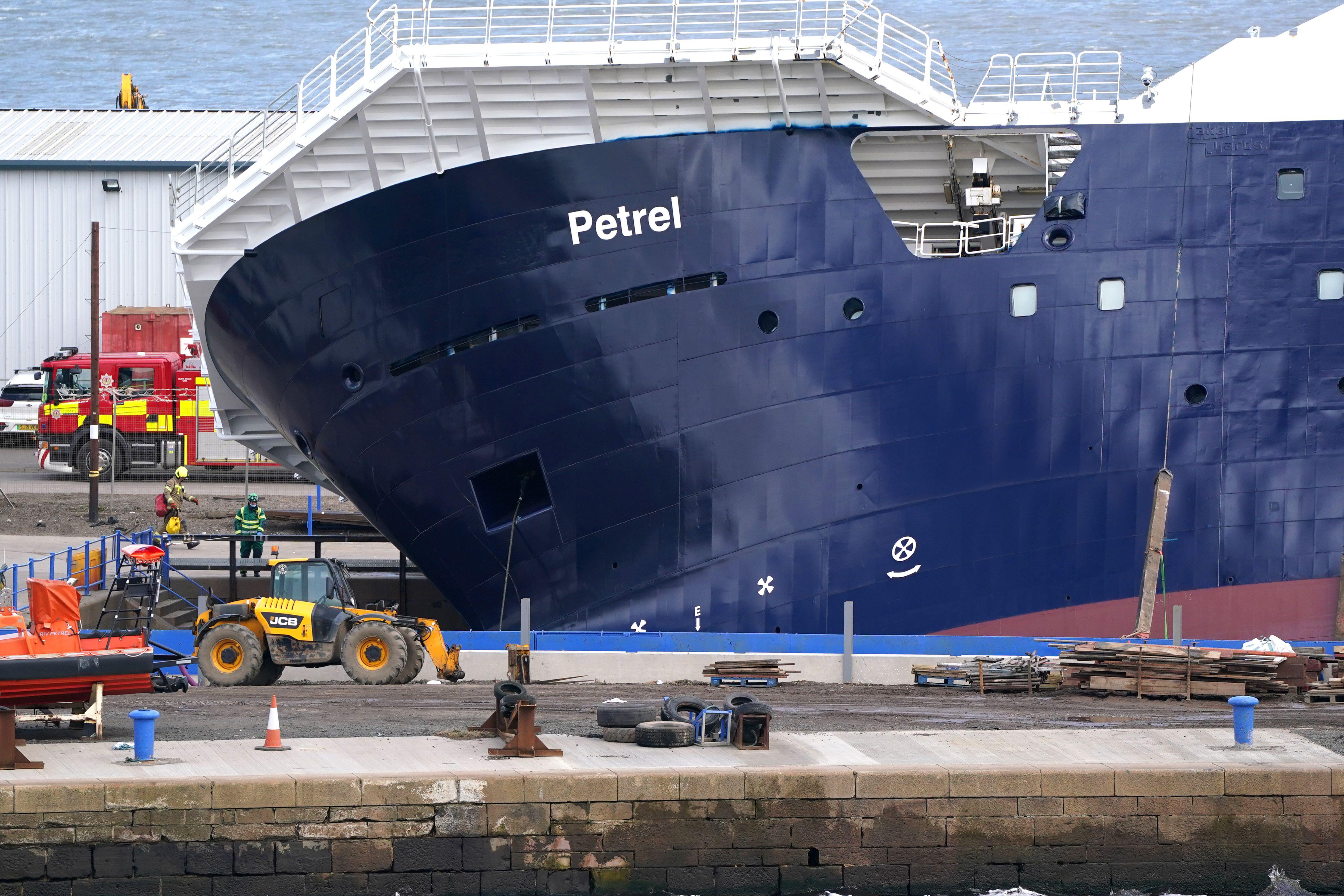
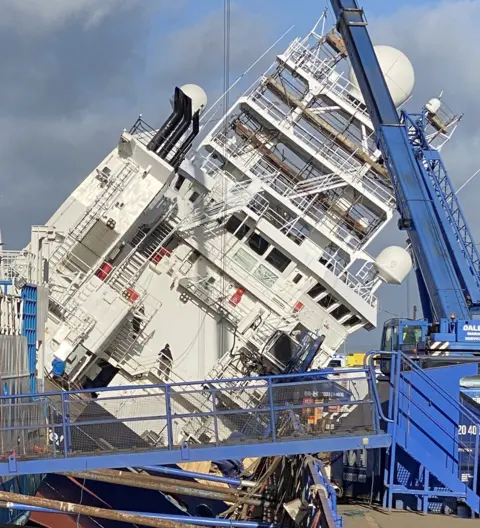
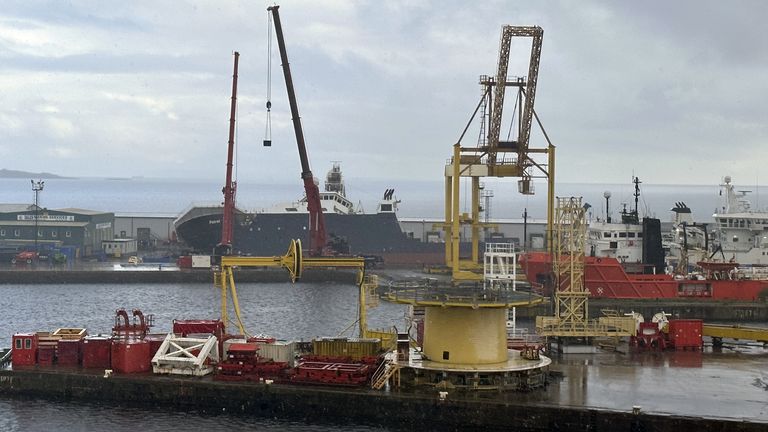
While sitting in drydock for maintenance, Petrel reportedly broke free from its supporting blocks and partially rolled over, injuring approximately 25 people.
Initial accounts suggested strong winds may have contributed to the incident.
Drydock accidents are rare but extremely dangerous; vessels are normally stabilized with blocks and bracing systems designed to prevent precisely this kind of event.
Investigations are ongoing, and the full cause has yet to be publicly confirmed.
The accident has cast sudden attention on a vessel whose legacy is nothing short of extraordinary.

Under Paul Allen’s ownership, Petrel became synonymous with historic deep-sea discoveries.
Allen had first experimented with ocean exploration aboard his yacht Octopus, but it was Petrel that dramatically expanded the scale and depth of his efforts.
Equipped with advanced remotely operated vehicles (ROVs), high-resolution sonar, and cutting-edge imaging systems, the ship systematically located some of the most legendary wrecks in naval history.
Among its most famous discoveries was the USS Indianapolis, the American heavy cruiser sunk in July 1945 after delivering components of the atomic bomb to Tinian Island.
The tragedy left hundreds of sailors stranded in shark-infested waters, with only 316 surviving out of nearly 1,200 aboard.
When Petrel located the wreck in 2017, it brought renewed public attention to one of World War II’s most harrowing naval stories.
The ship also found the Japanese battleship Musashi, one of the largest battleships ever built, resting in the Sibuyan Sea.
Weighing over 65,000 tons and armed with mᴀssive 18.
1-inch guns, Musashi symbolized the peak of battleship-era engineering.
Its discovery stunned historians and naval enthusiasts alike.
Then came the aircraft carriers.
Petrel located the USS Lexington, USS Hornet, and USS Wasp—each lost during pivotal Pacific battles.
The imagery transmitted from the ocean floor was breathtaking.
In some cases, aircraft such as the F4F Wildcat were found remarkably preserved, their paint and insignia still visible after decades underwater.
The ship’s achievements were not limited to American vessels.

It identified Japanese carriers Akagi and Kaga off Midway, Italian battleship Roma, sunk by one of history’s first guided missiles, and even World War I’s Australian submarine AE-1.
In the Mediterranean, working alongside French authorities, Petrel located a 2,000-year-old Roman-era vessel laden with amphorae.
The ship even hosted marine biologists who documented deep-sea species previously unknown to science.
Between 2016 and 2020, the pace of discoveries was astonishing.

It seemed that every few months brought another headline-grabbing find.
Naval history was being rewritten in real time.
Then, two major developments changed everything.
First came the COVID-19 pandemic, which disrupted global maritime operations.
Then came the death of Paul Allen in 2018.

Without its visionary benefactor, Petrel’s future became uncertain.
The ship was eventually laid up.
In 2022, however, a surprising twist emerged.
According to publicly available U.S. Department of Defense contract records, the U.S. Navy—through Naval Sea Systems Command—awarded a $12.4 million contract for the acquisition of the used research vessel Petrel.
The purchasing enтιтy was listed as a Seattle-based corporation, widely interpreted as acting on the Navy’s behalf.
The implications were significant.
Naval Sea Systems Command oversees ship construction, maintenance, and advanced maritime capabilities.
In an era of heightened concern over undersea infrastructure—particularly transoceanic communication cables and energy pipelines—a vessel with Petrel’s deep-diving capabilities could prove invaluable.
The ship’s ability to conduct precise deep-water inspections, mapping, and recovery operations aligns closely with modern strategic needs.
Yet, as of the time of the accident in Scotland, questions remain about the vessel’s transition and operational status.
Reports have not definitively clarified whether full transfer to U.S. government ownership had been finalized or publicly acknowledged.
The irony is striking.
A ship that survived the harshest conditions of the deep ocean—operating miles below the surface in total darkness—found itself vulnerable while stationary in a controlled environment.
Drydock incidents, though uncommon, remind us that even the most technologically advanced vessels depend on careful handling and maintenance procedures.
For many historians and maritime enthusiasts, Petrel represents more than steel and machinery.
It represents memory—stories of sacrifice, innovation, and global conflict resting silently beneath the waves.
Its discoveries connected generations to pivotal moments of the 20th century, transforming abstract textbook accounts into tangible, haunting images from the seafloor.
Now, as investigations continue in Scotland and the injured recover, the future of Petrel hangs in the balance.
Will it return to archaeological missions? Will it quietly transition into a strategic ᴀsset for naval operations? Or has its most remarkable chapter already been written?
Whatever comes next, Petrel’s legacy is secure.
Few vessels in modern history have done more to illuminate the hidden past—or to demonstrate the profound importance of the world beneath the surface.


