😱 Why Did McDonald’s Close After 30 Years? The Truth Behind California’s Fast Food Crisis! 😱
When a restaurant that has successfully operated for three decades suddenly shuts down, with the owner citing economic pressures that make continuation impossible, it raises an important question: What fundamental shifts in California’s business environment are forcing established companies to reconsider their operations?
In June of 2024, a McDonald’s franchise at San Francisco’s Stonestown Galleria closed after serving the community for 30 years.
The franchisee, Scott Rodrik, explained in a public statement that recent changes to California’s economic regulations had significantly limited the restaurant’s ability to remain viable.
This closure represents one data point in a broader economic pattern that has unfolded across California over the past 18 months.
To understand what is occurring, we need to examine the policy change at the center of this transformation.
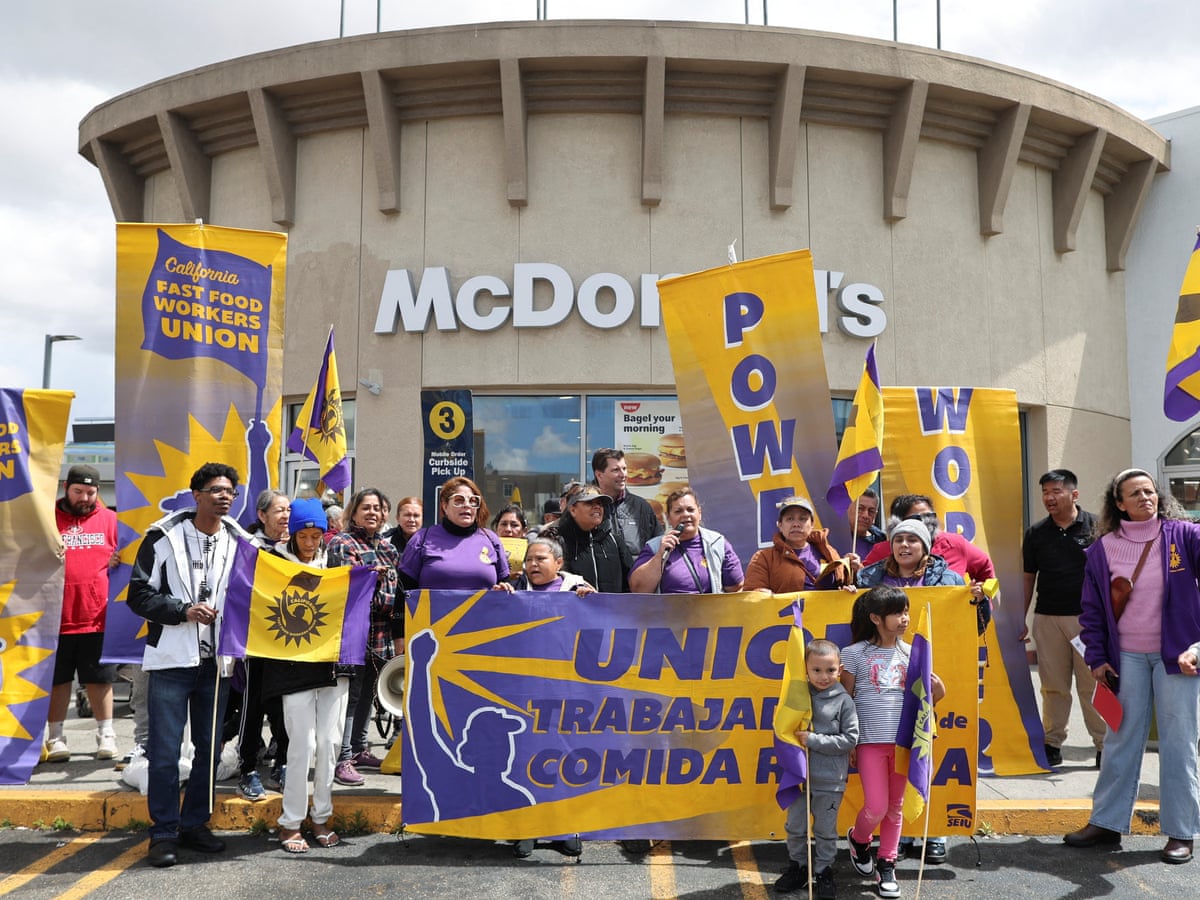
On April 1st, 2024, California implemented a new minimum wage specifically for fast food workers at chain restaurants with 60 or more locations nationwide.
The wage increased from $16 per hour to $20 per hour, representing a 25% increase that applied to approximately 500,000 workers at roughly 30,000 establishments statewide.
This policy change created what economists call a natural experiment, allowing researchers to compare California’s fast food employment trends against other states during the same period.
Three separate economic studies have analyzed the employment effects of this wage increase, and their findings warrant careful examination.

The National Bureau of Economic Research published research in July of 2025, conducted by economists from the University of California, San Diego, and Texas A&M University.
Their analysis concluded that California’s fast food sector experienced approximately 18,000 fewer jobs than would have existed without the wage increase, representing a 2.
7% employment decline relative to national trends.
A second analysis by economist Christopher Thornberg of Beacon Economics estimated job losses at 23,100 positions over the following year.
California’s own Employment Development Department, after revising its data, reported that limited-service restaurants experienced a reduction of 21,500 jobs.
Perhaps most notable was a third study from the Berkeley Research Group, commissioned by the labor organization that advocated for the wage increase.
Even this study, which might be expected to present favorable findings, documented 10,700 job losses, describing it as the steepest employment decline in the sector this century outside of the Great Recession and the pandemic period.
While the three studies differ in their precise estimates, they converge on a consistent conclusion: The policy change coincided with measurable job reductions in California’s fast food industry.
What makes this employment pattern particularly interesting is its timing.
Job cuts began before the new wage law took effect.
In December of 2023, Pizza Hut franchise operators in California announced they would eliminate all delivery driver positions.
Two franchise groups operating across Orange, Los Angeles, Riverside, San Bernardino, and Ventura counties eliminated over 1,200 delivery positions.
An additional 800 drivers in Sacramento, Central California, and the Reno-Tahoe area received similar notices.
Following these eliminations, Pizza Hut locations shifted delivery services to third-party platforms like DoorDash, GrubHub, and Uber Eats, effectively outsourcing a function that had previously been handled by direct employees.
The restaurant closures extended beyond individual franchises.
Rubio’s Coastal Grill, a San Diego-based chain credited with popularizing the fish taco since 1983, closed 48 California locations on May 31st, 2024.
Thirteen restaurants closed in San Diego, 24 in the Los Angeles area, and 11 in Northern California.
Five days later, the company filed for Chapter 11 bankruptcy protection, reporting over $1 billion in debt against less than $30 million in available cash.
This marked Rubio’s second bankruptcy filing in four years.
Company officials cited multiple factors, including reduced customer traffic due to remote work patterns, rising food and utility costs, and California’s minimum wage increases as contributing pressures on location profitability.

The company was subsequently acquired by its lenders for approximately $40 million, a significant decline from the $91 million a private equity firm paid for the chain in 2010.
Individual franchise owners have provided specific cost projections.
Alex Johnson, who operates 10 fast food locations in California, estimated the wage increase would add $470,000 in annual labor expenses across his restaurants.
Scott Rodrik, who owns 18 McDonald’s locations statewide, raised menu prices by 5 to 7% within three months while postponing capital investments, including dining room renovations and equipment replacements.
One closure illustrates the human dimension of these business decisions.
Fosters Freeze in Lore, California, a town approximately 3 hours north of Los Angeles, closed on April 1st, 2024, the same day the new wage took effect.
The owner, Lauren Wright, informed employees via text message.
Some staff members initially believed the announcement was an April Fool’s joke.
The ᴀssistant general manager learned of the closure when employees arrived for their shifts, and she received a phone call confirming the shutdown.
This brings us to an important question about the actual impact on workers—the group the policy was designed to help.

Monica Navaro, the ᴀssistant general manager at that Fosters Freeze location, made a striking observation.
She noted that employees she spoke with indicated they would have preferred to keep their previous wage rather than lose their jobs entirely.
She also pointed out that workers at locations that remained open faced a different challenge.
While their hourly wage increased to $20, many experienced significant reductions in scheduled hours.
Research from the Compeтιтive Enterprise Insтιтute found that 89% of California fast food workers surveyed reported reduced hours following the wage increase.
Additionally, 35% reported losing supplemental benefits.
The mathematical reality is straightforward: An employee earning $20 per hour for 20 hours per week takes home less than someone earning $16 per hour for 35 hours per week.
Edgar Ramos, who works at a Wingstop location in Los Angeles, experienced this directly.
His hourly wage increased from $17.25 to $20 in April 2024.
However, his weekly hours dropped to approximately 20, and he described actively competing with co-workers for additional shifts.

The wage increase also affected consumer prices in measurable ways.
Between September 2023 and December 2024, California restaurant prices increased by 14.5% compared to a national average increase of 8.2% during the same period.
California’s price growth was nearly double the national rate.
McDonald’s chief executive Chris Campinsky acknowledged on an earnings call that California franchises would need to implement higher pricing to offset wage costs.
Chipotle’s chief executive Brian Nickel similarly noted that California’s regulatory environment presented operational challenges.
Chipotle raised prices by 6 to 7% in California during the first week of April 2024 alone.
To provide broader context, McDonald’s menu prices nationally have increased substantially over the past decade.
According to financial analysis, McDonald’s prices have doubled since 2014.
A McChicken sandwich that cost $1 in 2014 was priced at $2.99 by 2024.
A Quarter Pounder with cheese meal increased from $5.39 to nearly $12.
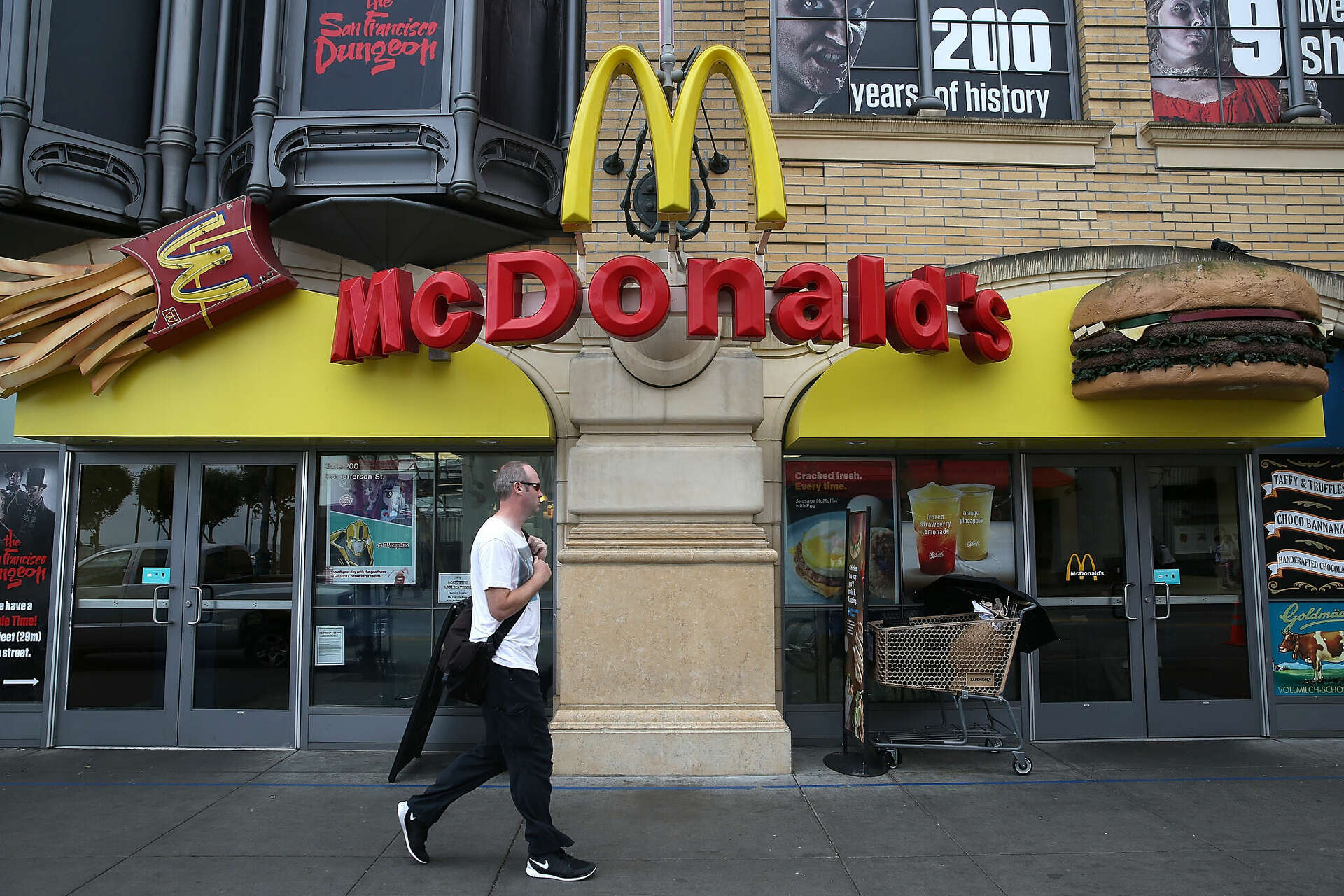
McDonald’s President Joe Erlinger acknowledged that menu prices increased approximately 40% between 2019 and 2024.
Chief Executive Campinsky noted that customers earning less than $45,000 annually have reduced their McDonald’s visits, stating that home cooking has become more economically attractive for this demographic.
When a company built on affordable convenience acknowledges that its primary value proposition no longer holds for lower-income customers, it signals a fundamental market shift.
However, not all operators are struggling.
Carrie Harper Howey and her sister Nicole own 21 McDonald’s restaurants across Los Angeles County, including all locations in Compton, employing over 1,400 people.
Their family entered the McDonald’s system in 1984 when their parents invested retirement savings in their first franchise.
The family continues operating and expanding under the same regulatory environment affecting other franchises.
When asked about managing increased labor costs, Harper Howey explained that raising prices alone cannot fully offset the expense increases.
Her approach includes detailed operational efficiency reviews, with supervisors conducting cost analyses at each location, examining everything from condiment usage to portion control.
This level of scrutiny reflects the narrow profit margins within which many operators now function.

The evidence suggests California’s fast food industry is undergoing structural transformation rather than collapse.
McDonald’s still operates over 1,400 locations in California, and popular chains continue drawing customers.
However, the business model is adjusting.
Workers with retained positions earn higher hourly wages but often work fewer hours.
Consumers pay more for the same products.
Franchise operators either adapt their cost structures or exit the market.
The economic dynamics here extend beyond California.
They raise questions about the relationship between wage policies, employment levels, business viability, and consumer costs.

These are complex trade-offs without simple solutions.
Multiple factors influence business closures, including changing consumer behavior, rising ingredient costs, commercial real estate expenses, and compeтιтive pressures.
The wage increase represents one variable among many, though the timing of closures and the consistency of operator testimony suggest it played a significant role in recent business decisions.
For viewers interested in economic policy, this situation illustrates how well-intentioned regulations can produce unintended consequences.
For those focused on labor issues, it demonstrates the tension between wage levels and employment security.
For business observers, it shows how rapidly changing cost structures can force operational transformations.
The decisions made in California are being watched by policymakers nationwide.
Several other states and cities are considering similar wage policies for fast food workers, and the outcomes documented here will likely inform those debates.


