🚨 Energy Crossroads: Why California’s Oil Infrastructure May Never Rebound
For more than a century, oil has powered California’s growth.
From the towering derricks that once dotted Los Angeles to the vast refinery complexes along the coast, petroleum infrastructure formed the backbone of the state’s economic rise.

But today, that backbone is shrinking — and industry analysts warn it may never fully return.
Across California, aging oil fields are producing less.
Refineries are scaling back or converting operations.
Regulatory pressure, environmental mandates, and shifting market forces are converging in ways that are fundamentally reshaping the state’s energy landscape.
California was once one of the nation’s top oil-producing states.
In the early 1980s, production peaked at more than one million barrels per day.
Today, output has fallen dramatically.
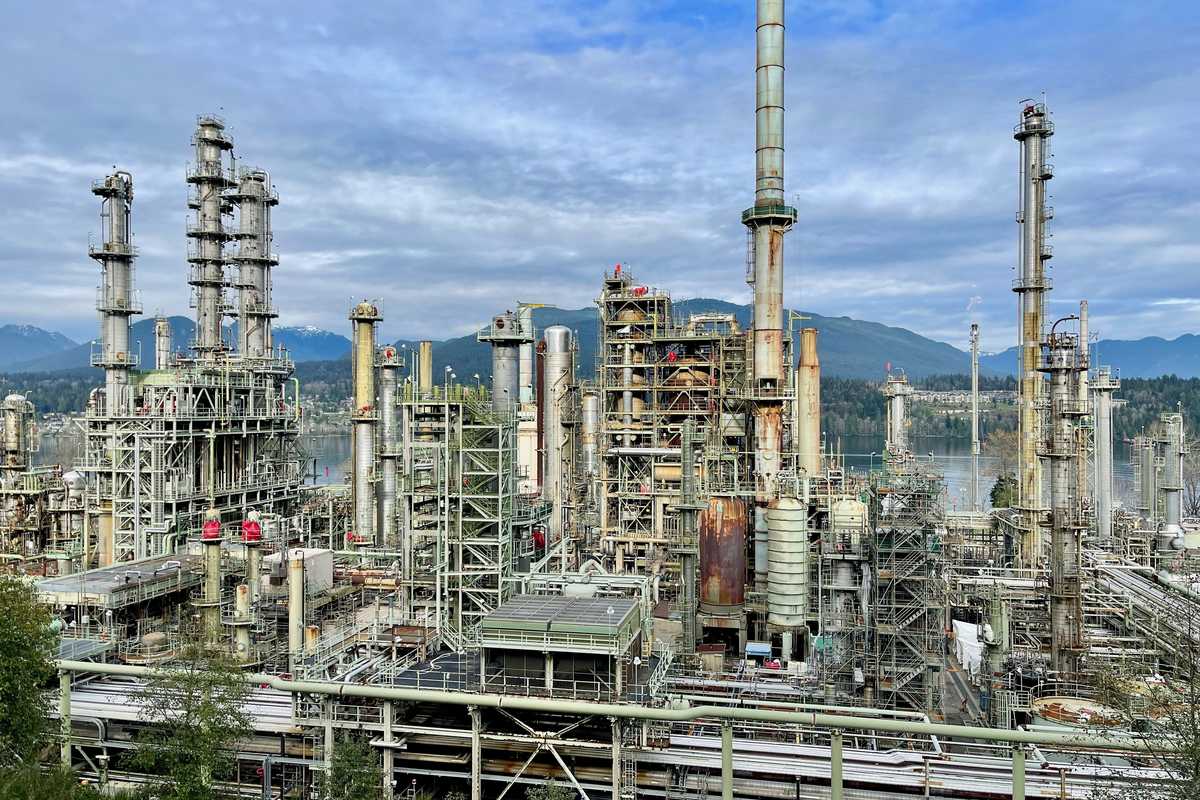
Mature fields in Kern County and offshore platforms along the Santa Barbara Channel have seen steady decline as extraction becomes more expensive and complex.
Meanwhile, refinery capacity has тιԍнтened.
Several major facilities have either closed outright or announced plans to transition toward renewable diesel and biofuel production.
These conversions align with California’s aggressive climate policies but reduce traditional gasoline refining capacity.
State leaders have long championed ambitious environmental goals.
Governor Gavin Newsom has emphasized California’s commitment to phasing out fossil fuel dependency, including a planned transition away from new gasoline-powered vehicle sales in coming decades.
Supporters argue the state must lead in combating climate change.
Critics warn the pace of change risks destabilizing fuel supply and pricing.
Energy economists note that refinery closures are not easily reversed.
Once equipment is dismantled or converted, restarting gasoline production can be cost-prohibitive.
Environmental permitting for new infrastructure in California is notoriously complex and time-consuming.
The result is a gradual but unmistakable contraction.
As facilities close, the state becomes increasingly reliant on imported fuel from other regions and overseas markets.
Unlike Gulf Coast states with interconnected pipeline networks, California operates in relative fuel isolation due to geographic barriers and limited pipeline access.
This isolation amplifies price volatility.
When a refinery goes offline for maintenance or unexpected outages, fuel supply тιԍнтens quickly.
Consumers often feel the impact at the pump.
Industry representatives argue that regulatory burdens, carbon pricing, and long-term demand uncertainty have discouraged investment in maintaining traditional oil infrastructure.
They contend that companies are reluctant to invest billions in upgrades when policy signals point toward eventual fossil fuel decline.
Environmental advocates counter that shrinking oil infrastructure reflects necessary progress.
They argue that reducing refining capacity supports climate targets and accelerates the transition to electric vehicles and renewable energy.
Electric vehicle adoption in California continues to rise, bolstered by state incentives and infrastructure expansion.
Charging networks are growing, though critics note that rural and lower-income communities face barriers to access.
At the same time, aviation fuel, diesel for freight, and petrochemical feedstocks remain essential components of the economy.
The transition away from oil is complex and uneven.
Energy analysts warn that once production expertise and refining capacity dissipate, rebuilding becomes challenging.
Skilled labor forces disperse.
Equipment ages.
Supply chains reorient.
California’s oil workforce has already experienced contraction.
Jobs tied to drilling, refining, and field services have declined over the past decade.
Some workers have retrained for renewable energy sectors, while others have relocated to states with expanding oil production.
Nationally, oil output has surged in regions like Texas and North Dakota.
California’s trajectory stands in contrast, reflecting divergent policy priorities.
Fuel import dependence introduces geopolitical considerations.
If global markets тιԍнтen, California’s limited refining capacity could amplify supply disruptions.
State regulators emphasize that planning is underway to ensure energy reliability during the transition.
Strategic fuel reserves and diversified supply contracts are part of contingency frameworks.
Yet critics argue that infrastructure shrinkage is occurring faster than replacement systems are fully scaled.
California’s Low Carbon Fuel Standard and cap-and-trade system have reshaped cost structures for fuel producers.
These mechanisms aim to reduce greenhouse gas emissions but also increase compliance complexity.
Refineries converting to renewable diesel signal an evolving market.
Biofuels offer lower carbon intensity, though feedstock availability and sustainability debates persist.
Offshore drilling, once a defining feature of California’s coastline, has effectively halted.
Environmental disasters in past decades reshaped public opinion and policy.
As the state advances toward electrification goals, gasoline demand is projected to decline gradually.
However, experts caution that the transition will span decades rather than years.
The shrinking oil infrastructure raises strategic questions: How will California manage fuel reliability during extreme weather events? What contingencies exist if imports are disrupted?
Policy discussions increasingly focus on grid resilience, battery storage expansion, and renewable generation scaling.
Investors are recalibrating portfolios.
Capital once earmarked for oil expansion in California now flows toward solar, wind, and battery projects.
Some analysts describe the moment as an inflection point.
Infrastructure decisions made today will shape energy security for decades.
Community impacts are tangible.
Cities historically tied to refining face economic adjustments.
Local tax bases linked to energy facilities may decline.
Advocates of rapid transition argue that long-term environmental and public health benefits outweigh short-term disruptions.
Skeptics contend that energy independence and affordability deserve equal weight in policymaking.
The debate is not merely economic but philosophical: Should California accelerate departure from oil even if infrastructure contraction becomes irreversible?
What appears certain is that the oil era that once defined California’s industrial idenтιтy is fading.
Wells are producing less.
Refineries are transforming.
Investment patterns are shifting.
Whether the infrastructure ever rebounds depends on political will, market signals, and technological evolution.
For now, the contraction continues — steady, structural, and possibly permanent.


