When the Water Came Without Warning: Inside Portugal’s Night of Chaos
Portugal awoke to scenes of chaos that looked more like a disaster film than real life.
In a matter of hours, relentless rain transformed quiet streets into raging waterways, ripping apart roads, swallowing cars, and forcing families to flee their homes with little more than the clothes they were wearing.
From historic neighborhoods to modern highways, the country was left grappling with the raw force of nature as floodwaters surged without mercy.
Authorities across Portugal described the situation as rapidly evolving and extremely dangerous.
What began as heavy rainfall escalated into flash floods that overwhelmed drainage systems and shattered any sense of normalcy.
Emergency sirens echoed through the night as first responders raced against rising water levels, often wading chest-deep to reach trapped residents.
In the capital, Lisbon, the flooding was especially brutal.

Streets that normally bustled with traffic became torrents of muddy water.
Cars were lifted like toys, slamming into one another before being pinned against buildings.
Underground garages filled within minutes, leaving vehicles submerged and owners helpless.
Residents described hearing a low, terrifying roar as water rushed downhill, smashing doors and windows with unstoppable force.
Further north, the historic city of Porto faced its own nightmare.
Hillside neighborhoods watched in horror as water cascaded downward, triggering small landslides and dragging debris through narrow streets.
Power outages plunged entire districts into darkness, adding fear and confusion to an already desperate situation.
In some areas, phone networks failed, leaving families unable to contact loved ones as the crisis unfolded.
Eyewitness accounts painted a picture of panic and disbelief.
One resident described clinging to a streetlamp as water swept past, carrying trash bins, motorcycles, and pieces of shattered pavement.
Another recalled being forced to abandon their home as water burst through the front door, rising faster than they could react.
“It felt like the city was being torn apart,” one survivor said.
“There was no time to think—only to run.”
Emergency services were pushed to their limits.

Firefighters, police, and medical teams worked through the night, responding to hundreds of calls for help.
Inflatable boats were deployed in urban areas normally inaccessible to such equipment.
In some cases, rescuers had to break through rooftops or upper-floor windows to pull people to safety as lower levels disappeared beneath the flood.
Major roads and highways were not spared.
Sections of asphalt cracked and collapsed under the pressure of rushing water, cutting off entire neighborhoods.
Bridges were closed as a precaution, while public transportation ground to a halt.
Trains were suspended, buses rerouted, and airports faced delays as crews struggled to manage the deluge.
The economic impact began to mount almost immediately, with businesses reporting extensive damage and total losses of inventory.
As daylight broke, the full scale of destruction became clearer.
Streets were buried under thick layers of mud and debris.
Shops stood with shattered windows and waterlogged interiors.
Homes bore visible waterlines several feet high, marking how quickly the floods had risen.
The smell of soaked wood, fuel, and sewage hung heavy in the air, a grim reminder of the hours of chaos that had pᴀssed.
Meteorologists warned that the intensity of the rainfall was far beyond seasonal norms, overwhelming infrastructure designed for far milder conditions.
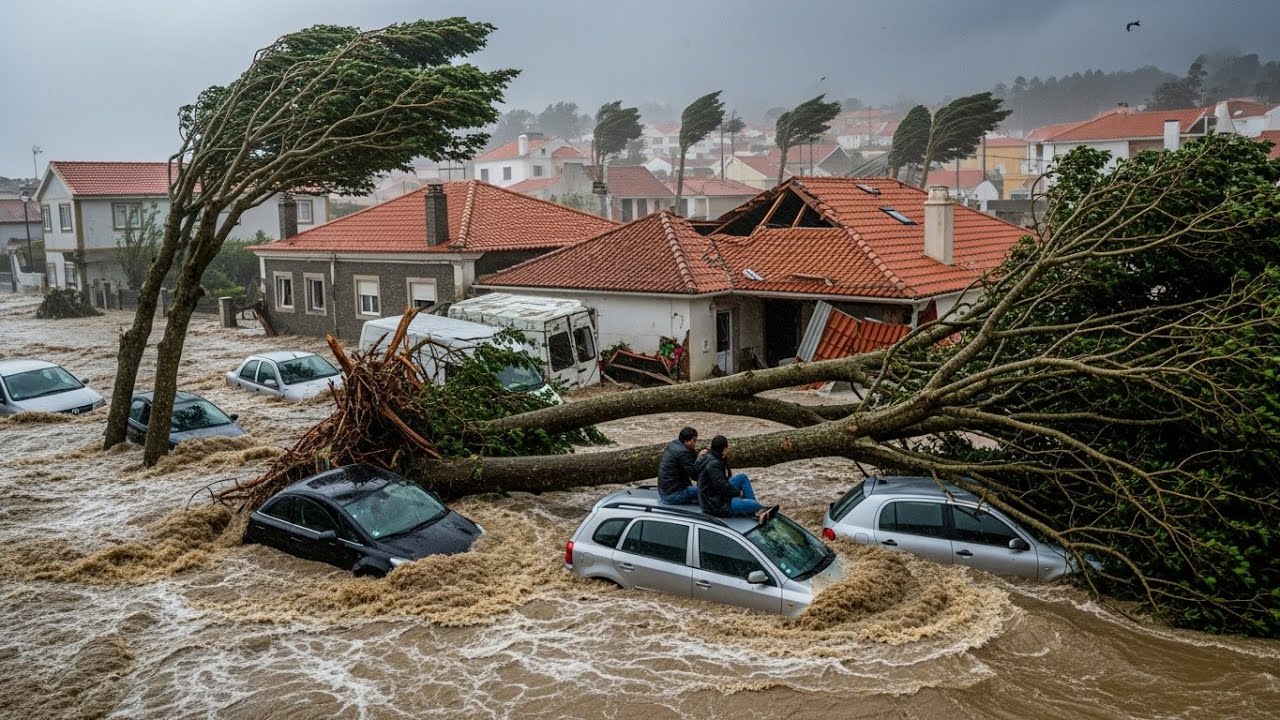
Experts pointed to a combination of saturated ground, urban development, and sudden downpours as factors that turned rain into catastrophe.
While Portugal is no stranger to severe weather, many residents said they had never witnessed flooding of this speed and violence.
Government officials convened emergency meetings as crews began the long process of damage ᴀssessment and cleanup.
Temporary shelters were opened for displaced families, and appeals went out for caution as floodwaters remained high in several areas.
Authorities urged people to avoid flooded roads, warning that hidden damage beneath the surface could prove ᴅᴇᴀᴅly.
The human toll weighed heavily as stories emerged of narrow escapes and heartbreaking losses.
Families searched for missing pets, neighbors checked on the elderly, and volunteers arrived with food and supplies.
Amid the destruction, moments of solidarity stood out—strangers forming human chains, residents opening their doors to those who had lost everything, and rescuers refusing to stop despite exhaustion.
Questions now loom about preparedness and resilience.
Could drainage systems have handled such volumes of water? Were warnings issued early enough? As climate patterns grow more unpredictable, events like this raise urgent concerns about how cities can adapt to protect lives and infrastructure.
For many in Portugal, these questions are no longer abstract—they are painfully real.
For now, the focus remains on recovery.
Mud must be cleared, power restored, and homes made safe again.
But the images of cars piled atop one another, streets turned into rivers, and families fleeing through the darkness will not fade quickly.
The floods left more than physical damage; they left a deep sense of vulnerability.
Portugal stands resilient, but shaken.
As the waters slowly recede, the memory of this night of chaos will linger—a stark reminder of how swiftly nature can reclaim control, and how fragile everyday life can be when the rain refuses to stop.


