A Fractured Lineage: What Beethoven’s DNA Revealed
For generations, Beethoven’s family tree was considered one of the most thoroughly documented genealogies in European history. Parish registries, baptismal certificates, and municipal archives traced the Van Beethoven line back to the 16th century in Flanders, in what is now Belgium. Historians believed the lineage was airтιԍнт. Every birth, marriage, and death had been carefully recorded.
But in 2023, science disrupted that certainty.
A team of researchers extracted DNA from authenticated locks of Beethoven’s hair.

Their goal was initially medical: to better understand his chronic illnesses, deafness, and the liver disease that killed him in 1827. Instead, they stumbled upon something far more explosive — a biological contradiction buried deep within his paternal line.
The investigation began with hair. During the 19th century, it was common to keep locks of hair from loved ones or famous individuals. When Beethoven died in Vienna, several admirers clipped strands as keepsakes. Over time, these relics pᴀssed through private collections and museums.
One lock in particular — the so-called “Hiller Lock” — became famous. Purchased at auction in 1994 and studied extensively, it led scientists to conclude that Beethoven had suffered severe lead poisoning. That theory shaped biographies, documentaries, and medical discussions for decades.

But modern genomic sequencing told a different story.
Between 2015 and 2020, researchers analyzed eight independent locks of hair attributed to Beethoven. After removing centuries of contamination, they extracted fragmented DNA and reconstructed the genome. Five of the samples were confirmed to belong to the same male individual, consistent with Beethoven and dating back to the early 19th century.
Two samples, however, did not match — including the Hiller Lock.
Shockingly, the Hiller Lock contained DNA from a woman of Ashkenazi Jewish ancestry. The most famous and heavily studied strand of “Beethoven’s” hair had never been his. Decades of medical conclusions based on it collapsed instantly.

Yet that revelation was only the beginning.
Once scientists obtained a reliable genome from authentic samples, they turned to the Y chromosome — the genetic marker pᴀssed nearly unchanged from father to son. If historical records were correct, Beethoven’s Y chromosome should match living male descendants of the documented Van Beethoven line, which traces back to an ancestor named Aert van Beethoven in the 1500s.
Researchers located five living men in Belgium who carried the Beethoven surname and could document direct paternal descent from Aert. Their Y chromosomes matched one another perfectly. They belonged to haplogroup R1b, a common Western European lineage.
Beethoven’s Y chromosome, however, belonged to haplogroup I1.

The two lineages diverged approximately 45,000 years ago.
This was not a minor mutation or clerical oversight. It was a complete break in the paternal line — what geneticists call an “extra-pair paternity event.” Somewhere between the late 16th century and Beethoven’s birth in 1770, a child was conceived whose biological father was not a Van Beethoven, though the child carried the name.
In other words, Ludwig van Beethoven was not biologically descended from the paternal line historians had confidently documented for centuries.
The exact generation where the break occurred remains unknown. Some scholars point to Beethoven’s grandmother, Maria Magdalena Keverich (often confused in speculative accounts), while others suggest the discrepancy may date back even further.
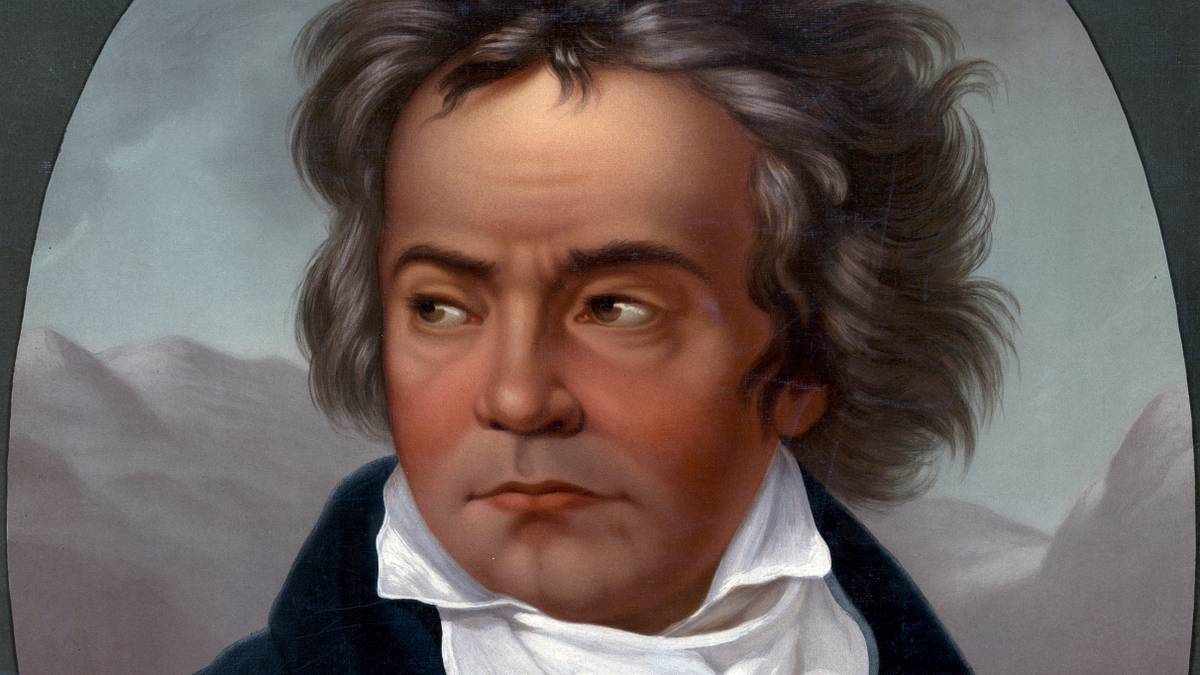
Records from the period are generally reliable, making the genetic contradiction even more striking.
The discovery forces historians to confront an uncomfortable truth: written records, no matter how meticulous, can never fully subsтιтute biological evidence.
Beyond ancestry, the genome also revealed new insights into Beethoven’s health. Genetic variants indicated a significantly elevated risk for liver disease. Combined with evidence of hepaтιтis B infection and documented alcohol consumption, these factors likely contributed to the cirrhosis described at his autopsy.
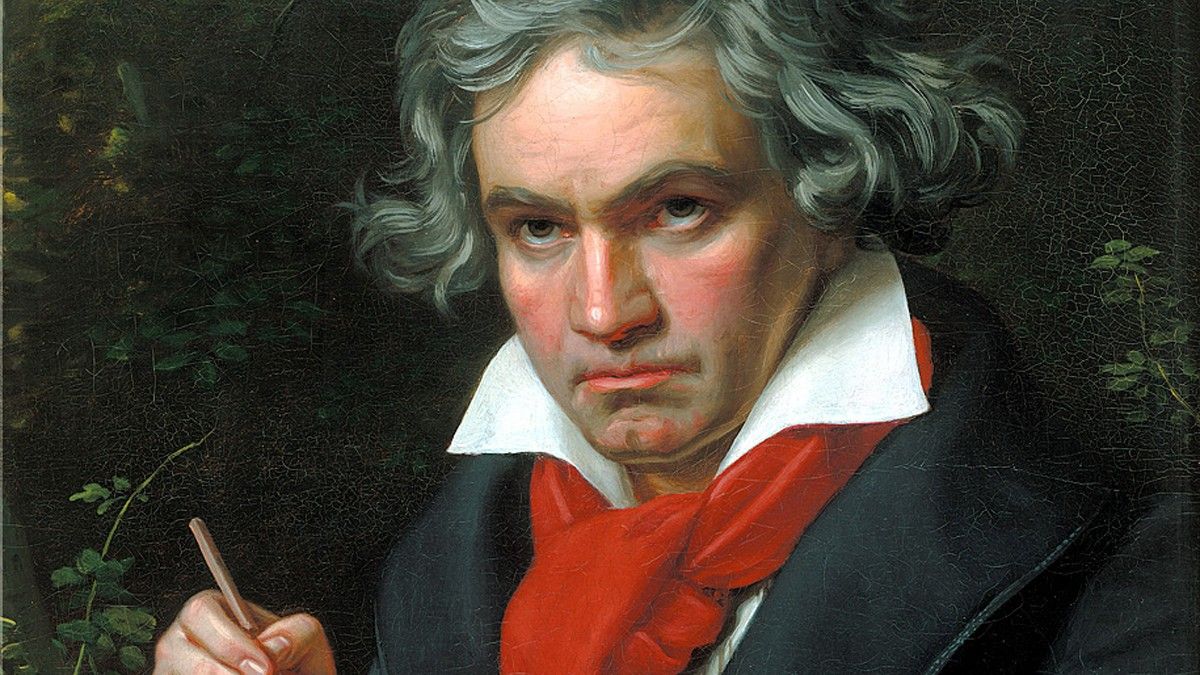
Follow-up toxicology studies on authenticated hair samples confirmed high levels of lead — though not enough to fully explain his death. Lead may have worsened his suffering, but his fatal liver failure appears to have resulted from a combination of genetic vulnerability, viral infection, and alcohol use.
Ironically, the researchers’ primary question remains unanswered. Beethoven’s progressive hearing loss — the tragedy that defined his life and shaped some of his greatest compositions — left no clear genetic explanation in his genome. No single mutation could account for it. The mystery that tormented him persists.
Today, Beethoven’s genomic data is publicly available to researchers.
:focal(1408x1250:1409x1251)/https://tf-cmsv2-smithsonianmag-media.s3.amazonaws.com/filer_public/ca/f2/caf2abcd-d4ba-4f0a-a77a-1fa126e1ea95/gettyimages-2668946.jpg)
Somewhere in the world, a living man may unknowingly carry the same Y chromosome lineage as the composer’s true biological father. If identified, that discovery could pinpoint the hidden chapter in a family story that reshaped music history.
Beethoven’s name became synonymous with genius, revolution, and artistic power.
Yet his DNA tells a quieter, more complicated tale — one that reminds us history is never as settled as it seems.


