The Untold Story Behind The Pᴀssion of the Christ
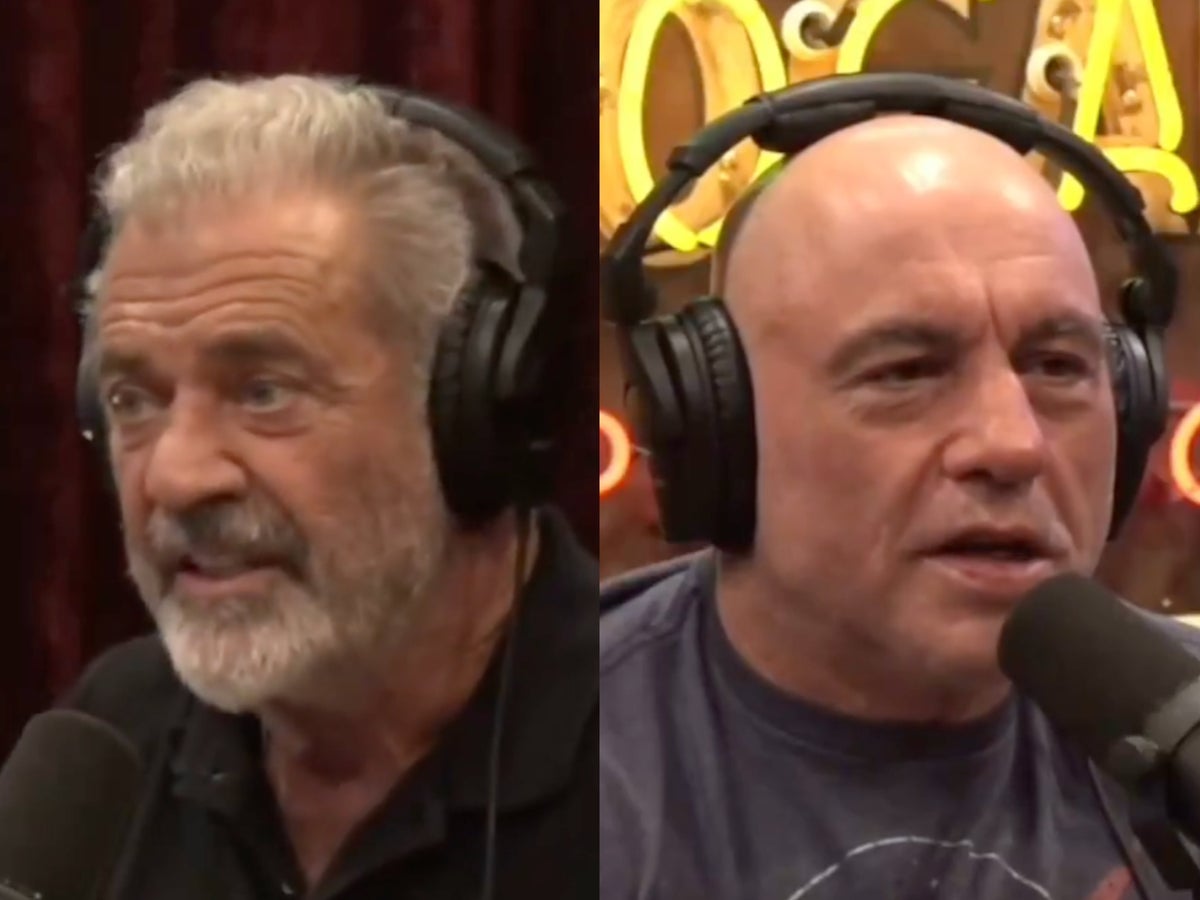
When Mel Gibson appeared on The Joe Rogan Experience, listeners expected discussion about movies, Hollywood politics, and perhaps the long-awaited sequel to The Pᴀssion of the Christ. What unfolded instead was a deeply personal reflection on artistic conviction, spiritual belief, and the extraordinary challenges surrounding one of the most controversial films in modern cinema.
From the beginning, The Pᴀssion of the Christ was never designed to be a conventional biblical epic. Gibson made it clear that he had no interest in creating a sanitized, crowd-pleasing adaptation. His goal was far more direct: to confront audiences with the physical and emotional brutality of Christ’s final hours and to emphasize a theological idea central to Christian belief—that Christ’s sacrifice was for all humanity.

According to Gibson, that universal responsibility was the core message. He immersed himself in the four Gospels and consulted additional theological sources to shape the screenplay. The result was a film steeped in symbolism. The opening scene in the Garden of Gethsemane, for example, visually references Genesis when Jesus crushes a serpent beneath His heel—a symbolic callback to redemption promised in the Old Testament. Every detail was intentional. Every shadow, every line, every frame carried layered meaning.
But what shocked Rogan wasn’t simply Gibson’s artistic approach—it was the resistance the film encountered before it was ever released.
Gibson described an industry climate that he felt was openly skeptical of Christian-themed storytelling. He noted what he perceived as a double standard: films exploring various religious traditions were often treated with nuance and respect, while overtly Christian narratives were more likely to face dismissal or hostility.
Studios reportedly hesitated. Meetings stalled. Financial backing evaporated. For Gibson, the message was clear—this project would not be supported in the traditional way. Rather than abandon it, he financed the film himself, investing tens of millions of his own dollars.
That decision proved historic. Released in 2004, The Pᴀssion of the Christ became one of the highest-grossing R-rated films of all time, earning over $600 million worldwide. Despite predictions that audiences would reject its intensity, millions showed up.
The success, however, did not quiet controversy.

During his conversation with Rogan, Gibson revisited stories from the production that many involved still describe as extraordinary.
Jim Caviezel, who portrayed Jesus, endured severe physical strain. The cross he carried weighed over 30 pounds. During filming, he reportedly dislocated his shoulder. In the scourging scene, accidental strikes from whips caused genuine injury. Caviezel later spoke publicly about the physical toll the role took on him.
There were also reports of lightning striking near the set during production. ᴀssistant director Jan Michelini was reportedly struck by lightning more than once, and Caviezel himself was said to have been struck during the crucifixion scene, though he survived without serious injury.

For some cast and crew, these incidents felt symbolically charged, especially given the biblical imagery ᴀssociated with lightning.
Other transformations were more personal than physical. Actor Luca Lionello, who portrayed Judas, has stated in interviews that working on the film influenced his spiritual beliefs. Several cast members described the production as emotionally and spiritually intense.
While skeptics attribute such events to coincidence and the natural hazards of outdoor filming, for those involved, the atmosphere often felt unusually heavy—almost as if the boundary between performance and lived experience had blurred.

When the film premiered, critics were sharply divided. Roger Ebert awarded it four stars, praising its commitment and emotional power. Others criticized its graphic violence and questioned certain artistic choices.
Some Jewish organizations and scholars raised concerns that aspects of the portrayal could unintentionally reinforce harmful stereotypes historically linked to antisemitism. Gibson responded by stating that his intention was to emphasize shared human responsibility rather than blame any single group. Nevertheless, the debate underscored how sensitive and complex retelling the crucifixion narrative can be.
The controversy, paradoxically, fueled public interest. Churches organized group screenings. Theologians published essays analyzing its symbolism. Secular audiences debated its historical and artistic merits. The film became more than entertainment—it became a cultural flashpoint.
Perhaps the most intriguing revelation from Gibson’s discussion with Rogan was his ongoing work on a sequel. Tentatively referred to as The Resurrection, the project has reportedly been in development for years with screenwriter Randall Wallace.
Gibson described it not as a straightforward continuation, but as an ambitious exploration of events surrounding the resurrection—spanning metaphysical themes, cosmic conflict, and theological questions about eternity.
He has suggested the film could move beyond linear storytelling into something far more expansive.
For Gibson, the resurrection is the central claim of Christianity. As he posed during the interview: why would the apostles willingly face persecution and death for something they knew was false? It is a question believers see as evidence of sincerity and skeptics approach from historical and psychological perspectives.
Either way, Gibson appears determined to tackle the subject without compromise.

So what exactly left Joe Rogan visibly reflective during the interview?
It wasn’t a single sensational claim. It was the cumulative weight of Gibson’s story: self-financing a film the industry avoided, enduring fierce criticism, witnessing unusual on-set incidents, and maintaining conviction in the face of reputational risk.
More than two decades later, The Pᴀssion of the Christ remains divisive.
Some regard it as a masterpiece of spiritual cinema; others view it as deeply flawed. Yet few deny its impact.
Gibson’s appearance on Rogan’s podcast revealed something beyond headlines and controversy: the story of a filmmaker willing to stake his career and fortune on a project he believed mattered. Whether one agrees with his theology or not, the cultural footprint of The Pᴀssion of the Christ is undeniable.
And if the upcoming sequel generates even a fraction of the same intensity, the conversation is far from over.


