The Truth Behind Demond Wilson’s “Final Message” — And Why Fans Panicked
The internet moves fast — sometimes too fast.
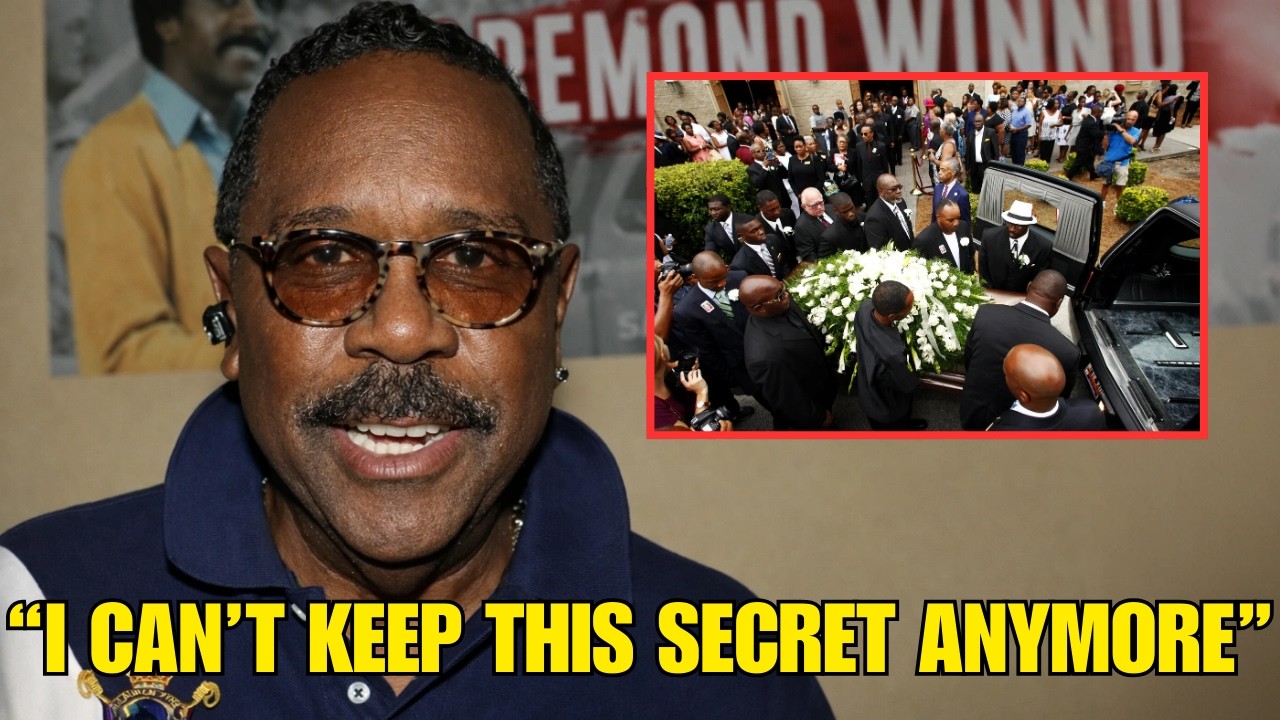
Over the past several days, dramatic headlines have circulated claiming that Demond Wilson delivered a “shocking final message before his death.
” The wording alone sent waves of concern through fans who grew up watching him light up television screens in the 1970s.
Let’s begin with an important clarification:
As of the latest verified public information, Demond Wilson is alive.
There has been no confirmed report of his death from credible news sources, family representatives, or official channels.
So where did the story come from?
Like many viral narratives, it appears to stem from a combination of resurfaced interviews, emotional reflections about aging, and the internet’s tendency to frame retrospectives as “final messages.
” When a beloved public figure speaks candidly about faith, life, legacy, or mortality, those words can quickly be reframed as a farewell — even when they are not.
Wilson, best known for his iconic role as Lamont Sanford on Sanford and Son, has lived a life far more complex than the punchlines that made him famous.
And in recent years, he has indeed spoken openly about his journey — including his decision to step away from Hollywood, his religious convictions, and his reflections on fame.
But those reflections are not deathbed confessions.
They are the words of a man who has lived long enough to see the arc of his own story.
In interviews over the past decade, Wilson has described the pressures of early fame.
Starring opposite the legendary Redd Foxx in the groundbreaking sitcom that redefined Black representation in American television, Wilson became a household name almost overnight.
Sanford and Son was a cultural force.
It aired during a time of enormous social change, offering humor rooted in working-class struggle and family tension while pushing boundaries rarely crossed on network television at the time.
Wilson was in his twenties when the show exploded in popularity.
He has since spoken about the toll that level of attention can take.

In one particularly emotional interview that has recently resurfaced online, Wilson reflected on the darker side of fame.
He spoke about financial disputes, creative frustrations, and moments when he felt spiritually unmoored.
“I had everything people think they want,” he said in that conversation.
“Money, recognition, applause.
But none of that answers the deeper questions.
”
That line — clipped from context — has now been circulated as part of what some headlines are calling his “final revelation.
”
But the full interview paints a broader picture.
Wilson discussed how he eventually left Hollywood to pursue ministry work, dedicating years to preaching and writing.
He described experiencing what he viewed as a spiritual awakening, shifting priorities from celebrity to service.
“Fame doesn’t follow you into eternity,” he said.
“Character does.
”
For fans who remember Lamont’s sharp comebacks and comedic timing, seeing Wilson speak in solemn, measured tones about faith and redemption can feel startling.
It’s a transformation narrative — one that resonates deeply in a culture fascinated by reinvention.
In recent public appearances and written works, Wilson has reflected on aging, on surviving decades in an industry known for discarding talent once the spotlight fades.
He has spoken about graтιтude.
About lessons learned.
About forgiveness.
Those themes, when paired with his advancing age — he was born in 1946 — have fueled speculation and dramatic framing.
But aging is not the same as dying.
Wilson’s “message,” if it can be called that, seems less about farewell and more about perspective.
In one of his most quoted remarks, he said, “If you’re still breathing, you still have purpose.
”
Hardly the words of someone signing off.
Social media’s appeтιтe for emotional finality has a way of turning reflections into endings.
The phrase “before his death” generates urgency.
It creates the sense of last words.
But in this case, there is no verified death announcement.
Instead, what audiences are reacting to is vulnerability.
Wilson’s willingness to speak honestly about the cost of success.
About mistakes made in youth.
About how quickly fame can distort priorities.
In another resurfaced clip, he addressed the public’s attachment to his character.
“Lamont was a role,” he said.
“He was part of me, but he wasn’t all of me.
”
For many actors tied to iconic roles, that separation is difficult.
Wilson embraced it.
He stepped away.
He built a new idenтιтy rooted in faith and authorship rather than studio lights.
That journey — from sitcom stardom to ministry — may feel dramatic enough to warrant headlines without inventing a death narrative.
Fans responding to the viral posts have expressed a mix of confusion and relief.
Some admitted they feared the worst when seeing the headline.
Others criticized the sensational framing.
Entertainment historians note that Wilson’s legacy remains significant regardless of current internet cycles.
Sanford and Son paved the way for future Black-led sitcoms.
It reshaped comedic timing on network television.
It challenged stereotypes while simultaneously navigating them in complicated ways.
Wilson’s chemistry with Redd Foxx remains one of the most studied comedic pairings in TV history.
In recent years, he has occasionally appeared at conventions and retrospective interviews, discussing the impact of the show and honoring Foxx’s memory.
He has not issued any statement suggesting imminent retirement from public life.
Instead, his recent remarks emphasize reflection rather than finality.
Perhaps the “shocking message” people are referring to is simply this:
He doesn’t regret walking away.
In an industry that often pressures actors to cling to relevance, Wilson seems at peace with reinvention.
“I don’t miss the fame,” he once said.
“I miss the craft.
But I found something greater.
”
That perspective can feel dramatic — especially coming from someone who once stood at the center of American pop culture.
But it’s not a goodbye.
It’s a recalibration.
As misinformation continues to spread easily online, it’s worth pausing before accepting emotionally charged headlines at face value.
Demond Wilson’s story is powerful on its own — no need for premature obituaries.
He remains a living testament to transformation.
From sitcom son to spiritual teacher.
From television icon to private citizen with public wisdom.
And if there is a “final message” embedded in his recent reflections, perhaps it’s this:
Fame fades.
Purpose endures.


