🦊 DIGITAL EYES UNCOVER THE UNTHINKABLE: Mysterious Hidden Structure in the Shroud of Turin Sparks Fierce Global Showdown Between Tech and Tradition! ⚡
Scientists have recently applied advanced artificial intelligence (AI) and image-processing techniques to one of the most studied and controversial artifacts in human history: the Shroud of Turin.
The Shroud, a 14-foot-long linen cloth bearing the faint image of a crucified man, has been a source of fascination, debate, and scientific inquiry for centuries.
Its exact origins, method of creation, and historical significance have remained subjects of controversy, with scholars, theologians, and forensic experts providing differing interpretations.
The application of AI offers a new perspective, revealing structural features in the cloth that were previously undetectable using conventional techniques.
While media coverage has sometimes suggested that these findings are inexplicable, the reality is more nuanced: the AI has highlighted patterns that may provide insight into how the image formed and how the cloth has been preserved over centuries.
The Shroud of Turin has a complex and layered history.

For many believers, it represents the burial cloth of Jesus, a sacred relic that carries the physical imprint of a crucified man.
Skeptics, however, argue that it is a medieval artifact, produced as a devotional object during the 13th or 14th century.
Radiocarbon dating conducted in 1988 by three independent laboratories suggested that the cloth likely originated between 1260 and 1390, supporting the medieval hypothesis.
Critics of this analysis have argued that the tested samples may have come from areas that were repaired or contaminated, potentially affecting the results.
Despite decades of study, the Shroud has resisted definitive conclusions, partly due to the limitations of traditional methods and partly because the artifact itself exhibits characteristics that are difficult to explain through conventional artistic or textile techniques.
One of the most unusual aspects of the Shroud is the nature of its image.
The faint figure of a man is superficial, appearing primarily on the outer fibers of the linen rather than penetrating deeply into the fabric.
Unlike paintings, which typically display brush strokes and pigment layers, the Shroud’s image lacks these conventional indicators.
Additionally, previous studies have noted that the tonal variations in the image correspond to three-dimensional depth information, meaning that when the Shroud is digitally analyzed, the contours of the figure’s body can be rendered in a three-dimensional model.
This combination of superficiality and three-dimensional information has puzzled scholars for decades and contributed to ongoing debate about the Shroud’s origin.
In the most recent studies, researchers employed AI-driven image analysis to examine high-resolution scans of the Shroud.
Artificial intelligence is particularly effective at detecting subtle patterns and variations in complex data, including images that are too faint or intricate for human observation.
By applying advanced computational algorithms to the Shroud, scientists were able to enhance the visibility of microstructural features and detect patterns that had previously been overlooked.
These features include variations in fiber density, subtle tonal differences, and microscopic textures that appear to correspond to the underlying figure.
While these patterns are not evidence of any hidden message or supernatural phenomenon, they provide a more detailed understanding of the cloth’s physical properties and image structure.
One key observation from the AI analysis is that the image appears to rest on the surface of the fibers, confirming previous findings about the superficial nature of the imprint.
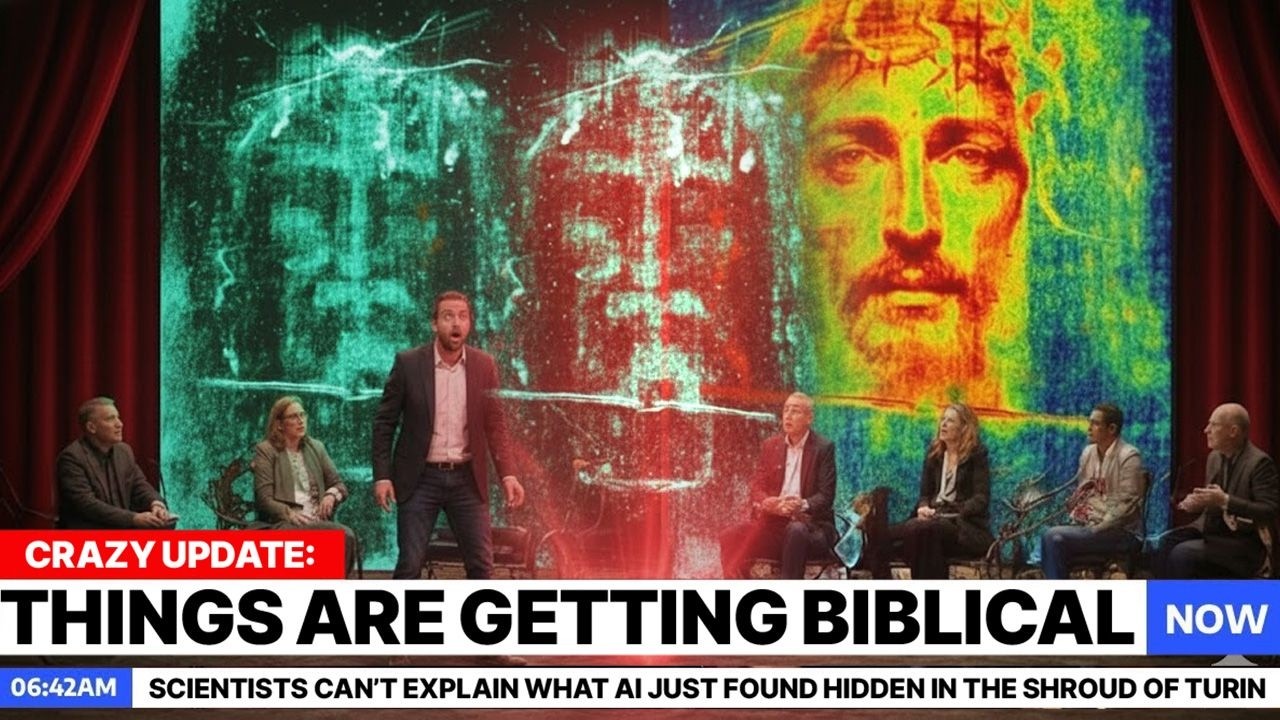
This superficiality has been one of the central challenges in explaining the Shroud, as it does not conform to known painting or printing techniques.
Moreover, the AI detected consistent microgradations that may correspond to three-dimensional depth, reinforcing the idea that the image contains information about the contours of the human body.
These findings do not establish authenticity or confirm the idenтιтy of the individual depicted, but they do highlight the complexity and sophistication of the image.
Experts emphasize that AI is a tool that enhances observation rather than providing definitive answers.
While it can reveal structural characteristics, it cannot independently determine how the image was formed or whether the Shroud is authentic.
Some of the detected patterns may result from natural variations in the fibers, environmental exposure over centuries, or the accumulation of dust, pollen, and other particulates.
Others may reflect the process by which the image was created, whether through chemical reactions, heat, or other mechanisms.
Researchers continue to analyze the data in order to distinguish between meaningful structural information and artifacts introduced by imaging techniques or AI processing.
The use of AI in studying the Shroud reflects broader trends in archaeological and historical research.
Modern imaging technologies, including multispectral analysis, 3D modeling, and computational methods, allow researchers to examine artifacts with unprecedented precision.
AI can detect patterns and structures that would be difficult or impossible to observe using conventional techniques, offering new insights into historical objects.
However, scholars caution that technological enhancement does not automatically resolve historical questions.
Interpretation requires careful consideration of context, corroborating evidence, and existing scientific knowledge.
The Shroud has also been examined using a variety of other scientific methods.
Radiocarbon dating, textile analysis, and chemical studies have all contributed to understanding the cloth’s composition and potential age.
Pollen and dust studies have provided information about its historical journey and the environments it has pᴀssed through.
Each method has limitations, and the results are often subject to interpretation and debate.
The AI analysis adds another layer to this body of research, enhancing our understanding of the Shroud while leaving some questions unresolved.
One important consideration in interpreting the AI findings is the nature of the patterns detected.
The AI identified microstructural features that appear to be consistent across the cloth and correlated with the image of the figure.
These features may provide clues about the formation process, including whether the image was created through a chemical reaction, contact with a human body, or some other mechanism.

However, researchers stress that these patterns are not direct evidence of a specific technique or historical event.
Further studies, including chemical and material analysis, are necessary to interpret the significance of the observed structures.
The Shroud’s historical and cultural significance also contributes to public interest in these findings.
As one of the most studied and revered religious artifacts in the world, it has captured the attention of millions of people over centuries.
Public exhibitions of the Shroud draw large crowds, and new research often generates widespread media coverage.
The combination of scientific investigation and religious significance ensures that any new discovery, including AI analysis, will attract attention and debate.
Despite the attention and speculation, scientists remain cautious in their conclusions.
They emphasize that the AI findings highlight structural features but do not provide definitive evidence regarding the origin, age, or authenticity of the Shroud.
The results contribute to a more detailed understanding of the artifact but must be interpreted alongside other forms of analysis and historical context.
Scholars continue to investigate the Shroud using a multidisciplinary approach, combining expertise from physics, chemistry, textile studies, and historical research.
The AI analysis may also guide future research directions.
By revealing patterns and structures that were previously undetectable, it identifies areas of the cloth that merit closer examination.
This could include targeted chemical analysis, more detailed imaging, or studies of fiber composition.
The integration of AI with other scientific methods represents a promising approach for understanding complex artifacts that have resisted explanation for centuries.
While the Shroud continues to challenge scholars, the AI findings illustrate the potential of modern technology to contribute to historical and scientific research.
The combination of traditional methods, advanced imaging, and computational analysis allows researchers to examine artifacts in ways that were not previously possible.
This interdisciplinary approach can provide new insights and help clarify aspects of the Shroud’s structure, preservation, and image formation.
It is important to note that public fascination with the Shroud often amplifies the significance of scientific findings.
Media coverage may frame results as mysterious or unexplained, while social media users speculate about supernatural or historical implications.
Scientists caution against overinterpretation, emphasizing that AI reveals structural information rather than definitive proof of authenticity or miraculous origin.
Understanding the Shroud requires careful analysis, context, and corroborating evidence.
In conclusion, the application of AI to the Shroud of Turin has revealed structural features and patterns that were previously undetectable, providing new insights into this complex and historically significant artifact.
The findings highlight the superficial nature of the image, its three-dimensional qualities, and subtle variations in the fibers that may correspond to the underlying figure.
While the AI results do not provide conclusive answers regarding authenticity or origin, they contribute to a more detailed understanding of the Shroud’s physical properties and image formation.
The Shroud remains an object of intense study, debate, and fascination.
AI has added a new dimension to this ongoing research, offering detailed analysis that enhances traditional methods.
Scholars continue to investigate the Shroud from multiple perspectives, integrating historical, scientific, and technological approaches to understand its origins, creation, and preservation.
As research progresses, new insights may emerge, but the Shroud’s enduring mysteries ensure that it will continue to captivate researchers and the public alike for generations to come.
Ultimately, the AI analysis represents a promising step forward in the study of the Shroud of Turin.
It demonstrates the potential of computational tools to uncover subtle structural information and offers a model for applying modern technology to historical and religious artifacts.
While the results raise questions and invite further study, they do not settle long-standing debates about authenticity or miraculous origins.
The Shroud remains a compelling subject for scientific inquiry, historical analysis, and public fascination, illustrating the enduring power of one of the world’s most enigmatic relics.


