Operation Raptor: How Authorities Infiltrated and Crushed a Hidden Criminal Network
Before dawn broke across multiple continents, tactical teams were already in motion.
In quiet suburbs, dense city centers, and industrial districts scattered from the United States to Europe, doors were breached in coordinated raids that would mark one of the most sweeping crackdowns on darknet crime in recent history.
By nightfall, 270 individuals were under arrest, accused of running a vast encrypted marketplace that had quietly fueled a global pipeline of narcotics, weapons, and stolen data.
For years, this hidden digital underworld operated in plain silence beneath the visible internet.
It wasn’t searchable.
It wasn’t advertised.
It didn’t rely on social media campaigns or flashy branding.
Instead, it thrived behind encrypted routing systems and anonymized browsers that promised users protection from surveillance.
To many participants, it felt like liberation — a frontier where idenтιтies dissolved and transactions left no visible trace.
To authorities, it was an expanding ecosystem of organized crime.
At the center of this operation stood one of the most powerful darknet marketplaces uncovered in recent years — a platform that functioned with the polish of a legitimate online retailer.
Vendors maintained customer ratings, dispute resolution systems, and even refund policies.
But instead of selling electronics or clothing, listings included synthetic opioids, counterfeit prescriptions, hacking tools, stolen personal data, and illegal firearms.
Payments were processed in cryptocurrency, routed through mixers and anonymizing services in an attempt to erase financial footprints.
Law enforcement agencies had long been locked in a frustrating cycle.
When one marketplace was seized, others emerged within weeks using open-source code and recycled infrastructure.
Vendors simply migrated.
Buyers followed.
Cryptocurrency wallets shifted.
The digital machine kept running.
But in early 2025, investigators quietly changed strategy.
Rather than immediately dismantling marketplaces once located, cybercrime units across the United States and Europe began coordinating on a deeper level.

Intelligence analysts weren’t just identifying websites anymore.
They were mapping entire ecosystems — tracking cryptocurrency flows across blockchains, analyzing shipping patterns, studying login timestamps, and building behavioral profiles of high-volume operators.
Instead of smashing the storefront, they stepped inside it.
Investigators infiltrated backend systems tied to multiple darknet platforms.
Rather than shutting them down, they allowed transactions to continue under surveillance.
Every encrypted message was preserved.
Every wallet transfer traced.
Every shipping label logged.
Artificial intelligence tools flagged suspicious postal activity — unusual surges in priority mail shipments, repeated address patterns, bulk package drops tied to short-term rentals.
Encryption protected the content of communications, but it did not erase behavior.
And behavior left patterns.
Authorities soon identified enterprise-level vendors — individuals conducting thousands of transactions per month.
Many never physically handled the drugs they sold.
Instead, they operated as logistics managers, coordinating supply chains from laptops.
Bulk narcotics were shipped to intermediaries who repackaged them into smaller quanтιтies.
Temporary addresses were used as distribution hubs.
Workers were hired to mail parcels under false idenтιтies.
From bedrooms and co-working spaces, these operators managed global pipelines of illegal substances.
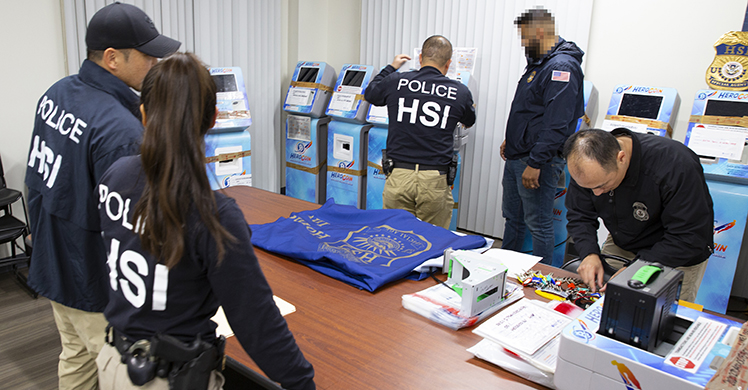
When investigators finally moved, the operation — later revealed to be months in preparation — was executed with precision.
Across the United States, Germany, Brazil, South Korea, and the United Kingdom, arrest teams carried out synchronized warrants to prevent word from spreading through the network.

The results were staggering.
Authorities seized more than $200 million in cash and cryptocurrency.
Hardware wallets containing Bitcoin, Monero, and other digital ᴀssets were confiscated.
Bank accounts were frozen.
Luxury vehicles and properties tied to suspects were secured pending forfeiture proceedings.
But the most chilling discovery was the scale of narcotics intercepted.
Over two metric tons of illegal drugs were seized — approximately 4,400 pounds.
Among them were large quanтιтies of fentanyl and fentanyl-laced substances.
Even in small amounts, such synthetic opioids pose extreme overdose risks.
Officials stated that the quanтιтies recovered represented an enormous disruption to supply chains that stretched across continents.
In addition, more than 180 firearms were confiscated during the raids, challenging the ᴀssumption that darknet vendors were purely digital actors.
Many suspects were allegedly armed and organized, prepared to defend operations that existed both online and in physical warehouses.
The investigation also exposed a parallel economy built on stolen personal data and cyber intrusion tools.
Databases containing sensitive information were reportedly traded alongside narcotics, underscoring how cybercrime and traditional organized crime had become deeply intertwined.
Operation Raptor, as authorities later called it, represented a strategic shift in digital law enforcement.
Instead of reacting to online markets after they gained traction, investigators embedded themselves within the infrastructure, building cases over months before striking simultaneously.
Blockchain analysis played a critical role.
Although cryptocurrencies offer pseudonymity, transactions are permanently recorded on public ledgers.
Analysts followed funds as they moved through mixers, exchanges, and conversion services.
When digital ᴀssets touched regulated financial platforms, compliance alerts often triggered further scrutiny.
Postal data provided another key breakthrough.
Algorithms flagged residential addresses that suddenly began shipping high volumes of packages across state and national borders.
Slight variations in return addresses — designed to avoid detection — were recognized by pattern recognition systems.
Authorities emphasized that they did not need to break encryption to dismantle the network.
Instead, they correlated metadata — the “digital exhaust” left behind by routine activity.
Login times, transaction frequencies, shipping rhythms, and cryptocurrency flow patterns combined to create detailed profiles.
The psychological impact on the broader darknet ecosystem was immediate.
Trust, long considered the backbone of underground commerce, began to erode.
If administrators could be infiltrated, vendors questioned the integrity of marketplaces.
Buyers feared controlled deliveries.
Reputation systems, once treated as reliable indicators of legitimacy, suddenly felt compromised.
Cybersecurity experts note that online criminal networks often depend as much on perception as on technology.
The promise of guaranteed anonymity fuels participation.
Once doubt creeps in, marketplaces can fracture rapidly.
Still, authorities acknowledge that the takedown does not signal the end of online crime.

The global narcotics trade remains vast, and new decentralized platforms are already emerging.
Encrypted messaging channels, invitation-only networks, and privacy-focused payment systems continue to evolve.
But Operation Raptor demonstrated something significant: anonymity is not immunity.
Digital infrastructure — postal services, cloud hosting providers, cryptocurrency exchanges — ultimately intersects with real-world systems governed by regulation and oversight.
Even encrypted empires rely on physical delivery routes and financial touchpoints.
Those connections create vulnerabilities.
Officials involved in the investigation described the operation as a “decapitation of management,” targeting not low-level street dealers but the organizational core of an international enterprise.
By focusing on high-volume vendors, administrators, and financial facilitators, authorities aimed to destabilize the structure rather than merely disrupt the surface.
For communities impacted by synthetic opioids and illegal firearms trafficking, the crackdown represents a major disruption to supply lines.
For law enforcement agencies, it marks a shift toward proactive digital policing powered by data analytics and international collaboration.
The hidden web once marketed itself as untouchable — a realm where encrypted messages vanished into the void and digital idenтιтies dissolved into mathematical code.
But in May 2025, coordinated raids across continents sent a different message.
Every transaction leaves a shadow.
Every shipment creates a trail.
Every encrypted empire depends on infrastructure that can be mapped.
The invisible network had grown bold, confident in layers of anonymity.
But when the doors came crashing down in synchronized silence, the illusion shattered.
The era of believing that the darknet operates beyond reach has been fundamentally challenged — and for hundreds now facing prosecution, the promise of invisibility proved far more fragile than advertised.


