At 62, Demi Moore Reflects on Ashton Kutcher, Heartbreak, and the Cost of Losing Herself
When Demi Moore met Ashton Kutcher in the early 2000s, the connection felt electric. She was an established A-list actress in her early 40s, navigating life after her divorce from Bruce Willis. He was in his mid-20s, rising fast in Hollywood, charismatic and confident. Their chemistry was undeniable — and so was the scrutiny.
Almost overnight, their relationship became a cultural flashpoint. While older male actors dating younger women had long been normalized, Moore faced harsh criticism for reversing the dynamic. Tabloids dissected her appearance, questioned her motives, and framed the romance as spectacle rather than partnership.

Still, they married in 2005 in what appeared to be a deeply committed union. Kutcher embraced a role in Moore’s blended family with her three daughters. Publicly, the relationship projected unity and modernity. Privately, Moore has since revealed, pressure was building.
In her memoir Inside Out and later interviews, Moore described an undercurrent of insecurity that shaped much of the marriage. She felt compelled to remain youthful, desirable, and emotionally adaptable — not because Kutcher explicitly demanded it, but because she feared losing him. Aging, she has said, felt less like a natural process and more like a threat.
Then came a devastating turning point.
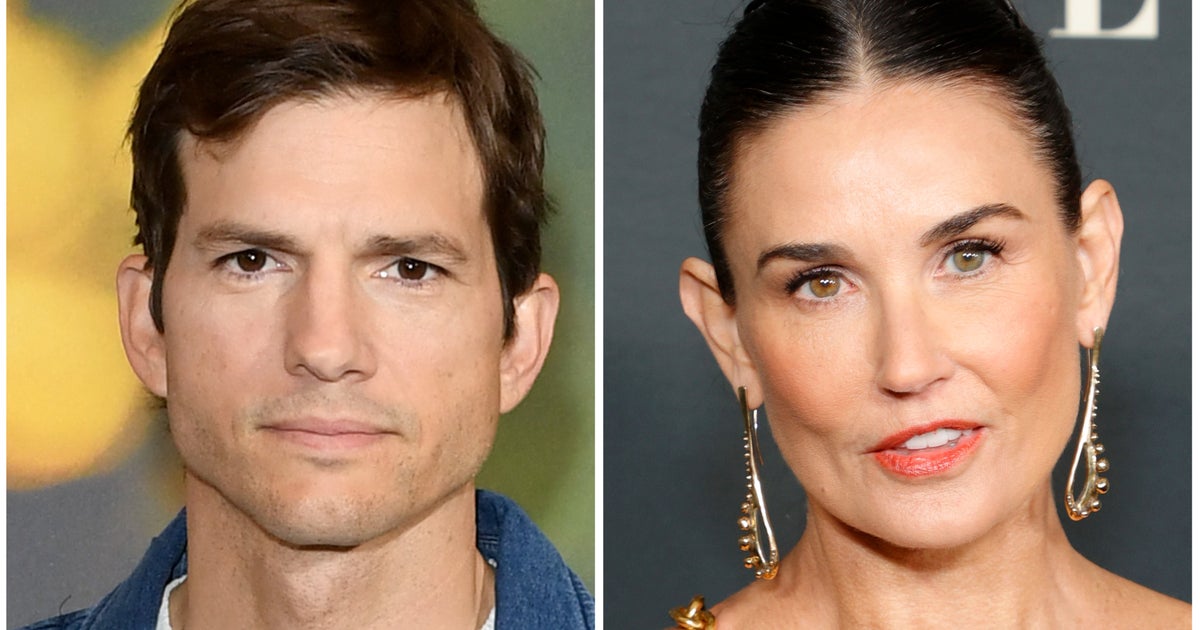
Moore became pregnant during the marriage but miscarried several months into the pregnancy. The loss hit her hard. She later admitted she internalized the miscarriage as personal failure, questioning her body and her worth. Rather than processing the grief openly, she carried it silently — an isolation that deepened cracks already forming.
Around this time, her long-standing sobriety began to fracture. After nearly two decades without alcohol, she convinced herself she could manage moderation. What began as an attempt to feel relaxed and connected gradually became something heavier. Moore has described this relapse not as rebellion, but as emotional exhaustion — an effort to numb unresolved pain.

Meanwhile, Kutcher’s career surged. He was working long hours, surrounded by younger co-stars, immersed in a fast-moving industry culture. Moore, already an established star, found fewer roles coming her way. The imbalance intensified her sense of invisibility.
In her own words, she began compromising parts of herself to preserve intimacy. She agreed to situations that conflicted with her boundaries, believing flexibility would keep the marriage strong. Instead, she later realized, it eroded her self-respect.
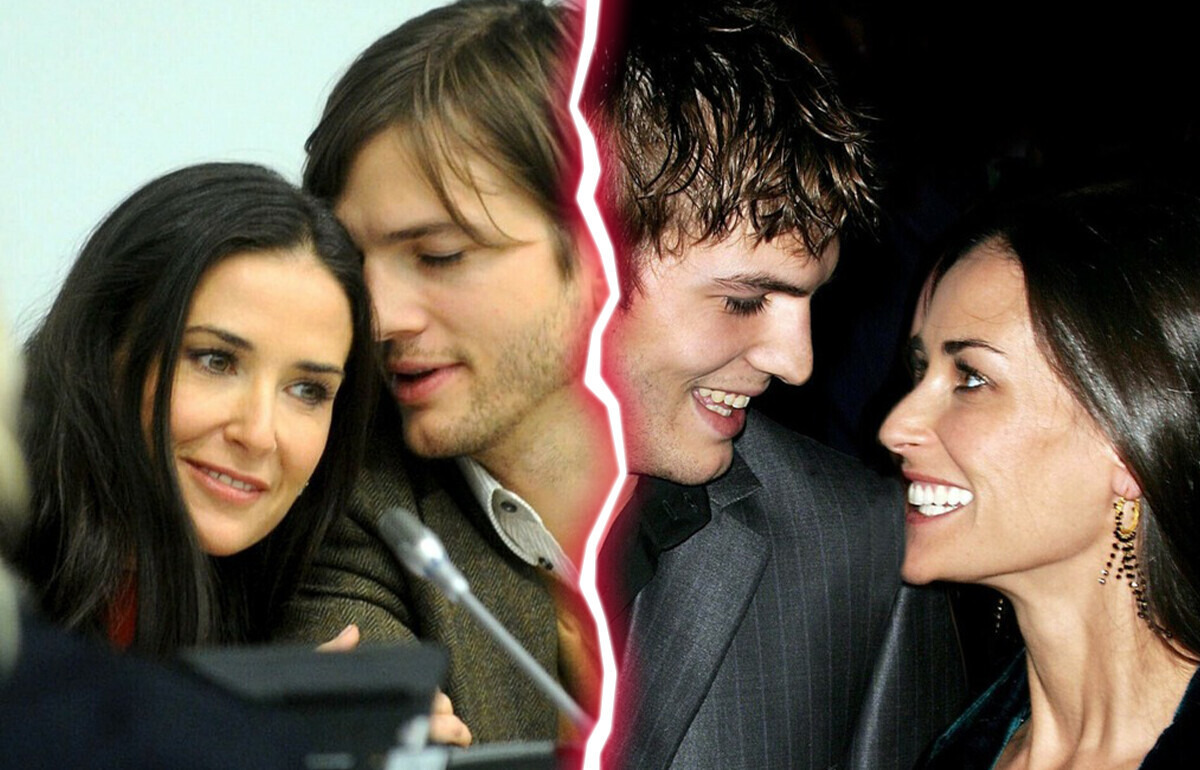
The breaking point came when allegations of infidelity surfaced publicly in 2011. The details exploded across tabloids, turning private devastation into entertainment. Moore has said that what hurt most was not only the betrayal, but the way responsibility seemed blurred in its aftermath — as though her earlier compromises were somehow justification.
The humiliation was compounded by ageist commentary. Headlines mocked her for “losing” a younger husband, reinforcing the very insecurities she had battled. Kutcher remained largely private during the fallout, while Moore felt she carried the emotional weight alone.
By the time they officially separated and divorced, Moore says she was physically and emotionally depleted. Her substance use escalated, culminating in a public health crisis that led to hospitalization in 2012. It was, she has described, a reckoning.
:max_bytes(150000):strip_icc():focal(749x0:751x2)/demi-moore1-fbe88459f52a45a0a8a877114246f5d2.jpg)
“I had lost myself,” she later reflected.
Recovery was not immediate. Therapy forced her to confront long-standing patterns — people-pleasing, fear of abandonment, and equating sacrifice with love. She realized these patterns predated Kutcher, but the marriage magnified them.
Professionally, the silence was equally confronting. Roles slowed. Hollywood seemed unsure where to place her. Too old for the ingénue, too visible to disappear. For the first time in decades, she couldn’t rely on career momentum to define her idenтιтy.
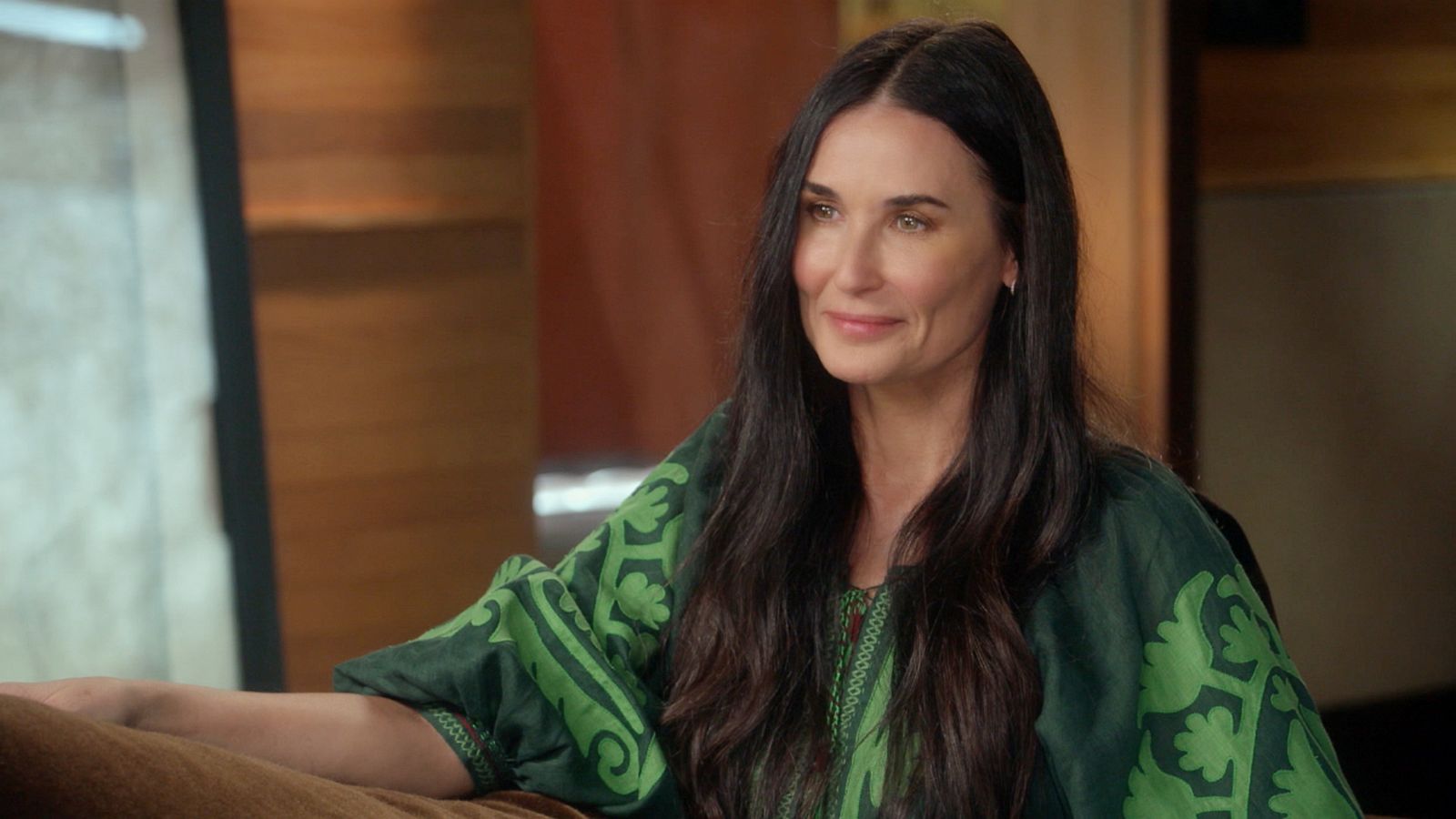
Writing Inside Out became a pivotal act. The memoir did not sensationalize Kutcher; rather, it examined her own choices with unflinching honesty. She acknowledged mistakes without excusing betrayal. She admitted where she had abandoned her intuition. Naming her shame, she found, stripped it of power.
In recent years, Moore has returned to acting with renewed clarity. She has chosen roles that reflect maturity rather than deny it, embracing age as evolution instead of erosion. At 62, she speaks less about scandal and more about survival.
The most striking revelation is not a shocking accusation against Kutcher.

It is her admission that she participated in her own erasure — and that losing everything forced her to choose herself fully for the first time.
Kutcher has since built a life with actress Mila Kunis, and Moore has publicly expressed goodwill toward them. Time has softened headlines into history. What remains is perspective.
Demi Moore’s story is not simply about a marriage that failed.

It is about how easily idenтιтy can become entangled with validation — and how painful, yet powerful, it is to untangle it.
At 62, she is not rewriting the past. She is reclaiming it.
And perhaps that, more than any tabloid revelation, is what truly shocks.


