Super Bowl Shockwave: Could Bad Bunny Face a $10 Million FCC Fine?
The Super Bowl halftime stage is one of the most powerful platforms in global entertainment — a collision of sports, music, advertising, and mᴀss broadcast.
Every second is choreographed.
Every lyric rehearsed.
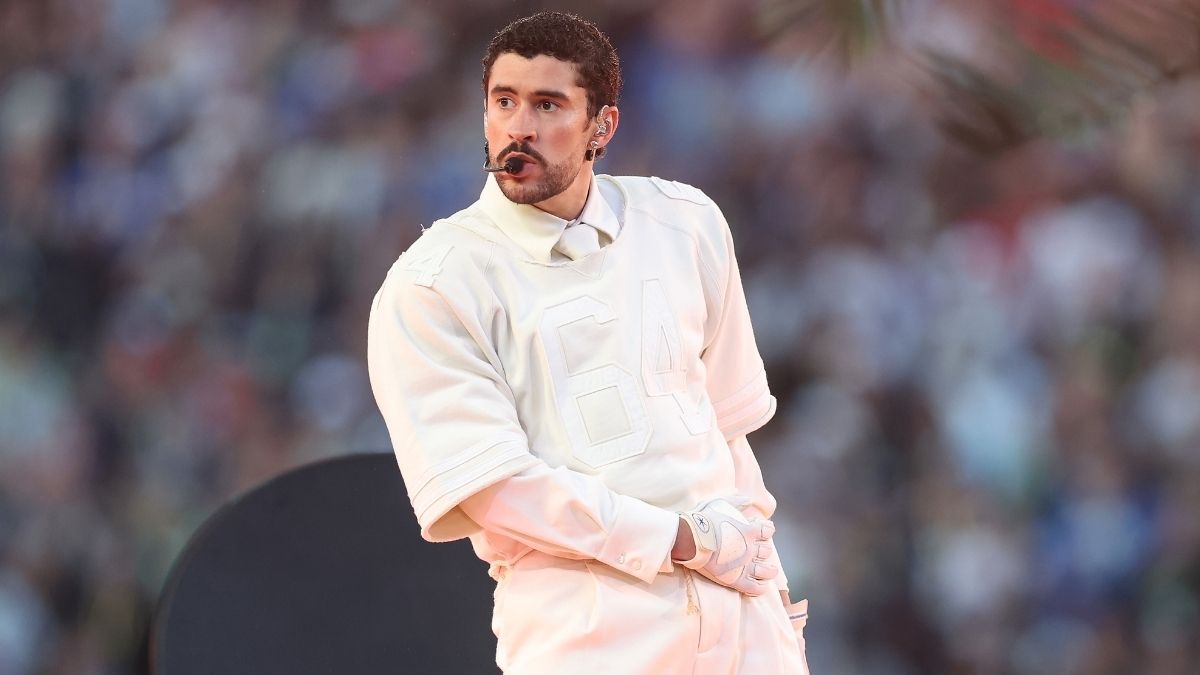
Every camera angle calculated.
So when rumors began circulating that Bad Bunny could face a potential $10 million fine from the Federal Communications Commission over alleged on-air vulgarity and explicit gestures during the Super Bowl, the conversation ignited instantly.
The claim, widely shared across social media, suggests that the FCC is reviewing the performance for possible indecency violations — and that Apple Music and the NFL could also face financial penalties.
But what do we actually know?
First, context matters.
The Super Bowl is broadcast on network television, which falls under FCC jurisdiction for indecency regulations.
The agency enforces standards that prohibit obscene content and restrict indecent material during certain hours when children are likely to be in the audience.

However, the FCC does not preemptively fine performers.
Complaints must be filed.
Investigations must be conducted.
Legal thresholds must be met.
As of this writing, there has been no official FCC press release confirming a $10 million fine against Bad Bunny, nor any finalized enforcement action publicly announced against the NFL or Apple Music.
The statement attributed to an “FCC Commissioner Joseph Barron” has also not been verified through official FCC channels.
Public records list current commissioners, and any formal statement would typically be documented on agency websites or through verified media briefings.
That does not mean controversy is absent.
Super Bowl halftime performances routinely generate audience complaints.
Past shows have sparked debate over costume design, choreography, lyrical content, and perceived suggestiveness.
The FCC’s authority, however, applies specifically to broadcast networks — not to streaming platforms.
Apple Music’s role as sponsor of the halftime show would not automatically place it under FCC broadcast fines unless content violations occurred through a regulated channel.
The NFL, as event organizer, could potentially face scrutiny if broadcast standards were violated, but enforcement mechanisms involve detailed review processes rather than instant penalties.
The key legal question centers on whether any language or gestures crossed the line from protected artistic expression into legally defined indecency or obscenity under FCC guidelines.
The distinction is technical.
Obscenity — which is not protected by the First Amendment — must meet a three-pronged legal test established by the Supreme Court.
Indecency, meanwhile, involves language or material that depicts Sєxual or excretory activities in a way deemed offensive by community standards for broadcast television.
Context, timing, and presentation matter significantly.
If profanity is spoken in a language other than English, the FCC may still evaluate meaning if the words are widely understood.
However, enforcement depends on substantiated complaints and formal review.
Super Bowl halftime shows are typically subject to delay mechanisms precisely to prevent accidental broadcast violations.
In previous high-profile cases — most notably the 2004 “wardrobe malfunction” incident involving Janet Jackson — the FCC imposed substantial fines, though subsequent court rulings later vacated those penalties due to procedural issues.
Since then, networks have implemented тιԍнтer controls and broadcast safeguards.
Industry observers note that modern halftime performances are carefully vetted in advance, including choreography review and lyrical edits.
The idea of an immediate $10 million fine suggests either an unprecedented enforcement scale or viral exaggeration.
Financial penalties from the FCC can be significant but are calculated per violation and per station, not typically as a flat symbolic figure announced in the immediate aftermath.
Public reaction has split along predictable lines.
Some viewers argue that Super Bowl halftime shows increasingly push boundaries inappropriate for family viewing.

Others counter that artistic expression and contemporary music culture inevitably reflect evolving norms.
Bad Bunny, known for blending reggaeton, trap, and Latin pop with unapologetic flair, has built a brand rooted in authenticity and cultural idenтιтy.
Language — including Spanish profanity — plays a role in his artistic voice.
Whether that voice crosses regulatory lines depends not on public opinion but on legal interpretation.
The NFL, meanwhile, has increasingly embraced global artists to expand international reach.
Cultural crossover inevitably invites cultural friction.
If complaints have indeed been filed, the FCC’s enforcement bureau would review recordings, ᴀssess context, and determine whether action is warranted.
Until official confirmation emerges, claims of a finalized $10 million fine remain speculative.
The broader issue highlights the tension between mᴀss broadcast standards and evolving entertainment norms.
The Super Bowl commands one of the largest television audiences in the United States.
That scale magnifies scrutiny.
But regulatory action requires procedural rigor.
In the absence of verified documentation, the prudent conclusion is that reports of a confirmed fine remain unsubstantiated.
As debates continue online, it is worth distinguishing between viral narrative and regulatory reality.
The halftime stage may generate shockwaves — but enforcement decisions unfold through formal channels.
For now, the story remains a question mark rather than a concluded case.


