Old Mystery, New Questions: The McCann Case and Claims Tied to Epstein Documents
Nearly two decades after the disappearance of Madeleine McCann shocked the world, her name has resurfaced once again — this time in connection with online claims about court documents tied to Jeffrey Epstein and Ghislaine Maxwell.
The renewed attention has spread rapidly across social media platforms, where posts allege that Madeleine’s name appeared in recently unsealed materials related to Epstein’s criminal network.
Some viral narratives go further, claiming that composite sketches released years ago bore resemblance to Maxwell and that documents suggested sightings of a child matching Madeleine’s description long after her 2007 disappearance in Portugal.
Given the emotional gravity of Madeleine McCann’s case — one of the most widely reported missing child investigations in modern history — such claims inevitably ignite intense public reaction.
But as with many viral stories linking high-profile cases, careful examination of verified court records and official investigative findings is essential before drawing conclusions.
Madeleine disappeared on May 3, 2007, from a holiday apartment in Praia da Luz, Portugal, while on vacation with her family.
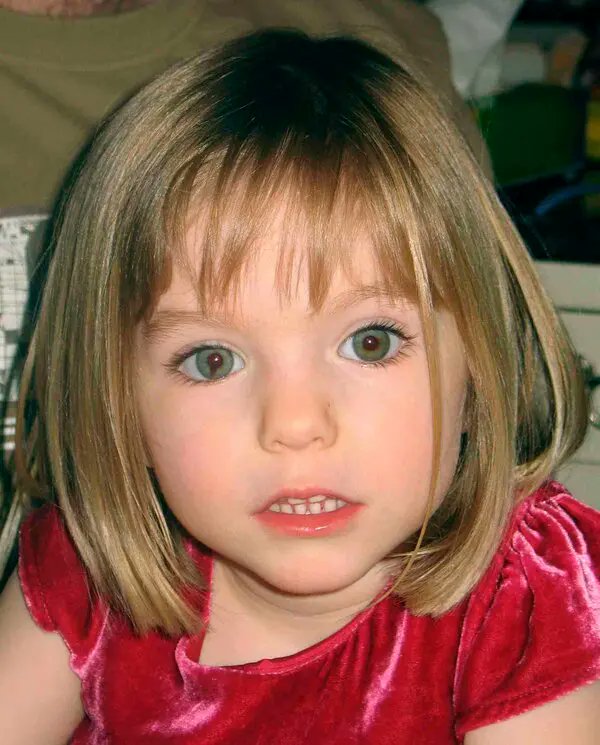
The case triggered an international investigation involving Portuguese authorities, British police, and later German prosecutors.
Over the years, multiple theories have emerged, suspects have been questioned, and investigative directions have shifted.
Yet despite extensive inquiry, no definitive judicial conclusion has been reached regarding her fate.
Meanwhile, the criminal proceedings involving Jeffrey Epstein and Ghislaine Maxwell followed a separate trajectory.
Epstein was arrested in 2019 on federal Sєx trafficking charges and died in custody later that year.
Maxwell was subsequently tried and convicted in 2021 for her role in recruiting and grooming minors for abuse.
The cases produced voluminous court filings, including depositions and contact references spanning decades of Epstein’s ᴀssociations.
In recent months, portions of those filings were unsealed following court orders.
The release reignited scrutiny of names that appeared in documents — though legal experts repeatedly cautioned that inclusion in court records does not equate to criminal involvement.

Many names appeared simply in address books, flight logs, or as contextual references in testimony.
As for claims that Madeleine McCann’s name appeared in those materials, thorough reviews of verified, publicly available court documents have not established evidence of her being directly connected to Epstein’s crimes.
Misinformation can spread rapidly when emotionally charged cases intersect, especially when document releases are complex and fragmented.
Another frequently cited element of the online narrative involves a composite sketch circulated during the early McCann investigation.
Some social media users have ᴀsserted that one of the facial composites resembles Ghislaine Maxwell.
However, law enforcement agencies never formally identified Maxwell as a suspect in Madeleine’s disappearance.
Composite sketches, by nature, are approximations based on witness descriptions and can resemble numerous individuals without indicating factual linkage.
British authorities have continued their investigation into Madeleine’s disappearance under Operation Grange, an inquiry launched by the Metropolitan Police in 2011.
In recent years, German prosecutors have publicly identified a separate suspect unrelated to Epstein or Maxwell.
That investigation remains ongoing.
Experts in criminal justice emphasize that conflating separate high-profile cases without substantiated evidence risks distorting public understanding and diverting attention from verified investigative pathways.
The emotional resonance of Madeleine’s case cannot be overstated.
For many, her disappearance symbolizes the vulnerability of children and the anguish of unresolved loss.
Any suggestion of new leads naturally commands attention — particularly when tied to infamous figures like Epstein and Maxwell.
Yet responsible reporting requires distinguishing between documented facts and speculative connections amplified online.
While court records in the Epstein matter span thousands of pages and reference a vast array of names, reputable outlets have not reported credible findings tying Madeleine McCann to Epstein’s criminal enterprise.
Legal analysts note that viral claims often arise from misinterpretations of document indexing systems, name searches within large datasets, or conflation of unrelated investigative timelines.
Advocates for missing children warn that misinformation can unintentionally harm ongoing investigations by muddying public discourse.
Families affected by unsolved cases often face renewed waves of speculation each time unrelated headlines trend.
The broader lesson may lie in the way modern information ecosystems function.
The intersection of unsealed court records, algorithm-driven amplification, and emotionally charged unresolved mysteries creates fertile ground for rapid — but not always accurate — narrative formation.
For now, there is no verified judicial or law enforcement confirmation linking Madeleine McCann’s disappearance to Jeffrey Epstein or Ghislaine Maxwell.
Authorities continue to pursue investigative avenues grounded in evidence specific to the McCann case itself.
As discussions continue online, experts urge caution, critical reading of primary sources, and reliance on confirmed statements from investigative agencies rather than viral summaries.
The enduring tragedy of Madeleine’s disappearance remains a solemn reminder of the countless families still seeking answers about missing children worldwide.
While public interest in accountability and transparency is legitimate, preserving factual integrity is equally vital.
In an era when document releases can spark global speculation within minutes, distinguishing between substantiated developments and conjecture becomes not only a journalistic responsibility but a public one.
The search for truth in any case — particularly one as sensitive as Madeleine McCann’s — depends on evidence, not echoes.


