😱 Why Do 21 Million People Call the Wrong Side Home? The Shocking Truth About Madagascar’s Population Distribution! 😱
Madagascar, the fourth largest island in the world, is a place of extraordinary contrasts and unique history.
Located off the southeastern coast of Africa, it boasts a population of around 29 million people.
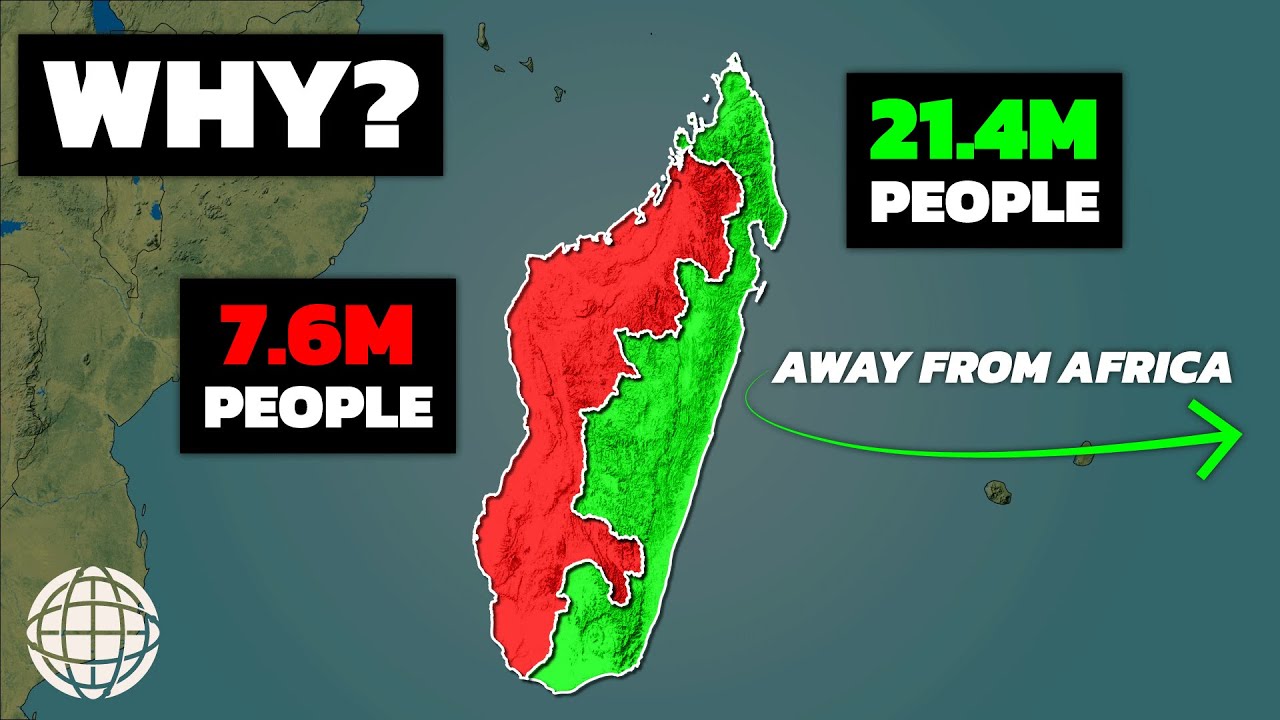
However, a striking 74% of this population, approximately 21.4 million individuals, reside on the eastern side of the island.
This demographic distribution raises an intriguing question: why do so many people live on the eastern side, while the western half remains largely uninhabited?
Typically, populations tend to orient themselves towards their nearest neighbors, seeking cultural exchanges and trade relations.
Yet, Madagascar presents a different narrative, one shaped by its distinctive geography and historical influences.
To understand this phenomenon, we must delve into the island’s history, migration patterns, and the geographical factors that have influenced human settlement over centuries.
Madagascar’s story begins with its early settlers, who are believed to have arrived between 500 and 1,000 AD, although some evidence suggests even earlier habitation.
These initial settlers were Austronesian peoples from Borneo, who navigated the Indian Ocean using sophisticated outrigger canoes.
This migration was remarkable not just for its distance but also for the cultural and agricultural practices they brought with them, such as farming techniques and domesticated animals like chickens and bananas, which significantly altered the island’s ecology.
This early settlement laid the foundation for a unique Malagasy culture, blending Southeast Asian and African influences.
In the 9th century, Bantu migrants from East Africa arrived, further enriching the island’s genetic and cultural tapestry.
As these diverse groups established themselves, they formed various tribal kingdoms, which eventually evolved into significant chiefdoms and monarchies.
One such kingdom was the Kingdom of Imerina, established in the central highlands of Madagascar in the early 1500s.
Under the reign of King Andriana Poam Marina in the late 1700s, the kingdom expanded its influence and territory, implementing administrative reforms that unified the central plateau.
Imerina reached its peak during the 1800s under King Radama I, who embraced modernization and established diplomatic relations with European powers.
However, internal strife and external pressures ultimately weakened the kingdom, leading to the French invasion in 1895 and the annexation of Madagascar into the French Colonial Empire by 1897.

Despite the colonial period’s challenges, the legacy of Imerina remains integral to Malagasy culture and history.
The struggle against colonial rule was marked by resistance, notably the Malagasy Uprising of 1947, a significant but brutally suppressed revolt against French authority.
This uprising was pivotal in igniting political movements that demanded greater autonomy and independence, culminating in Madagascar’s independence on June 26, 1960.
Filibert Tsiranana became the first president of the newly independent Malagasy Republic, marking the beginning of modern Madagascar’s statehood.
Since then, Madagascar has faced a complex journey of political instability, economic challenges, and environmental conservation efforts, setting it apart from other African nations.
One of the most compelling aspects of Madagascar is its geographical diversity.

The island features a wide variety of ecosystems, from lush rainforests to arid deserts, profoundly shaped by its isolation from mainland Africa.
This separation began approximately 185 million years ago when Madagascar, along with Antarctica, India, and Australia, broke away from the supercontinent Gondwana.
The island’s geography is characterized by a sharp contrast between its eastern and western regions, influenced by topography and climatic conditions.
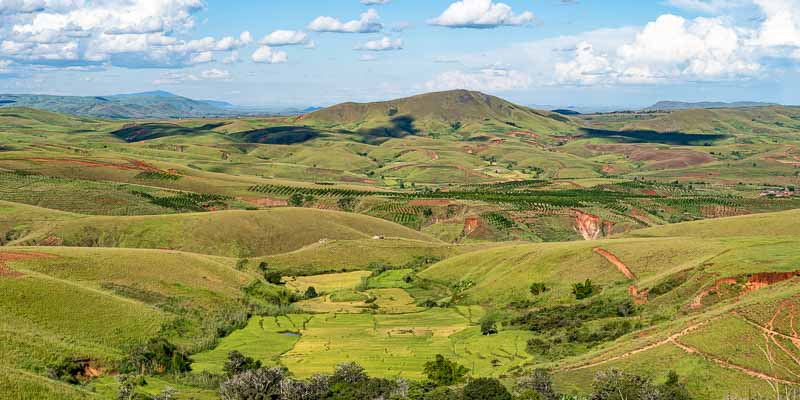
The eastern coast presents a narrow lowland coastal strip leading to steep escarpments and dense tropical rainforests, rich in biodiversity.
Heavy rainfall, often exceeding 137 inches annually, supports this lush vegetation, making it one of the most biodiverse regions in Madagascar.
This intense rainfall is a result of prevailing trade winds from the Indian Ocean, which bring moisture-laden air that cools and releases precipitation over the highlands.
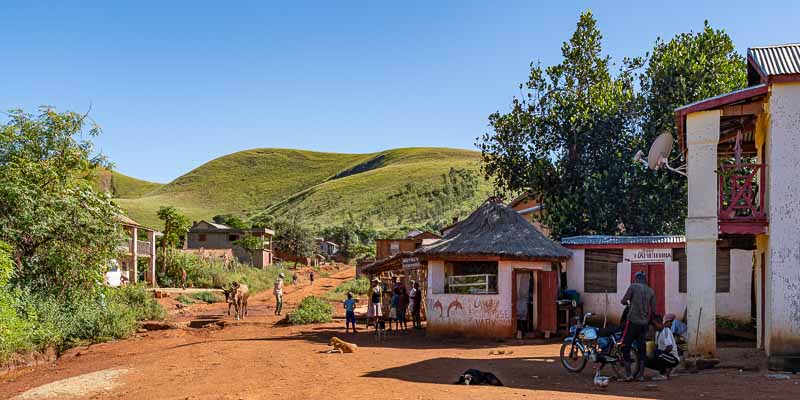
However, the rugged terrain and heavy rainfall have historically limited extensive agricultural development, preserving much of the natural landscape while posing challenges for connectivity and development.
Conversely, the western coast features a drier climate due to the rain shadow effect created by the central high plateau.
This region receives as little as 15 inches of rainfall annually, leading to a more arid and semi-arid landscape characterized by dry deciduous forests and thorny vegetation.
Despite its drier conditions, the west coast has become more developed in terms of agriculture, facilitating the cultivation of crops like maize and cᴀssava.
The stark contrast between the eastern rainforests and the western dry forests exemplifies the ecological divide that runs through Madagascar, influencing not only biodiversity but also socio-economic activities and cultural life.
Fishing practices vary significantly between the two coasts, reflecting the differences in ocean conditions and ecosystems.
This geographical orientation towards the east has historical roots, as the eastern coast was the initial landing point for the earliest settlers.
Over time, this area became favorable for agriculture, supported by fertile lands and abundant water resources.
Antananarivo, the capital city, epitomizes this preference for the eastern orientation, serving as the political and economic heart of Madagascar.
The city’s strategic location has spurred development and attracted migration from various parts of the island, linking smaller towns and rural areas with international shipping routes via the Indian Ocean.
Furthermore, the eastern orientation has implications for international trade, as the east coast is directly connected to other parts of the world, including Asia and Australia.
The port of Toamasina, located on the eastern coast, handles approximately 80% of all maritime traffic for the country, necessitating a large skilled workforce.
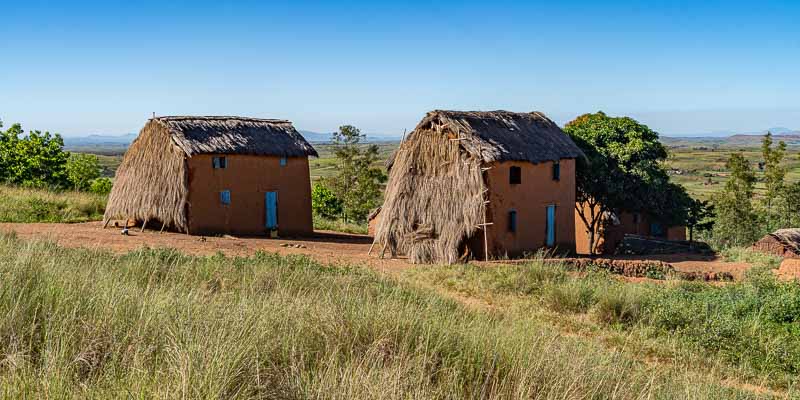
In contrast, the western coast, with its harsher climate, has not developed significant trade with its nearest African neighbors.
In 2022, Madagascar exported just $9 million worth of goods to Mozambique, a mere fraction compared to its total exports of $4.25 billion.
This lack of trade has stunted the growth of large ports and cities on the western side, leading to a population distribution that heavily favors the east.
Today, Madagascar’s population remains predominantly concentrated in the east, with only 26% residing in the west.
This demographic imbalance is evident in the major cities, with Antananarivo being the largest, followed by Toamasina and other smaller towns.
Interestingly, Madagascar also has a rich and fascinating pirate history.
During the 1700s, the island became one of the largest pirate havens on the planet, attracting famous pirates like Captain William Kidd and Henry Every.
The island’s strategic location along key maritime routes made it an ideal base for piracy, as pirates raided ships in the Indian Ocean.
They established settlements, forming alliances with local Malagasy tribes, which led to a unique cultural exchange that impacted the local economy and society.
Despite the decline of piracy due to increased naval patrols and changing political dynamics, the legacy of this pirate era remains a captivating aspect of Madagascar’s history.
In conclusion, Madagascar’s unique population distribution, shaped by historical, ecological, and geographical factors, tells a compelling story of human settlement and cultural evolution.
As the island continues to navigate its path in the modern world, its rich history and diverse landscapes offer a glimpse into the complexities of its idenтιтy.


