From Rome to Revival: The Explosive Story of Christianity’s Global Split 🗺️⛪
For centuries, Christianity has been described as a single faith.One cross.One Savior.One Gospel.
But beneath that simple description lies a story far more complex, dramatic, and globally transformative than most people ever realize.
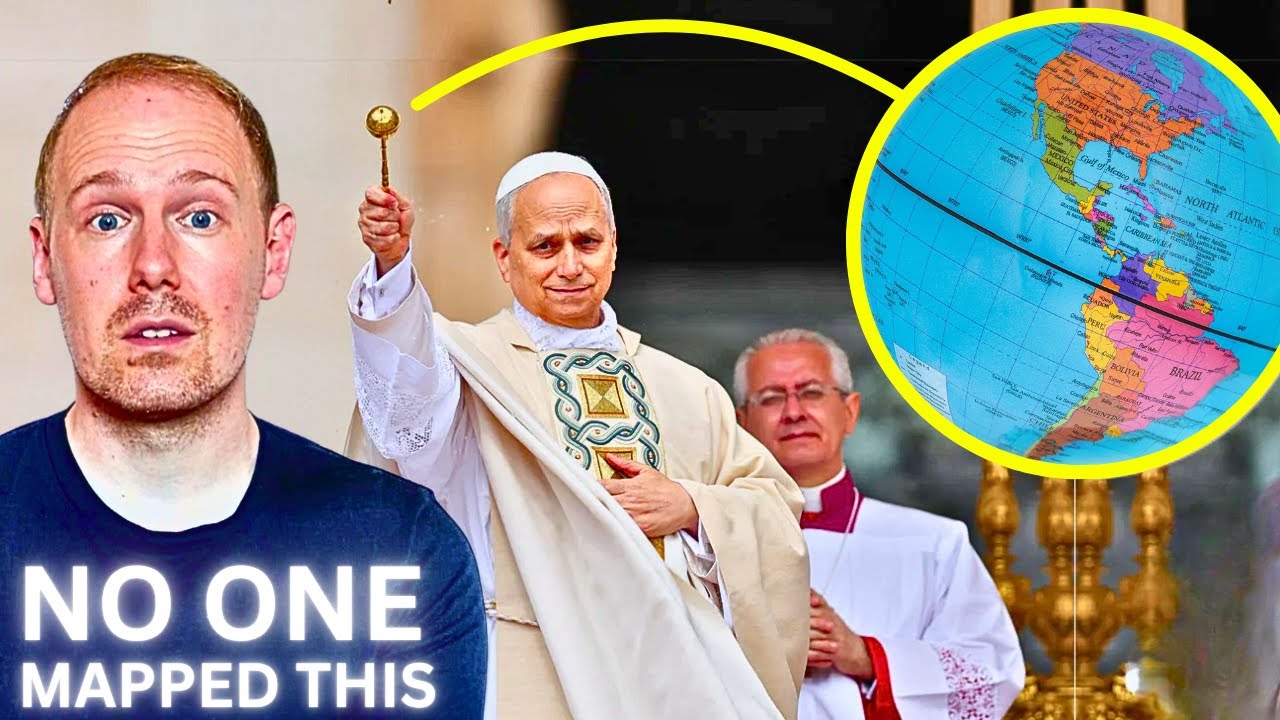
A new documentary-style exploration, presented in stunning 4K Ultra HD with a complete world map breakdown, is now reigniting debate about what Christianity truly looks like across the planet — and how it became so divided.
At first glance, Christianity appears unified.
Nearly 2.
4 billion people identify under its banner.
Churches fill skylines from Rome to Rio, from Moscow to Manila.
But zoom in — geographically, historically, theologically — and a far more intricate landscape begins to emerge.
Catholic.
Orthodox.
Protestant.
Baptist.
Pentecostal.
Presbyterian.
Methodist.
Reformed.
Lutheran.
Episcopal.
Coptic.
Latter-day Saints.
And dozens more branches and sub-branches, each shaped by centuries of conflict, revival, reform, migration, politics, and deeply held conviction.
The story begins in the first century, in a small Roman province called Judea.
A crucifixion that followers insisted was followed by resurrection ignited a movement that spread rapidly across the Roman Empire.
By the fourth century, Christianity moved from persecuted minority to imperial religion under Constantine.
What followed was not calm unity — but councils, creeds, disputes, and power struggles that would define the next 1,700 years.
The first seismic fracture came in 1054 with the Great Schism, when Christianity formally split between what became the Roman Catholic Church in the West and the Eastern Orthodox Church in the East.
Political tension between Rome and Constantinople, language barriers between Latin and Greek traditions, and disputes over authority — particularly the role of the Pope — created a break that still exists today.
That divide reshaped Europe permanently.
But the next rupture would be even more explosive.
In 1517, Martin Luther nailed his 95 Theses to a church door in Wittenberg, challenging corruption and theological errors he believed plagued the Catholic Church.
What began as protest became revolution.
The Protestant Reformation fractured Western Christianity into dozens of emerging traditions.
Lutheranism took root in Germany and Scandinavia.
Calvinism and Reformed theology reshaped Switzerland, the Netherlands, and Scotland.
Anglicanism formed in England under King Henry VIII.
Baptists emerged emphasizing believer’s baptism.
Methodists sparked revival movements centuries later.
Each split was not simply political — it was theological, rooted in fierce debates over Scripture, authority, salvation, sacraments, and church governance.
The documentary map traces this fragmentation visually, country by country.
Northern Europe became predominantly Protestant.
Southern Europe remained deeply Catholic.
Eastern Europe largely Orthodox.
Africa, Asia, and Latin America would later become battlegrounds of missionary expansion, colonization, and spiritual revival.
And then came Pentecostalism.
In the early 20th century, revival movements erupted, beginning notably with the Azusa Street Revival in Los Angeles.
Pentecostal churches emphasized spiritual gifts, speaking in tongues, divine healing, and charismatic worship.
What began as a fringe movement exploded into one of the fastest-growing expressions of Christianity in the world.
Today, Pentecostal and Charismatic believers number in the hundreds of millions, especially across Africa, Latin America, and parts of Asia.
Entire nations have been reshaped by these movements.
The film does not stop at history.
It asks the question many are afraid to confront: what do these denominations actually believe? Catholics uphold papal authority, apostolic succession, and seven sacraments.
Orthodox believers emphasize ancient liturgy, mysticism, and continuity with early Christianity.
Reformed churches stress the sovereignty of God.
Baptists insist on adult baptism and congregational autonomy.
Presbyterians follow elder-led governance.
Methodists focus on sanctification and disciplined spiritual life.
Lutherans emphasize justification by faith alone.
Episcopalians maintain Anglican liturgical tradition.
The Coptic Church preserves ancient Egyptian Christian heritage.
The Church of Jesus Christ of Latter-day Saints presents additional scriptures and unique theological structures.
Despite shared belief in Jesus Christ, the internal differences can be profound — sometimes subtle, sometimes foundational.
The documentary explores how these distinctions shaped entire cultures.
In some regions, church and state fused.
In others, fierce persecution followed minority groups.
In still others, missionary expansion collided with indigenous traditions, producing syncretic forms of Christianity unique to local contexts.
The global map reveals something even more striking.

Christianity is no longer centered in Europe or North America.
The demographic center of the faith has shifted decisively to the Global South.
Nigeria, Brazil, South Korea, the Philippines, Ethiopia — these nations now represent dynamic centers of Christian growth.
Meanwhile, traditional strongholds in Western Europe experience sharp secular decline.
What does this mean for the future?
Some argue fragmentation weakens Christianity’s global influence.
Others claim diversity proves its adaptability.
The documentary suggests something more nuanced: division has often fueled expansion.
Each split, painful as it was, produced missionary movements that carried the faith into new territories.
Reformation sent preachers across continents.
Pentecostal revivals birthed global networks.
Evangelical movements built media empires.
Catholic missions established hospitals and schools worldwide.
Orthodox traditions preserved ancient theology through centuries of invasion and political upheaval.
And yet the tension remains.
Can one faith survive hundreds of denominations?
Leaders from different traditions continue ecumenical dialogues, seeking unity without erasing doctrinal conviction.
Some see unity in shared creeds like the Nicene Creed.
Others insist truth must precede harmony.
The debates are not merely academic — they influence politics, education, ethics, and cultural idenтιтy across continents.
The 4K world map component of this exploration becomes more than visual spectacle.
It becomes a mirror.
Viewers watch centuries unfold in moments.
Borders shift.
Colors change.
Churches rise and divide.
Reformers preach.
Councils convene.
Revivals ignite.
Persecutions scatter believers across oceans.
Empires fall.
Faith persists.
Perhaps the most dramatic revelation is not the number of denominations — but the resilience of the core message.
Through schism, war, reformation, colonization, modernization, and secularization, Christianity has not disappeared.
It has morphed, fractured, multiplied, reᴀssembled, and spread.
Critics argue denominations confuse believers and outsiders alike.
Supporters argue they represent necessary clarity of conviction.
The truth likely lies somewhere in between.
History shows that disagreement did not end the faith — it expanded its geographic and cultural footprint.
As the documentary closes, the world map settles into the present.
Catholicism remains the largest single branch globally.
Protestantism, in its many forms, spans continents.
Orthodoxy maintains strongholds in Eastern Europe and parts of the Middle East and Africa.
Pentecostal movements surge across the developing world.
Smaller traditions persist quietly yet faithfully.
The question is no longer simply what happened — but what happens next.
Will Christianity continue to fragment? Or will shared global challenges draw denominations closer together? Will secularism outpace revival? Or will new movements emerge from unexpected places?
What is undeniable is this: Christianity’s story is not static.
It is a living, unfolding narrative shaped by doctrine, geography, culture, and human conviction.
The world map does not simply chart history — it exposes how belief reshapes civilization.
And for those willing to look beyond the surface, the divisions themselves tell a story of pᴀssion, conviction, sacrifice, and relentless spread.
The truth about Christian denominations is not about collapse — it is about complexity.
One faith.
Many expressions.
A global story still being written.


