Mexico at a Crossroads: The Fall of a Cartel тιтan
Mexico has entered a period of profound uncertainty following the dramatic capture of Nemesio Oseguera Cervantes, widely known as “El Mencho,” the longtime leader of the Jalisco New Generation Cartel (CJNG). The operation, carried out on Sunday, February 22, in the mountainous region of Tapalpa, Jalisco, marks one of the most significant blows to organized crime in recent Mexican history.
According to official reports, the coordinated mission involved the Mexican Army, the National Guard, and the Air Force, with intelligence support from the United States. Ground forces and armed helicopters were deployed to surround an area believed to be under heavy cartel protection. What followed was an intense confrontation between security forces and armed members of the CJNG.

Authorities later confirmed that four alleged cartel members were killed during the firefight. Among them, officials stated, was Oseguera Cervantes himself. If fully verified, his death would close a chapter in Mexico’s long and bloody struggle against organized crime—while potentially opening another defined by instability and violent power struggles.
El Mencho had long been considered one of the most powerful and elusive drug traffickers in the world. Under his leadership, the CJNG grew into a transnational criminal organization with operations spanning multiple continents. Known for its aggressive tactics and rapid expansion, the cartel established territorial dominance in several Mexican states, often challenging rival groups and state authorities with unprecedented force.
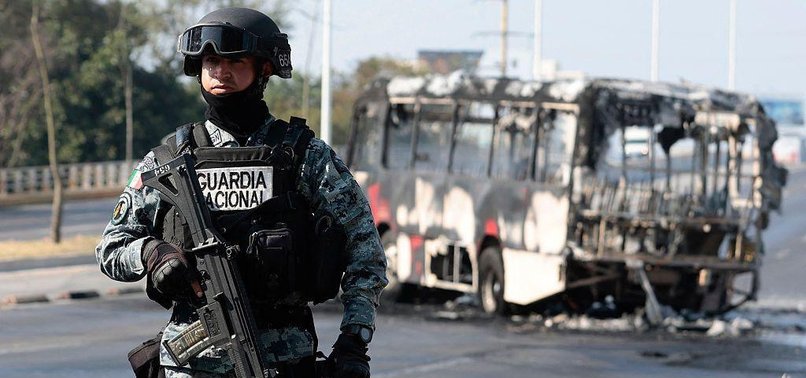
The immediate aftermath of the operation has been marked by unrest in regions where the CJNG maintains influence. Within hours of news spreading about the capture, reports emerged of criminal blockades involving burning vehicles that shut down highways and major avenues. In at least six states, armed cells allegedly launched coordinated acts of violence, targeting security forces and causing widespread panic among civilians.
Local media described scenes of chaos as gunfire erupted in urban areas. Businesses closed abruptly, schools suspended activities, and residents sheltered indoors as security forces attempted to regain control. Airports, including Guadalajara’s international airport, reportedly heightened security protocols amid fears of further disruptions. Videos circulating on social media appeared to show confrontations between suspected cartel gunmen and National Guard units, though authorities have urged caution regarding unverified footage.
As of now, officials have not released comprehensive figures detailing casualties or the full economic impact of the violence. The situation remains fluid, with updates emerging minute by minute. Federal authorities have reinforced security deployments in affected regions, emphasizing that restoring public order is their immediate priority.
Security analysts warn that the removal of a dominant cartel leader often triggers internal fragmentation. Without a central figure to command loyalty, factions may compete violently for control. Such struggles can lead to an escalation in homicides, kidnappings, and extortion, particularly in territories where criminal economies are deeply entrenched.
There are also concerns about retaliatory attacks against civilian infrastructure. Historically, the CJNG has demonstrated a willingness to challenge the state openly, employing high-profile tactics designed to project power and intimidate authorities. The current wave of unrest appears consistent with that strategy, aimed at demonstrating that the organization remains capable of coordinated action even after the loss of its leader.
At the same time, some experts argue that the dismantling of centralized cartel leadership may create opportunities for long-term insтιтutional gains. If sustained security efforts are coupled with judicial reform and economic investment in vulnerable communities, the state could gradually weaken the structural foundations that allow such organizations to thrive. However, achieving that outcome requires consistency and political will—both of which have been tested repeatedly in Mexico’s prolonged struggle against organized crime.
International reaction has also been swift. The United States government, which had placed a multimillion-dollar reward on Oseguera Cervantes, described the operation as a significant step in bilateral security cooperation. Yet observers caution that the fight against transnational trafficking networks extends far beyond the fate of a single individual.
For many Mexicans, the moment is bittersweet. While the removal of a powerful criminal figure represents a symbolic victory, the immediate reality on the ground is one of anxiety. Families in affected regions face uncertainty as violence disrupts daily life. Small businesses brace for losses. Local governments confront renewed pressure to maintain stability amid escalating tensions.
The coming weeks will be critical. Whether Mexico experiences a prolonged spiral of violence or gradually restores calm may depend on how effectively authorities manage the transition period.
Strengthening intelligence operations, protecting civilian populations, and preventing factional conflicts from spiraling out of control will be central challenges.
The fall of El Mencho represents more than the end of a criminal reign.
It underscores the fragile balance between state authority and organized crime in parts of Mexico.
As the country navigates this volatile chapter, the stakes are not only national but international, given the far-reaching impact of cartel activity on global drug markets and regional security.
For now, one reality is clear: Mexico stands at a crossroads. The outcome of this moment could redefine the trajectory of its ongoing war against powerful criminal networks.


