At eighty-nine years old, Apollo astronaut Charles Duke has once again found himself at the center of global curiosity.
Decades after humanity’s historic journeys to the Moon, the former astronaut is speaking openly about his experiences, sparking renewed interest in the missions that changed history.
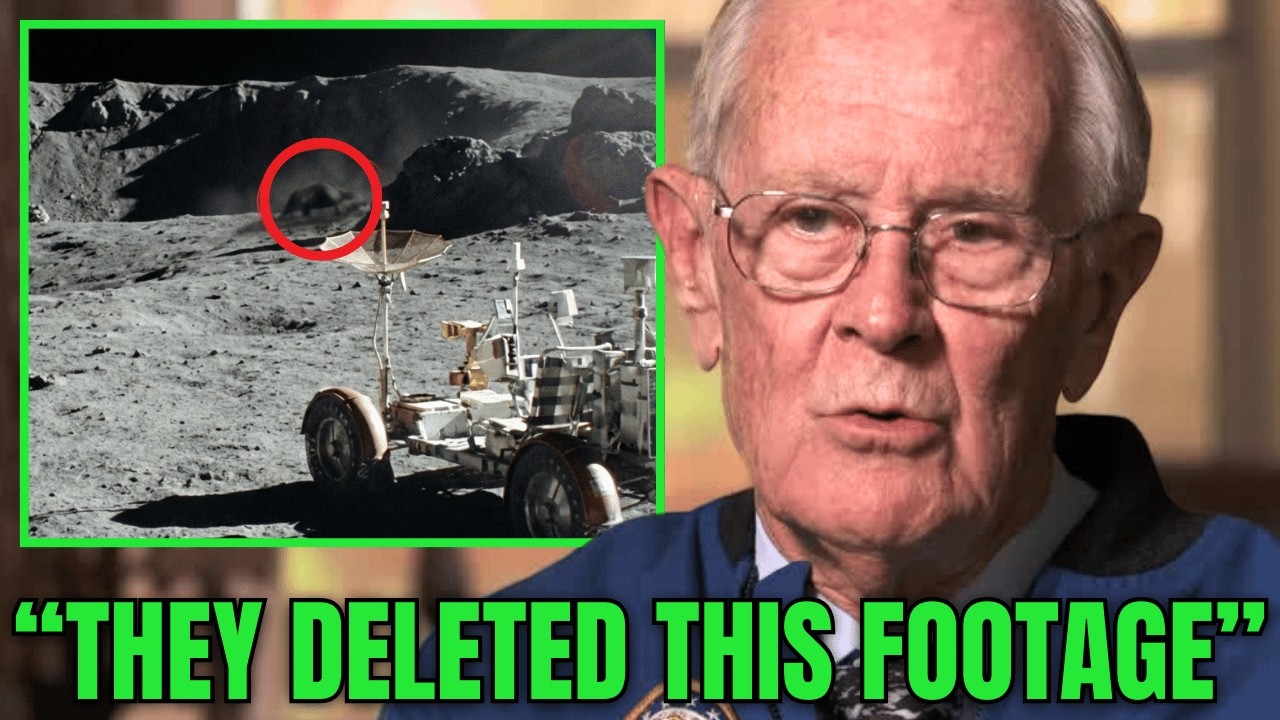
As one of the last living men to walk on the lunar surface, his words carry the weight of firsthand experience from a time when humanity reached beyond Earth for the first time.
Charles Duke is not just another name from the space race.
He played a role in two of the most significant moments in human exploration.
As a young astronaut, he served as the voice from mission control who guided Neil Armstrong during the Apollo 11 landing in 1969.
His calm, steady words were heard across the world as Armstrong prepared to take that first historic step onto the lunar surface.
A few years later, Duke would experience the Moon for himself.
In 1972, as part of the Apollo 16 mission, he became the youngest person ever to walk on the Moon.
At just thirty-six years old, he stepped onto the gray, powdery surface, leaving footprints that still remain untouched in the vacuum of space.
For decades, much of the world’s attention remained fixed on Apollo 11, the mission that made history with the first landing.
Later missions, though scientifically important, faded into the background of public memory.
Duke’s journey, like those of several other astronauts, became a lesser-known chapter in the story of lunar exploration.
Now, more than fifty years after his mission, Duke has begun sharing memories and reflections that have reignited interest in what the astronauts truly experienced on the Moon.
His words have spread quickly across media and online platforms, with many wondering what secrets he might reveal after so many years of silence.
According to Duke, the Moon was far from the simple, lifeless desert many imagine.
He has spoken about the surprising brightness of the landscape, the strange lighting conditions, and the overwhelming silence that surrounded him.
Without an atmosphere, the sky appeared pitch black, even while the surface was bathed in brilliant sunlight.
The lunar terrain itself was both beautiful and unsettling.
Rolling hills of gray dust stretched out in every direction, interrupted by craters and rocky outcrops.
The surface reflected sunlight in a way that made the environment feel almost otherworldly.
Shadows were sharp and deep, creating stark contrasts that made distances difficult to judge.
Duke has described the experience as both awe-inspiring and isolating.
Standing on the Moon, he was more than two hundred thousand miles from Earth.
There was no wind, no sound, and no movement beyond the slow drift of dust under his boots.
Every step stirred up fine particles that floated briefly before settling back onto the surface.
One of the most striking aspects of the Moon, he has said, was its silence.
There were no birds, no rustling leaves, no distant echoes.
The only sounds he heard were the mechanical hum of his suit and the voices of his fellow astronauts through the radio.
It was a silence so complete that it felt almost unreal.
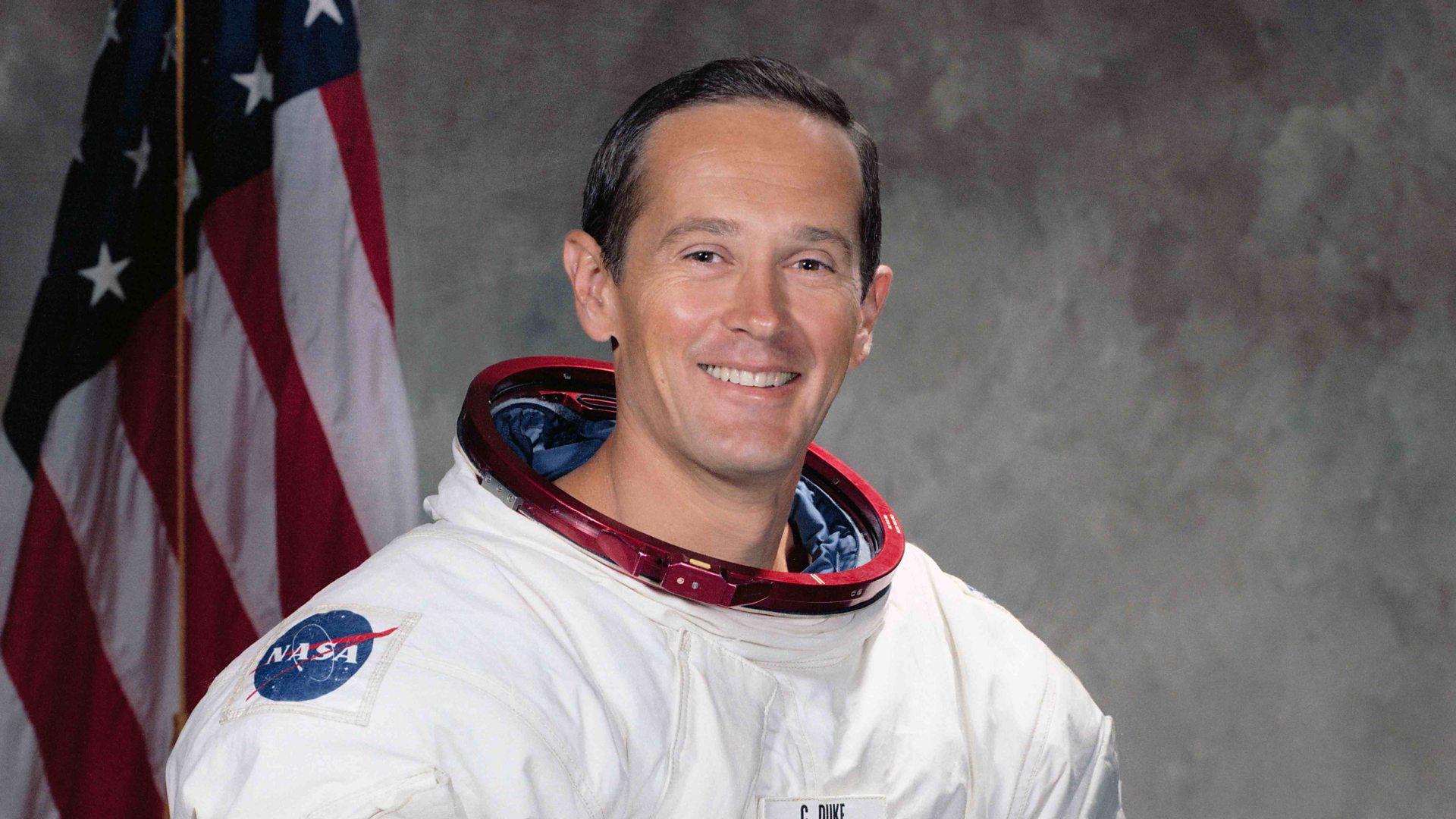
Yet the Moon was not entirely as people imagine it.
Duke has spoken about the subtle beauty of the landscape, the way sunlight reflected off the dust, and the sense of standing on a world untouched for billions of years.
The experience, he has said, left a deep impression on him, one that stayed with him long after he returned to Earth.
During the Apollo 16 mission, Duke and his crewmates conducted a series of scientific experiments.
They collected rock samples, deployed instruments, and explored the Descartes Highlands, a region believed to hold clues about the Moon’s geological history.
The mission lasted eleven days, with three days spent in lunar orbit and nearly three days on the surface.
Duke’s time on the Moon was filled with moments of both excitement and tension.
Space exploration in the early 1970s was still a dangerous endeavor.
Every mission carried risks, from mechanical failures to navigation errors.
The astronauts were aware that they were operating on the edge of human capability.
Despite those risks, the mission was considered a success.
The crew returned safely to Earth, bringing back valuable scientific data and lunar samples.
Yet as the years pᴀssed, public attention shifted away from space exploration.
The Apollo program ended, and no human has returned to the Moon since 1972.
For Duke, the experience remained a defining moment of his life.
He often speaks about how the journey changed his perspective, not only about space but about Earth itself.
Seeing the planet from the Moon, he said, was a powerful reminder of how small and fragile it appeared against the vastness of space.
In recent years, as interest in lunar exploration has returned, Duke’s reflections have gained new relevance.
With plans for future missions and the possibility of humans returning to the Moon, his firsthand accounts offer a glimpse into what those journeys might feel like.
The idea that the Moon is a completely ᴅᴇᴀᴅ and silent world has long been part of public imagination.
But Duke’s descriptions suggest a more complex reality.
While there is no life or atmosphere, the lunar environment is filled with striking visuals, unusual lighting, and a sense of profound isolation.
His words have sparked curiosity not because they reveal hidden conspiracies, but because they offer a human perspective on a place few have ever seen.
The Moon may be silent, but the experience of standing there is anything but ordinary.
As one of the last living moonwalkers, Duke represents a direct link to one of humanity’s greatest achievements.
His memories serve as a reminder of the courage, skill, and determination required to reach another world.
Today, at eighty-nine, he continues to share his story, reflecting on the mission that took him farther from Earth than most people could ever imagine.
His voice, once heard guiding astronauts from mission control, now carries the echoes of his own footsteps on the Moon.
The footprints he left behind in 1972 are still there, preserved in the airless lunar environment.
They remain a silent testament to a moment when a young astronaut stood on a distant world and looked back at the Earth hanging in the black sky.


