Hormuz at the Edge: A New Geometry of Power
The Strait of Hormuz is just 21 miles wide at its narrowest point. Within that confined space, two shipping lanes—each roughly two miles across—carry a fifth of global oil supply. Geography compresses time and decision-making. In this environment, even small shifts in alignment matter.
In February, a trilateral naval exercise—Maritime Security Belt 2026—brought Iranian, Russian, and Chinese vessels into overlapping operational zones spanning the Gulf of Oman and approaches to the Strait. The drill, officially framed as focused on maritime security and anti-piracy operations, marked the seventh consecutive year the three countries have conducted joint exercises.
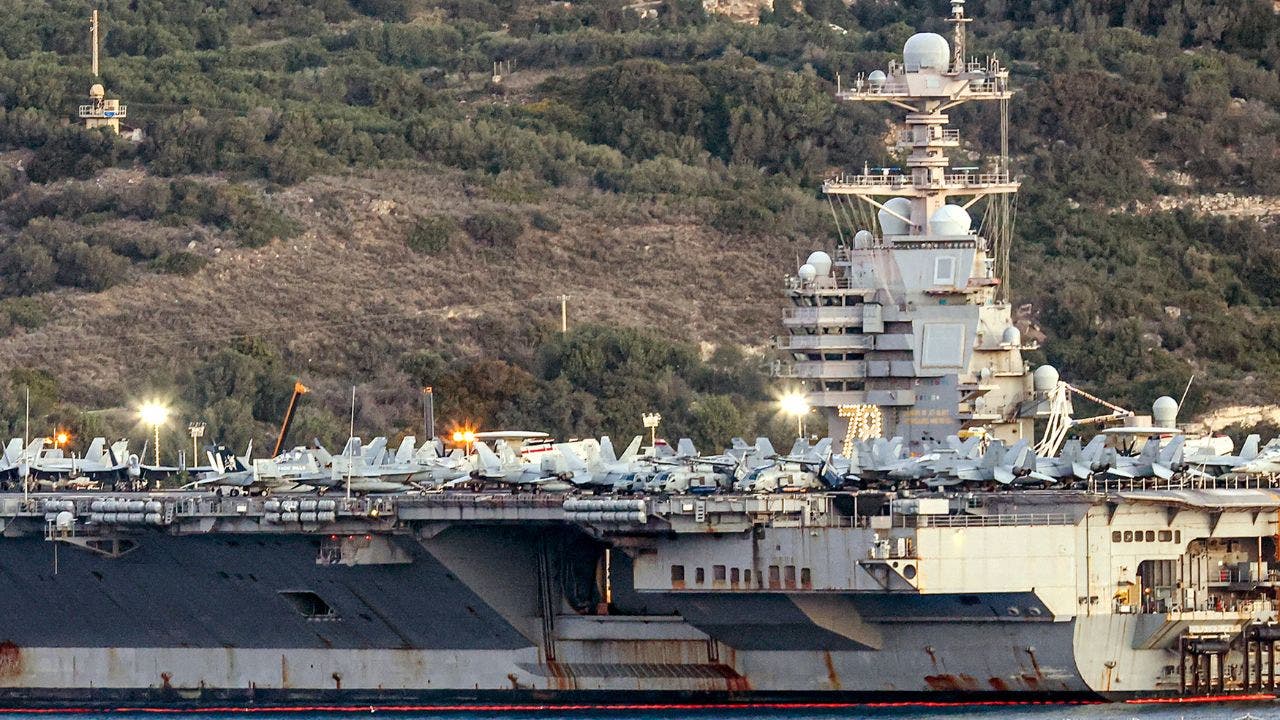
Simultaneously, U.S. forces increased regional presence amid heightened diplomatic tensions over Iran’s nuclear program. Carrier strike groups transited nearby waters.

Strategic bombers were positioned within operational reach. Advanced fighters were forward deployed. None of this was accidental. Each move was a signal.
What makes this moment distinct is not simply the number of ships involved. It is the layering of capabilities.
Iran’s advantage in the Strait has always been geography. The northern coastline is heavily fortified, and the Islamic Revolutionary Guard Corps Navy (IRGCN) has long invested in asymmetric tools designed specifically for confined waters: fast attack craft, coastal missile batteries, sea mines, and small submarines optimized for shallow, acoustically complex environments.

Iran’s inventory reportedly includes thousands of naval mines. In practical terms, the mere credible threat of mine deployment could disrupt commercial shipping, as insurers respond to risk ᴀssessments long before explosions occur. In such a scenario, economic impact could precede kinetic conflict.
Iran also fields small Ghadir- and Fateh-class submarines tailored for shallow waters. While U.S. anti-submarine warfare capabilities are formidable in open ocean, cluttered littoral environments narrow detection margins and compress engagement timelines.
Yet Iran historically faced one major limitation: real-time targeting. Detecting and tracking moving carrier strike groups with precision has been a persistent technical challenge.
This is where the presence of China and Russia complicates the equation.

China’s deployment included advanced surface combatants such as a Type 055 destroyer—among the most capable in its fleet—alongside intelligence collection vessels.
The Type 055 carries a large vertical launch capacity and is ᴀssociated with long-range anti-ship capabilities, including hypersonic systems under active development and testing. Even without firing a weapon, the ship’s presence expands the potential engagement envelope.
Intelligence collection platforms, meanwhile, specialize in monitoring electromagnetic emissions—radar signatures, communications protocols, and data link activity. Persistent surveillance enhances maritime situational awareness. In a dense operating environment like Hormuz, information itself becomes leverage.
Russia’s naval contribution may appear modest in hull count, but its role is less about mᴀss and more about signaling.
As a permanent member of the UN Security Council with an active nuclear arsenal, Russia’s participation alters diplomatic dynamics. Any escalation now carries broader geopolitical implications beyond a bilateral U.S.-Iran confrontation.
Additionally, Russian electronic warfare capabilities—refined through recent operational experience—add another layer to the strategic picture. Modern carrier strike groups depend on тιԍнтly integrated networks linking ships, aircraft, and sensors into a unified defensive system.

Electronic interference does not need to fully disable such systems to create risk; even momentary disruption or latency can complicate defensive coordination in high-speed engagements.
When these elements are viewed together, the exercise appears less like three parallel navies and more like a demonstration of complementary strengths. Iran provides geography and asymmetric denial tools. China contributes advanced sensors and long-range strike potential. Russia brings electronic warfare expertise and diplomatic weight.
For U.S. commanders, the challenge is not simply military—it is multidimensional.
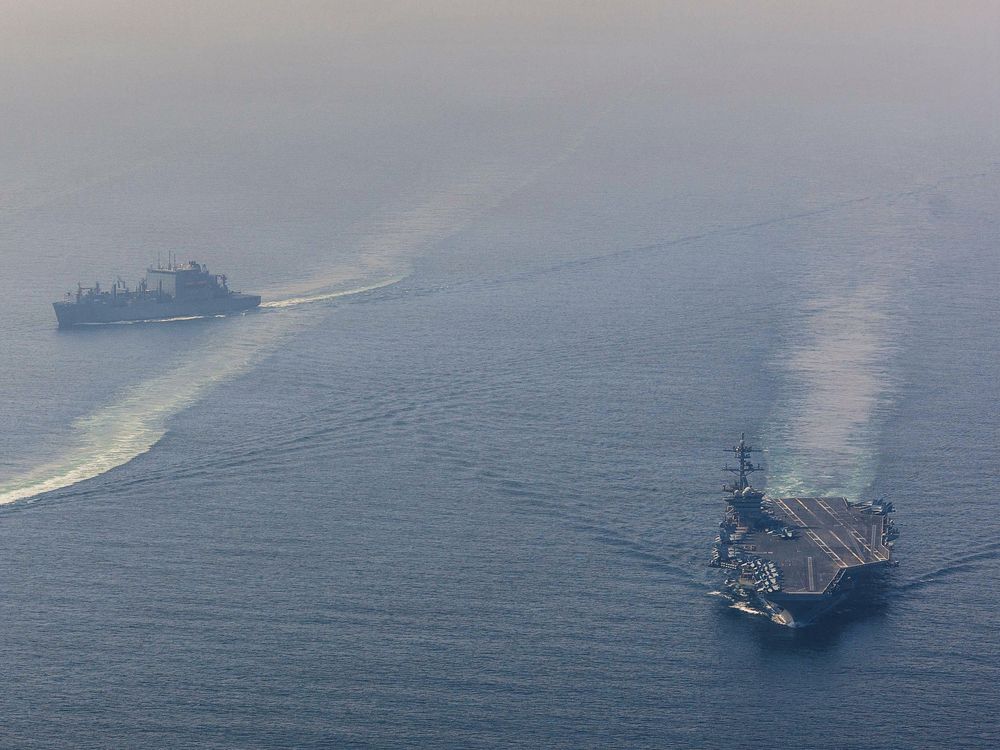
Carrier strike groups remain among the most capable maritime formations in the world, equipped with layered missile defenses, advanced radars, and integrated air wings. But operating in constrained waters under overlapping surveillance increases complexity.
The strategic question becomes less about whether American carriers can defend themselves—they can—and more about how escalation pathways unfold when multiple major powers are physically present.
In this environment, weapons that remain unfired still exert influence. Hypersonic missiles that stay in launch cells affect planning.
Electronic warfare systems that are never activated still alter risk calculations. Mines that are never laid still affect insurance markets.
Presence reshapes perception. Perception shapes decisions.
Seven years of joint exercises have gradually built interoperability among the three participating states. Coordination that once required improvisation now follows established frameworks.
That continuity signals intent: a shared interest in demonstrating that Western naval dominance is no longer uncontested in key maritime chokepoints.
At the same time, none of the actors involved appear eager for open conflict. The economic stakes—particularly in a waterway vital to global energy supply—are enormous. Any miscalculation would reverberate far beyond the region.

The Strait of Hormuz remains navigable. Oil continues to flow. No exchange of fire has occurred.
But the geometry has shifted.
Power in this narrow corridor is no longer defined solely by tonnage or aircraft count. It is shaped by data fusion, electronic resilience, multinational signaling, and the political cost of escalation.
As carrier groups transit these waters under the watchful sensors of multiple flags, one reality stands out: in modern maritime strategy, influence is often exerted not by what is fired—but by what is seen, shared, and silently held in reserve.


