The news broke with the force of a thunderclap. Mexican security forces had killed Nemesio Rubén Oseguera Cervantes, the notorious leader of the Jalisco New Generation Cartel, widely known as CJNG. For years, he had been one of the most hunted men on the planet, a shadowy figure whose name inspired fear across borders. By the time confirmation came from federal authorities, the consequences were already unfolding in real time.
The operation that ended his life was described as a mᴀssive and coordinated military action carried out by elite units of Mexico’s armed forces. According to official statements, the mission was executed in the early hours of the morning, targeting a heavily guarded location believed to be one of his secure strongholds. The Secretariat of National Defense confirmed that federal forces encountered armed resistance, triggering violent confrontations and immediate retaliatory blockades across multiple regions.

Within hours of his death, cartel fighters flooded key roadways, setting vehicles ablaze and erecting barricades in what appeared to be a coordinated display of rage and retaliation. Videos circulating on social media showed plumes of black smoke rising above highways, armed men moving through urban corridors, and frightened civilians scrambling for safety. The message from the cartel’s rank and file was unmistakable: their leader may be gone, but their firepower remained intact.
For over a decade, Oseguera Cervantes—known globally by his alias—had built one of the most powerful and violent drug empires in the world. Under his command, CJNG transformed from a regional criminal group into a multinational trafficking machine. The cartel expanded aggressively into fentanyl production, methamphetamine distribution, cocaine trafficking, extortion, kidnapping, and oil theft. Its reach extended beyond Mexico into the United States, Latin America, Europe, and Asia.

The United States government had placed a $15 million bounty on his capture, identifying him as one of the most dangerous criminal leaders operating today. American authorities linked his organization to the flow of synthetic opioids that have fueled an unprecedented overdose crisis. For Washington, his death represented not only symbolic justice but a strategic blow to transnational organized crime.
U.S. officials quickly praised the operation. Statements described the killing as a significant victory for regional security and a milestone in the fight against violent drug trafficking organizations. The tone was congratulatory, framing the event as proof that coordinated international pressure can dismantle even the most entrenched criminal figures.

Yet even as officials celebrated, the streets of Mexico told a more complicated story.
Government representatives urged calm, emphasizing “absolute coordination” among federal and state authorities. They reᴀssured the public that most of the country remained stable and that security forces were responding decisively to outbreaks of violence. The Mexican Army, National Guard, and federal police were deployed in force to prevent further escalation.
But fear spread quickly. In several regions, schools suspended classes. Businesses shuttered early. Public transportation routes were rerouted or halted altogether. The sound of sirens and sporadic gunfire punctuated neighborhoods already accustomed to living under the shadow of cartel influence.
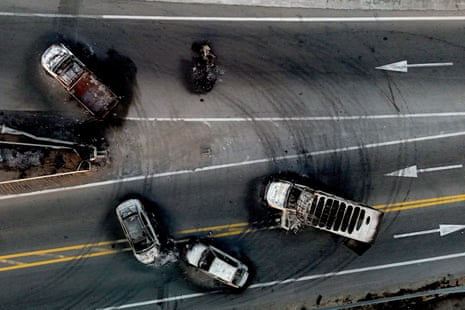
The killing of a cartel leader often triggers a dangerous power vacuum. Analysts have long warned that eliminating a kingpin does not automatically dismantle the structure beneath him. CJNG is not a one-man operation; it is a network of regional commanders, enforcers, financial operators, and international partners. The removal of its founder raises urgent questions about succession, fragmentation, and potential internal warfare.
Some experts fear that rival factions within the cartel could compete violently for control. Others warn of renewed turf wars with competing criminal organizations eager to exploit instability. The immediate eruption of retaliatory violence suggests that the organization remains highly mobilized and capable of rapid coordination.

International reaction extended beyond North America. Governments issued advisories urging their citizens in Mexico to avoid high-risk areas, remain vigilant, and limit travel. Diplomatic missions monitored developments closely, concerned that unrest could spread or impact foreign nationals.
Meanwhile, the United States intensified maritime and border operations aimed at intercepting trafficking routes that CJNG has long utilized. Military and law enforcement units increased patrols in strategic waterways, reflecting broader concerns that the cartel’s networks remain operational despite the loss of its leader.

Oseguera Cervantes’ rise to power had been marked by calculated brutality. Unlike some earlier cartel bosses who maintained lower profiles, he was known for direct confrontations with the Mexican state. CJNG forces famously downed a military helicopter in 2015 using a rocket-propelled grenade launcher, signaling a bold escalation in firepower and intent. The cartel became notorious for public displays of strength—convoys of armored vehicles, heavily armed gunmen in tactical gear, and propaganda videos designed to intimidate both rivals and authorities.
His leadership style blended strategic expansion with ruthless enforcement. Communities that resisted cartel control often faced severe reprisals. Local officials, journalists, and activists operated under constant threat. Entire regions became battlegrounds in a struggle between state forces and organized crime.
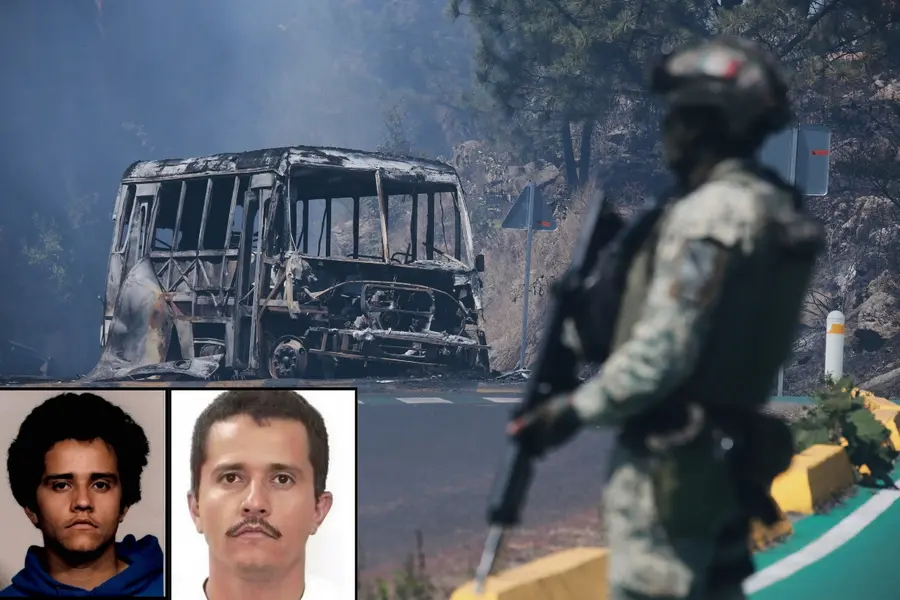
Despite multiple close calls and years of intelligence tracking, he managed to evade capture time and again. Safe houses, loyal security rings, and a deep network of informants reportedly shielded him from previous operations. That history made the announcement of his death all the more shocking.
Still, history suggests that the fall of a cartel leader rarely marks the end of violence. In past cases, decapitation strategies have sometimes splintered organizations into smaller, more unpredictable factions. Violence can spike as emerging leaders attempt to ᴀssert dominance or as rivals move to seize contested territory.

On the ground, Mexican authorities now face the delicate task of preventing widespread destabilization. Reinforcing security without provoking further escalation requires precision and coordination. Public confidence depends not only on tactical victories but on sustained stability.
For families living in cartel-influenced areas, the question is less about geopolitical significance and more about daily survival. Will streets become safer, or more volatile? Will businesses reopen without fear of extortion? Will children return to school without hearing gunfire in the distance?
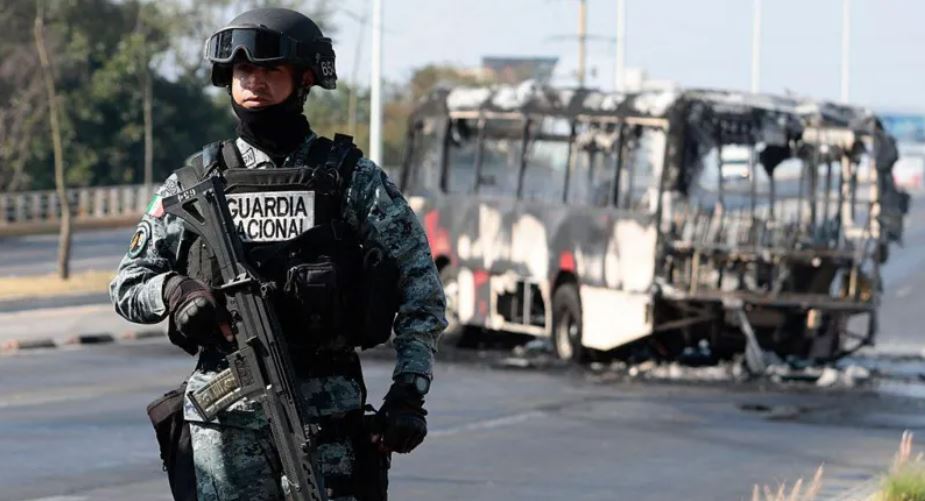
The symbolic weight of the operation is undeniable. Removing one of the world’s most wanted drug lords sends a message that no criminal figure is untouchable. It reflects years of intelligence work, interagency cooperation, and political will.
But symbolism does not automatically translate into peace.
The cartel’s logistical pipelines, financial networks, and armed cells remain active. The demand driving drug trafficking across borders persists. Corruption vulnerabilities within insтιтutions continue to present challenges. Eliminating a leader addresses one node in a much larger system.

As night fell after the operation, armored vehicles patrolled tense neighborhoods. Helicopters circled overhead. Social media feeds filled with conflicting reports, rumors, and official updates. Smoke from burned vehicles lingered in the air in certain regions, a stark reminder that the aftermath of a kingpin’s death can ignite new flames.
In global capitals, policymakers debated the broader implications. Some hailed the development as proof that sustained pressure yields results. Others cautioned that the deeper roots of organized crime—poverty, corruption, demand, and access to weapons—remain unresolved.
For now, one chapter in Mexico’s long war against cartels has closed. The man who once commanded one of the most feared criminal organizations in the hemisphere is gone. Yet the infrastructure he built did not vanish overnight.

The guns are still firing in certain pockets. The blockades have not entirely disappeared. Communities remain on edge, watching closely for signs of what comes next.
In the end, the operation may be remembered as historic. But history in this conflict has a way of repeating itself. A leader falls. Another rises. And the struggle between state authority and organized crime continues, relentless and unresolved, beneath the heat of a country still searching for lasting peace.


