When 300 Drones Reached Moscow
On February 15, Ukraine launched one of its largest long-range drone ᴀssaults of the war—roughly 200 drones aimed at Moscow, followed by another wave of about 100 just an hour later. The message was unmistakable. This was not symbolic harᴀssment. It was saturation.
Moscow’s mayor quickly claimed that all drones were destroyed. Russian air defenses, built in layered rings around the capital, likely intercepted many of them. But interception statistics miss the broader point. The strategic effect begins the moment air raid alerts sound over the capital.
Each time drones approach Moscow, Russia’s aviation authority suspends operations at all four major airports—Domodedovo, Sheremetyevo, Vnukovo, and Zhukovsky.

Flights are canceled. Thousands of pᴀssengers are stranded. Commercial schedules collapse for hours, sometimes days. Even without direct hits, the disruption radiates outward into the country’s financial and political nerve center.

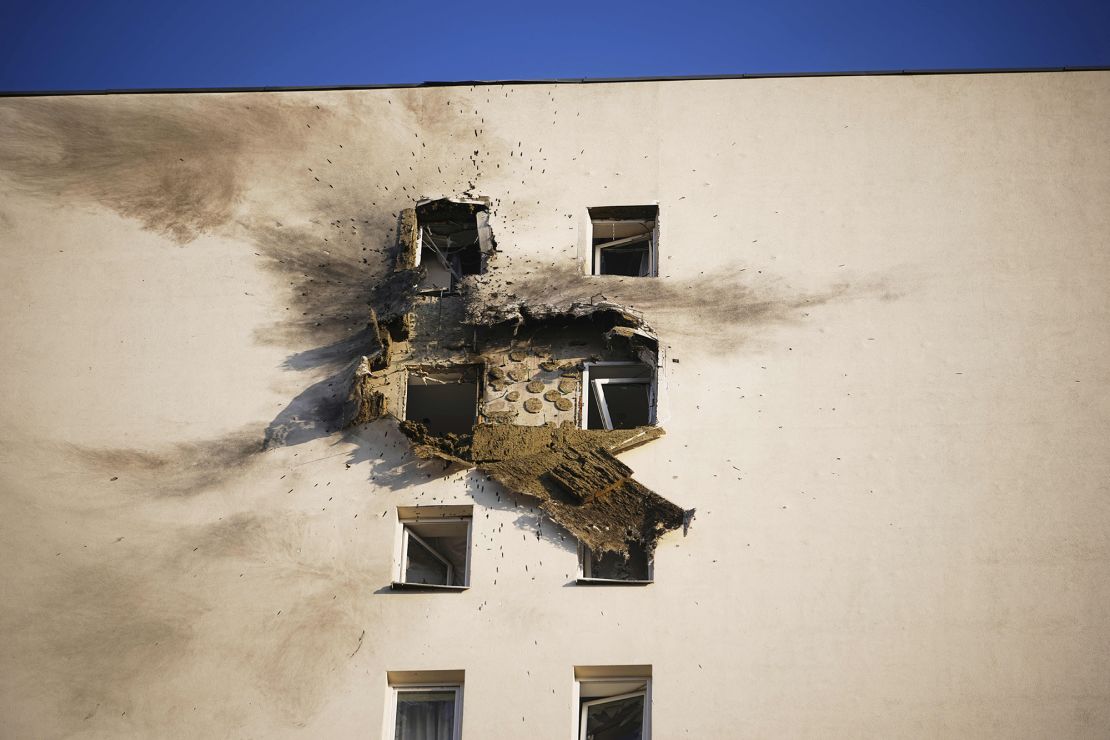
For many among Russia’s business and governing elite, the war long felt distant—something unfolding in border regions or occupied territories. Drone waves toward Moscow alter that perception. Debris falling near residential districts and military insтιтutions erodes the sense of insulation that once defined life in the capital.
And Moscow is only part of the story.

In border regions such as Bryansk, Belgorod, and Kursk, officials have acknowledged increasingly intense waves of Ukrainian strikes. Regional governors have publicly described recent attacks as among the most widespread since the war began. Such admissions are notable in a system where public messaging is тιԍнтly controlled.
At the heart of the growing vulnerability is the strain on Russia’s air defense network. Ukraine has systematically targeted key components of Russia’s layered system, including Pantsir short-range air defense units. These systems are designed specifically to intercept drones and low-flying threats, forming protective umbrellas over infrastructure and military facilities.
Replacing them is neither cheap nor immediate.

Each system carries a multi-million-dollar price tag and depends on supply chains already stressed by sanctions and wartime demand. Attrition, relocation to high-priority fronts, and repeated strikes create coverage gaps—particularly in border regions and around energy infrastructure.
And energy infrastructure has increasingly become a target.
Ukraine has struck oil refineries and fuel depots in multiple Russian regions, igniting fires that temporarily disrupt production and logistics. Facilities in Krasnodar, Rostov, Saratov, and Ryazan have all faced attacks. Even offshore platforms have reportedly been targeted by long-range drones.
Energy exports are a cornerstone of Russia’s wartime economy. Disruptions affect not only military supply chains but also state revenues. Meanwhile, defending against relatively inexpensive drones with costly interceptor missiles creates a financial imbalance. Every engagement forces Russia to expend high-value munitions against systems that cost a fraction to produce.
This asymmetry is central to Ukraine’s strategy.
Rather than matching Russia’s missile stockpile, Kyiv has leaned into scalable, cost-effective drone production. Swarms overwhelm defenses. Even when intercepted, they force radar activation, reveal system positions, and compel resource expenditure. The psychological impact compounds the material one.
But perhaps the most consequential development lies beyond the battlefield: industrial expansion.
In February 2026, Ukrainian and German officials marked the launch of joint drone production at a facility in Munich. The initiative represents a new phase of defense cooperation—pairing Ukrainian battlefield experience with European manufacturing capacity.
One featured system, the Linza 3.0 drone, integrates AI-ᴀssisted navigation designed to resist electronic jamming. Capable of carrying several kilograms of payload and operating at tactical ranges suitable for frontline and infrastructure strikes, it exemplifies a new generation of adaptive unmanned systems.

The Munich facility is reportedly designed to produce up to 10,000 drones in its first year. Plans for additional joint ventures across Europe signal a broader ambition: insтιтutionalized, multinational production pipelines capable of scaling over time.
This is where the strategic curves diverge.
Ukraine’s production capacity is expanding, backed by European industrial ecosystems. Russia’s defensive capacity—particularly in short-range air defense systems—is under sustained pressure. One side is scaling cost-effective offense; the other is absorbing high-cost defense attrition.
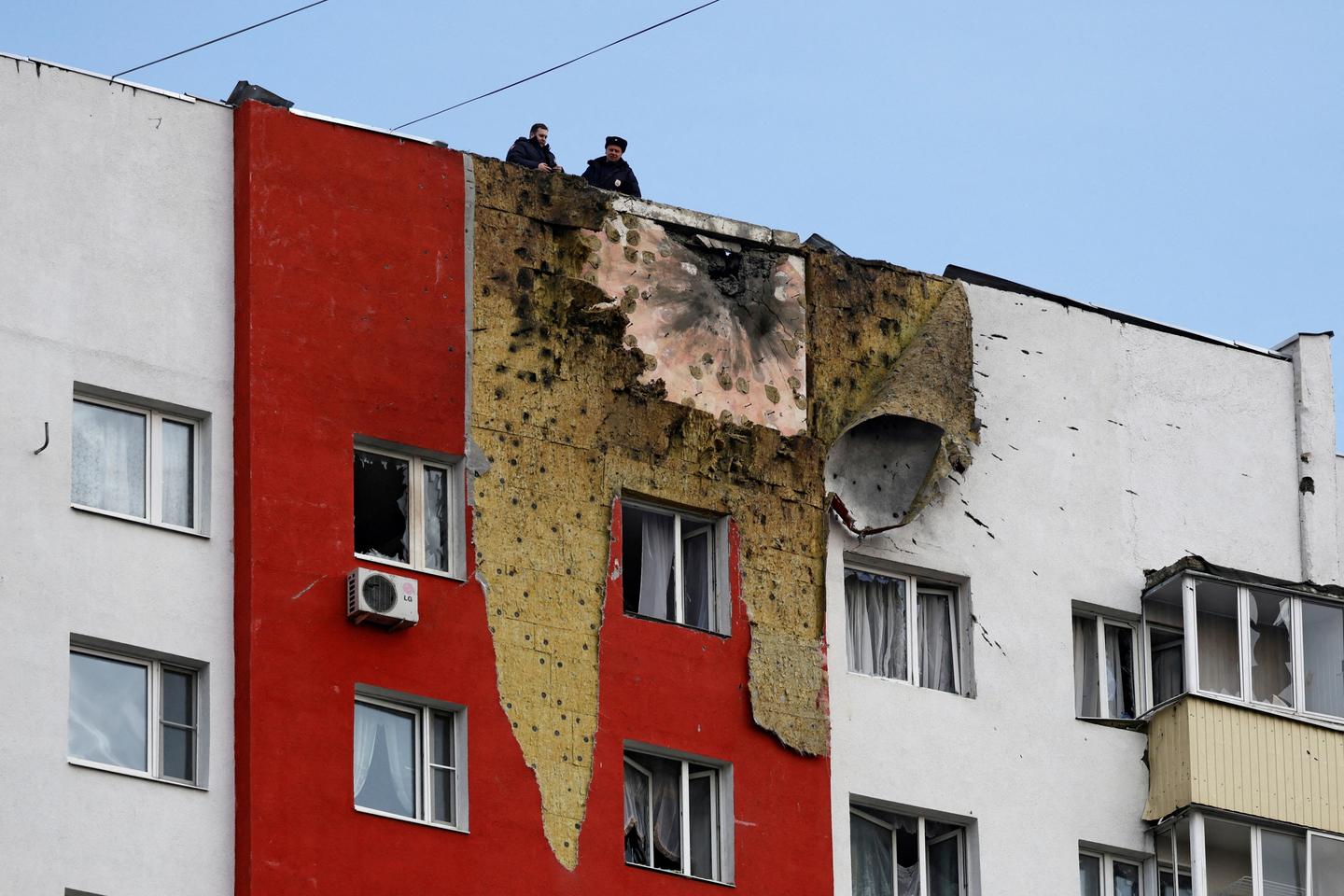
The imbalance extends beyond equipment. Every drone wave forces Moscow to shut airports, divert military ᴀssets, and reᴀssure domestic audiences. Border governors publicly appeal for greater protection. Civilians face infrastructure disruptions and economic strain. Inflation and rising utility costs add to a sense of uncertainty within parts of the population.
None of this means Russia lacks military power. It retains significant resources and continues offensive operations along multiple fronts. Nor does it suggest that drone warfare alone will determine the conflict’s outcome. But it does underscore a structural transformation: modern war is as much about production cycles and technological adaptation as it is about territorial control.
Factories matter. Supply chains matter. Innovation loops matter.
Ukraine’s model—rapid iteration informed by battlefield feedback, combined with allied manufacturing depth—creates a feedback cycle designed to accelerate. Each month brings refinements in range, navigation, payload, and survivability.
Meanwhile, defending a vast territory against persistent, low-cost aerial threats demands constant expenditure.
The skies over Moscow may return to calm between waves. Airports will reopen.

Official statements will emphasize interceptions and resilience. But the psychological boundary has shifted. The capital has felt the war—if only through sirens, shutdowns, and falling debris.
And beneath those headlines lies a deeper question: in a contest defined by industrial endurance and technological agility, which side’s trajectory is rising—and which is narrowing?
The answer may not be decided in a single strike. It will be measured in production numbers, replacement rates, and the relentless mathematics of modern warfare.


