“Critical Mistake? Expert Warns Evidence May Be Compromised in Nancy Guthrie Case”
The search for Nancy Guthrie was supposed to bring clarity, answers, and ultimately justice.

Instead, it has now become the center of a growing storm of controversy, doubt, and outrage after explosive claims surfaced suggesting that investigators may have irreversibly compromised the scene.
What was once viewed as a critical effort to uncover the truth is now being questioned as potentially flawed from the very beginning.
The allegation came from Ted Williams, a former homicide detective and well-known legal analyst, who did not mince words when discussing the handling of the search operation.
According to Williams, the scene connected to the disappearance of Nancy Guthrie may have been “contaminated,” a term that in law enforcement carries devastating implications.
If accurate, this means that crucial physical evidence could have been disturbed, destroyed, or rendered unreliable, potentially altering the course of the entire investigation.
In cases involving missing persons, the integrity of the search area is everything.
Every footprint, fiber, scent, and disturbance in the environment can tell a story.
When a scene is compromised, that story becomes fragmented—or worse, permanently silenced.
Williams’ comments have ignited fierce debate among experts and the public alike, with many asking how such a lapse could occur in a case of this magnitude.
From the earliest hours of the search, multiple agencies and volunteers reportedly converged on the area connected to Guthrie’s disappearance.
While the intention was to locate her as quickly as possible, critics now argue that the sheer number of people involved may have worked against that goal.
According to Williams, basic protocols designed to preserve evidence may not have been strictly enforced, leading to the possibility that key details were unintentionally altered.
The word “contaminated” does not necessarily imply malicious intent, but its consequences are no less severe.
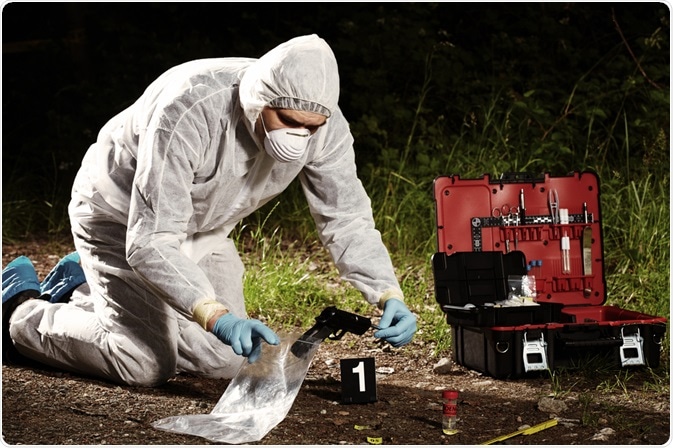
In forensic terms, contamination can occur when unauthorized individuals enter a scene, when evidence is handled improperly, or when environmental factors are not adequately controlled.
Once contamination occurs, it becomes exceedingly difficult for investigators to determine what is original evidence and what is not.
What makes this situation even more troubling is the timing.
The early stages of an investigation are often the most critical.
This is when evidence is freshest, leads are most viable, and the chances of reconstructing events are highest.
Any misstep during this window can haunt a case for years—or forever.
As news of Williams’ ᴀssessment spread, public reaction was swift and emotional.
Social media platforms quickly filled with anger, disbelief, and speculation.
Some users questioned whether the investigation was rushed.
Others wondered if pressure to show progress led to corners being cut.
Many expressed fear that the truth about what happened to Nancy Guthrie may never fully come to light.
Law enforcement officials have not publicly confirmed that the scene was mishandled, but the silence has only intensified scrutiny.
In high-profile cases, transparency is often seen as essential to maintaining public trust.
Without clear explanations, doubts tend to grow, and confidence erodes.
Williams emphasized that contamination does not automatically mean a case is unsolvable, but it does mean the margin for error has grown significantly smaller.
Prosecutors rely heavily on clean, uncontested evidence.
Defense attorneys, on the other hand, are quick to exploit any suggestion that evidence was compromised.
Even the perception of contamination can be enough to introduce reasonable doubt in a courtroom.
For the Guthrie family and loved ones, these revelations are particularly painful.
What began as a desperate search for answers has now been overshadowed by concerns about whether those answers were unintentionally buried.
Families of missing persons often place immense trust in investigators, believing that every possible step will be taken to protect the truth.
When that trust is shaken, the emotional toll can be overwhelming.
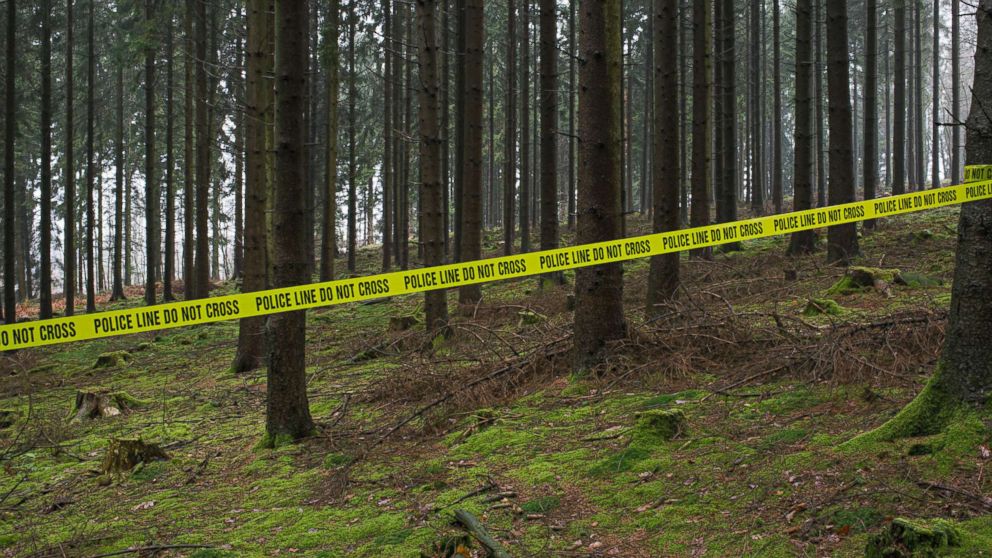
Experts familiar with missing person investigations note that scenes involving outdoor searches are especially vulnerable.
Weather, wildlife, and human activity all pose challenges.
That is why strict controls are typically enforced, including limited access, detailed logging of personnel, and careful documentation of every action taken.
Any deviation from these standards can have cascading effects.
The controversy surrounding the Guthrie search has also reignited broader discussions about training, resources, and coordination among agencies.
Were enough safeguards in place? Was there clear leadership overseeing the operation? And perhaps most importantly, will lessons be learned to prevent similar situations in future cases?
As the investigation continues, every new development will be examined through the lens of these allegations.
Tips, evidence, and witness statements will all be scrutinized more intensely.
The stakes are higher now, not just for solving this case, but for restoring faith in the process itself.
Ted Williams’ comments have served as a wake-up call, reminding the public that the path to justice is fragile.
One misstep, one overlooked protocol, can alter outcomes in ways that cannot be undone.
Whether his concerns prove fully justified remains to be seen, but the questions he raised will not disappear easily.
For now, the search for Nancy Guthrie exists in a troubling limbo—caught between hope and doubt, urgency and regret.
As investigators move forward, they do so under an unrelenting spotlight, knowing that every decision will be measured against what may have already gone wrong.
The truth, whatever it may be, still matters.
But in this case, finding it may now be harder than ever.


