“Buried Alive: Eastern Congo Mine Collapse Leaves Hundreds ᴅᴇᴀᴅ and Missing”
A catastrophic mine collapse in eastern Democratic Republic of Congo has killed more than 200 people, plunging the region into mourning and exposing once again the ᴅᴇᴀᴅly risks faced by thousands of informal miners who descend underground each day in search of survival.
The disaster unfolded suddenly, turning a routine day of work into one of the ᴅᴇᴀᴅliest mining tragedies in recent years.
According to local authorities and community leaders, the collapse occurred at an artisanal mining site where hundreds of miners were working in narrow, unsupported tunnels.
Without warning, large sections of earth gave way, trapping workers deep underground.
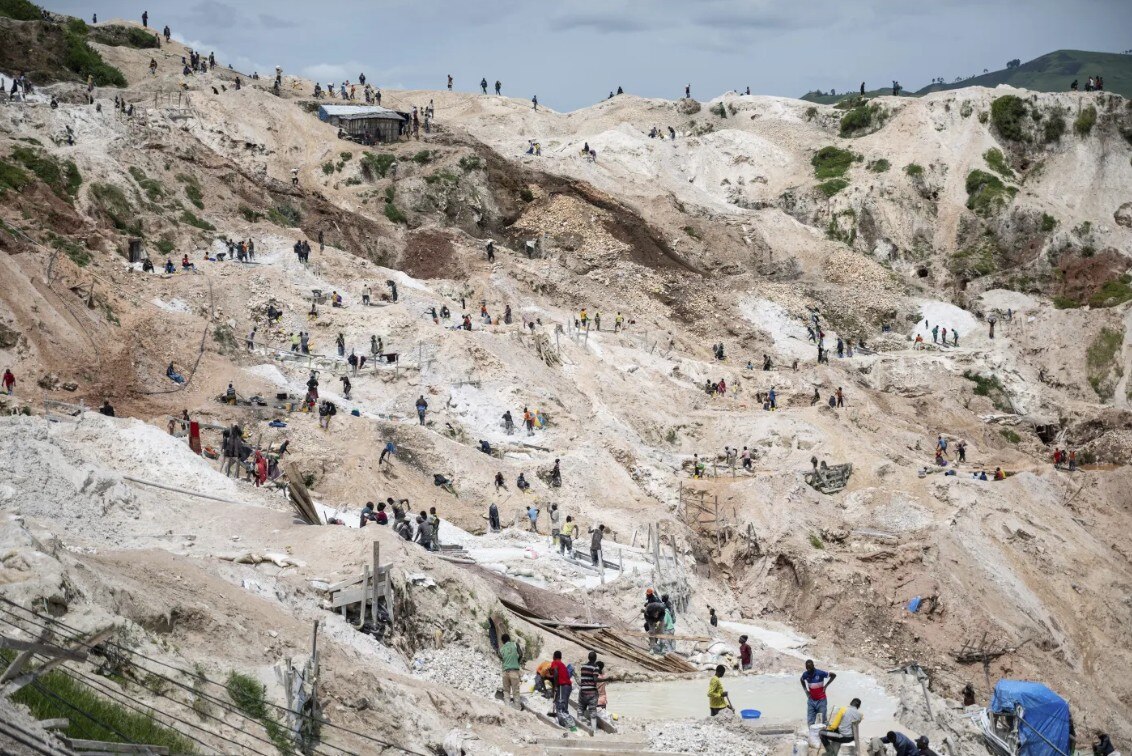
Many were buried instantly, while others were left screaming for help beneath tons of rock and soil.
Rescue efforts began immediately but were severely hampered by the remote location, lack of heavy equipment, and the fragile condition of the remaining tunnels.
Fellow miners and villagers dug desperately with bare hands and basic tools, racing against time to reach those trapped below.
As hours turned into days, hope faded, and the scale of the tragedy became painfully clear.
By the time rescue teams were forced to halt operations due to safety concerns, officials confirmed that more than 200 bodies had been recovered.
Dozens more are believed to remain buried, their fate unknown.
Survivors described scenes of chaos and terror as the ground shook and tunnels collapsed around them.
Most of the victims were artisanal miners, many of whom worked without permits, safety gear, or formal oversight.
In eastern Congo, mining is often the only source of income in impoverished communities where conflict, displacement, and economic instability leave few alternatives.
Men, women, and sometimes even teenagers risk their lives daily to extract minerals sold into global supply chains.
Families of the victims gathered near the site, waiting for news, clinging to the possibility that loved ones might still be alive.
As bodies were brought to the surface, grief spread through nearby villages.

Entire communities were left devastated, with households losing their primary earners in a single moment.
Local leaders have declared days of mourning, while religious figures led prayers at the site.
The air was heavy with sorrow as names of the missing were read aloud, many unanswered.
For families, there will be no compensation, no insurance, and little support beyond what neighbors can provide.
Authorities say the collapse may have been triggered by recent heavy rains that weakened the soil, combined with unregulated digging that compromised the mine’s structure.
Investigations have been launched, but residents remain skeptical that accountability will follow.
Similar disasters have occurred repeatedly in the region, often prompting promises of reform that fade with time.
Human rights organizations and labor advocates argue that the tragedy highlights a systemic failure to regulate artisanal mining and protect workers.

Despite Congo’s vast mineral wealth, including gold, coltan, and other critical resources, those at the bottom of the supply chain continue to pay the highest price.
International attention has once again turned to the conditions under which minerals are extracted in conflict-affected regions.
Advocacy groups are calling on governments and corporations to strengthen oversight, enforce safety standards, and ensure that supply chains do not rely on dangerous and exploitative labor practices.
Medical teams have been dispatched to ᴀssist survivors suffering from injuries and trauma.
However, resources are limited, and many victims’ families must rely on community support.
Long-term psychological and economic impacts are expected to ripple through the region for years to come.
As night fell over the collapsed mine, the sounds of digging finally stopped.
What remained was silence, broken only by mourning families and the realization that this disaster was not an isolated incident, but part of a broader pattern of neglect and desperation.
For eastern Congo, the mine collapse is more than a tragedy—it is a grim reminder of the human cost hidden beneath the world’s demand for minerals.
Until meaningful change is made, residents fear that such disasters will continue, claiming lives in silence beneath the earth.0


