“Myanmar Earthquake Sends Shockwaves Across India and Bangladesh, Millions Feel Tremors”
A powerful earthquake striking Myanmar has sent shockwaves far beyond the country’s borders, triggering tremors felt across large parts of India and Bangladesh and igniting widespread fear throughout South and Southeast Asia.
The sudden seismic event rattled buildings, disrupted daily life, and raised urgent concerns about regional seismic vulnerability.
The earthquake struck with little warning, shaking central and northern Myanmar before its energy rippled outward across hundreds of kilometers.
Residents in cities and towns reported violent shaking, swaying buildings, and objects crashing to the ground.

Within minutes, reports began pouring in from neighboring countries as the tremors crossed borders, startling millions who felt the ground move beneath their feet.
In eastern and northeastern India, people rushed out of homes, offices, and high-rise buildings as the tremors were felt in multiple states.
Witnesses described ceiling fans swinging, windows rattling, and furniture shifting across floors.
In some areas, panic spread as alarms sounded and residents gathered in open spaces, fearing aftershocks.
Bangladesh also experienced noticeable shaking, particularly in northern and eastern regions.
Office workers and residents reported feeling sudden jolts that lasted several seconds, enough to disrupt work and send people fleeing outdoors.
Social media quickly filled with videos and messages capturing the moment buildings trembled and people reacted in shock.
Authorities across the region moved swiftly to ᴀssess the situation.
Emergency agencies in Myanmar were placed on high alert as teams began evaluating potential damage near the epicenter.
Initial reports suggested that infrastructure in rural areas may have been affected, though the full extent of destruction remains unclear due to communication challenges and the remote nature of some impacted zones.
Seismologists explained that Myanmar sits along a complex network of fault lines, making it one of the most seismically active countries in the region.

The energy released by the quake was strong enough to travel vast distances, explaining why tremors were felt across national borders.
Experts warned that aftershocks are possible and urged caution in the hours following the initial event.
In major cities across India and Bangladesh, authorities advised residents to remain calm but vigilant.
Emergency response protocols were reviewed, and building safety inspections were prepared in case structural damage was discovered.
Hospitals were placed on standby as a precaution, even as no immediate large-scale casualties were reported.
Residents in Myanmar recounted terrifying moments as the quake struck.
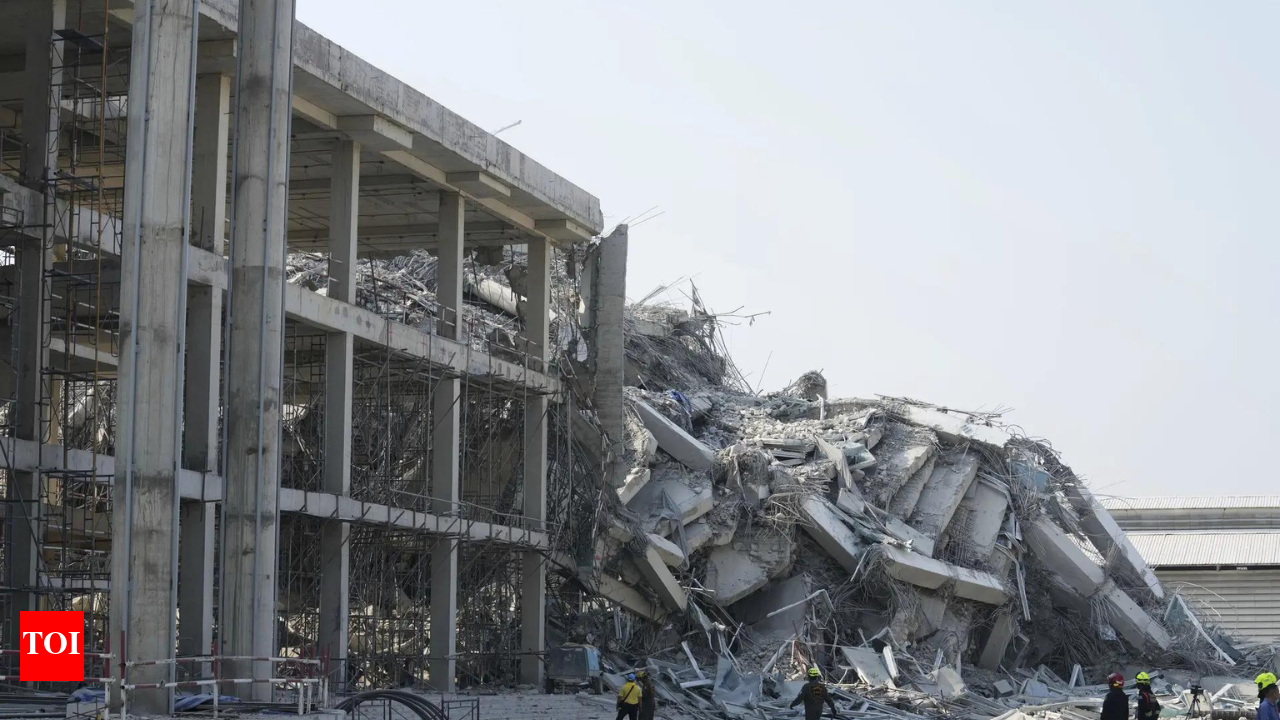
Some described being thrown off balance, while others reported cracks forming in walls and debris falling from ceilings.
In densely populated areas, the fear of building collapse prompted mᴀss evacuations into streets and open spaces.
Transportation systems experienced temporary disruptions in some areas as safety checks were conducted on bridges, rail lines, and roadways.
Power fluctuations were reported in isolated locations, adding to the uncertainty as officials worked to confirm the stability of critical infrastructure.
Regional governments began coordinating information sharing as seismic data was analyzed in real time.
Disaster management agencies emphasized the importance of preparedness, noting that earthquakes of this scale serve as stark reminders of the region’s exposure to natural hazards.
As night fell in parts of the affected region, anxiety lingered.
Many residents chose to remain outdoors or sleep in open areas, fearful of aftershocks.
Emergency H๏τlines remained active, and authorities continued to monitor seismic activity closely.
The quake has reignited conversations about building standards, early warning systems, and cross-border disaster cooperation.
Experts stressed that while earthquakes cannot be prevented, their impact can be mitigated through stronger infrastructure and faster response mechanisms.
For now, communities across Myanmar, India, and Bangladesh remain on edge, united by the shared experience of a powerful natural force that ignored borders and reminded millions how quickly the ground beneath them can turn unstable.


