It has been described as the greatest aviation mystery in modern history.
More than a decade after Malaysia Airlines flight MH370 vanished from the sky, the disappearance of a Boeing 777 carrying 239 people continues to haunt the world.
Despite unprecedented search efforts, advanced technology, and countless investigations, the final resting place of the aircraft has never been confirmed.
Now, eleven years later, renewed efforts and a fresh engineering perspective have reignited hope that the truth may finally be within reach.
On the night of March 8, 2014, Kuala Lumpur International Airport looked no different from any other busy hub after midnight.
Travelers moved through terminals, crew members prepared aircraft, and families said routine goodbyes.

Among them were the pᴀssengers and crew of Malaysia Airlines flight MH370, a scheduled overnight flight bound for Beijing.
The aircraft ᴀssigned to the route was a Boeing 777, widely regarded as one of the most reliable and advanced commercial aircraft in service.
At 0041 local time, MH370 lifted off the runway and climbed smoothly into the humid night sky.
For the first forty minutes, the flight proceeded exactly as expected.
Inside the cabin, pᴀssengers settled into their seats, lights were dimmed, and the aircraft followed its planned route northward.
In the cockpit, the crew made routine communications with air traffic controllers.
Shortly after 0100, as the aircraft approached the boundary between Malaysian and Vietnamese airspace, the captain transmitted what would become the final voice communication from the flight.
The message was routine and calm, indicating nothing unusual.
Moments later, control of the aircraft was handed over from Malaysian air traffic control to their counterparts in Vietnam, a standard procedure repeated thousands of times every day.
When Vietnamese controllers attempted to establish contact, they received no response.
At first, the silence raised little alarm.
Temporary radio interference or minor technical issues were not uncommon.
However, as minutes pᴀssed with no reply, concern began to grow.
What investigators would later uncover transformed that concern into one of the most baffling aviation mysteries ever recorded.
While civilian radar systems lost track of MH370, Malaysian military radar continued to detect an unidentified aircraft behaving in an unexpected manner.
Instead of continuing north toward China, the aircraft appeared to execute a sharp turn back toward the west.
This was not a minor deviation.
The radar data suggested a deliberate maneuver, sending the aircraft back across the Malay Peninsula and out over the Strait of Malacca.
The aircraft was last observed on military radar heading northwest over the Andaman Sea, far from its planned route.
After that point, it disappeared entirely from radar coverage.

The question that has echoed ever since is why such a maneuver occurred and who was in control at the time.
In the chaotic early hours following the disappearance, search and rescue operations focused on the South China Sea, the area where the aircraft was expected to be based on its flight plan.
Ships and aircraft from more than two dozen countries converged on the region.
It was one of the largest and most urgent search efforts in aviation history.
Yet day after day, no debris, oil slicks, or life rafts were found.
As frustration mounted, investigators uncovered a critical new clue.
Although voice communication had ceased, the aircraft continued to exchange automated signals with a communications satellite.
These brief electronic handshakes confirmed that the aircraft’s satellite system remained powered for nearly seven hours after the final radio transmission.
By analyzing the timing of these signals, experts determined that MH370 had continued flying long after it vanished from radar.
The data did not reveal the aircraft’s exact location, but it allowed analysts to draw a vast curved line across the globe, known as the seventh arc.
Somewhere along this arc, the aircraft had exhausted its fuel and ended its flight.
This discovery shifted the focus of the search dramatically.
Instead of the South China Sea, attention turned to the remote southern Indian Ocean, one of the most isolated and hostile environments on Earth.
The search zone lay thousands of kilometers west of Australia, an area known for extreme weather, towering waves, and immense ocean depths.
Australia took the lead in coordinating a mᴀssive underwater search.
Specialized vessels deployed sophisticated sonar equipment to scan the seabed meter by meter.
Over nearly three years, search teams examined an area of approximately 120,000 square kilometers, an expanse comparable to the size of an entire country.
The operation cost hundreds of millions of dollars.
Despite the scale and precision of the effort, the search yielded nothing.
In January 2017, with no new leads and resources exhausted, the official search was suspended.
For many families, the decision felt like the end of hope.
In 2018, a private marine exploration company launched a new search using autonomous underwater vehicles.
These robotic submersibles were capable of navigating extreme depths and complex terrain with greater efficiency than previous methods.
Operating under a no find no fee agreement, the company scanned an additional 25,000 square kilometers of seabed.
Once again, the ocean remained silent.
The mission concluded without discovering the wreckage.
Then, beginning in 2015, the ocean began to offer its own evidence.
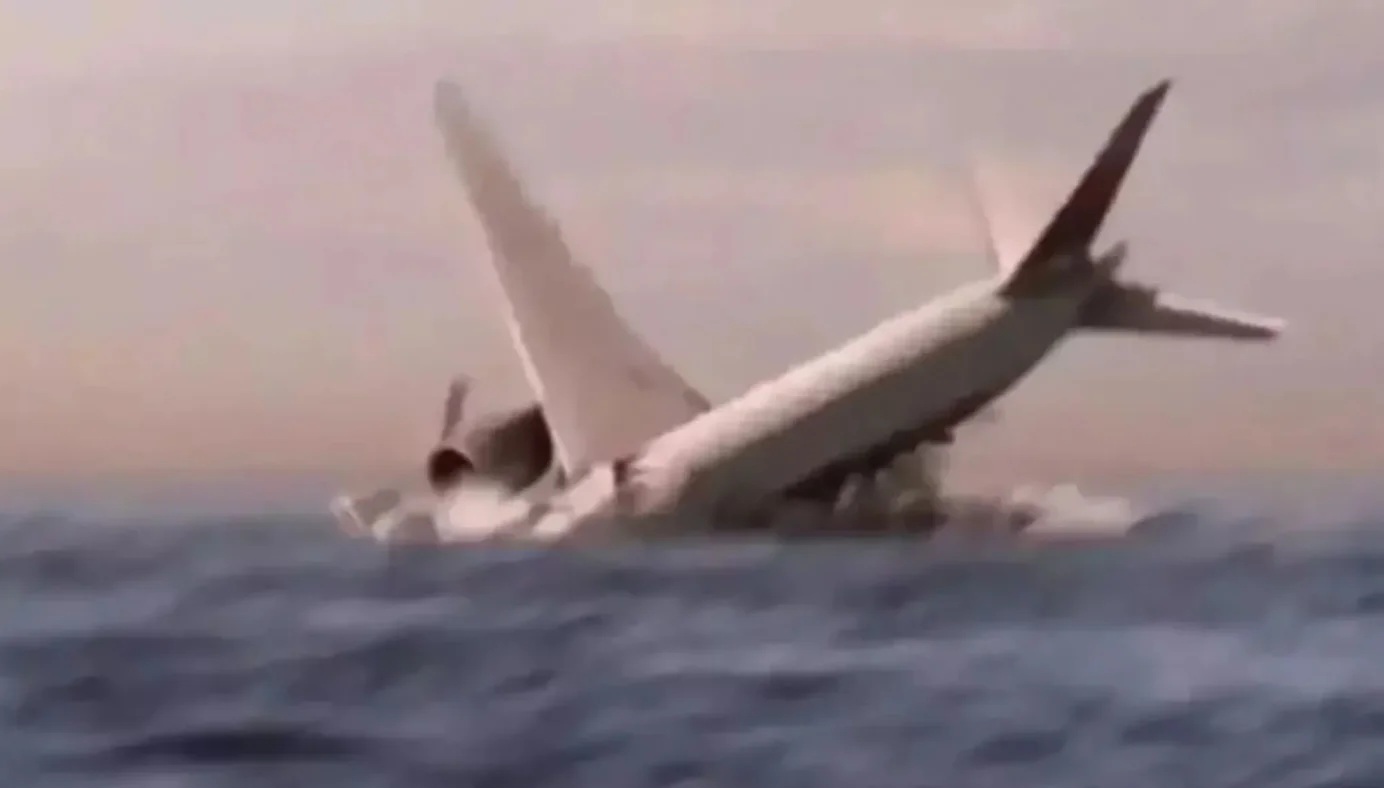
Pieces of aircraft debris started washing up on distant shores across the western Indian Ocean.
The first confirmed fragment was found on Reunion Island, a wing component identified as part of MH370.
Over time, additional debris was recovered in Tanzania, Mozambique, and Madagascar.
Oceanographers analyzed currents and wind patterns to trace the debris back to its origin.
Their findings supported the conclusion that the aircraft had indeed ended its journey in the southern Indian Ocean, near the seventh arc.
While the debris confirmed the general location, it offered few answers about the cause of the disappearance.
The condition of the recovered fragments showed no signs of an in air explosion or intense f*re.
Instead, they suggested a relatively intact aircraft entering the ocean.
This raised further questions about what occurred in the cockpit during the final hours of the flight.
As years pᴀssed, theories multiplied, ranging from mechanical failure to deliberate human action.
Yet none could be proven without locating the main wreckage.
A new perspective emerged from a veteran aviation engineer with decades of experience maintaining and analyzing aircraft systems.
He approached the mystery not solely as a satellite data problem, but as a fundamental piloting and navigation issue.
His analysis focused on a basic instrument often overlooked in modern discussions, the magnetic compᴀss.
According to this theory, if the aircraft was being flown manually rather than by autopilot, the pilot would have relied on the magnetic compᴀss.
Unlike advanced navigation systems, a magnetic compᴀss does not automatically correct for the difference between true north and magnetic north.
Over long distances, this variation can cause gradual but significant drift.
The engineer calculated that under the specific conditions of that night, a small compᴀss error could have resulted in the aircraft deviating hundreds of kilometers from its intended path.
Combined with fuel endurance models, this drift pointed to a different ending location than previously ᴀssumed.
His conclusion suggested that the official search areas may have missed the wreckage by focusing too far south.
Instead, he identified a narrower corridor closer to the coast of Western Australia, in waters shallower and calmer than those previously searched.
The theory also aligned with the debris analysis.
A controlled descent onto the ocean surface, rather than a high speed impact, would explain both the condition of the debris and its distribution.
Such a scenario would increase the likelihood that the main wreckage remains relatively intact and detectable.
In early 2025, the Malaysian government announced the resumption of the search for MH370.
A new agreement was finalized with the same private exploration company, authorizing an eighteen month operation under a no find no fee model.
The proposed reward for success was set at seventy million dollars.
This renewed mission targeted a refined search area of approximately 15,000 square kilometers, shaped by updated data, improved modeling, and new expert insights.
Advances in autonomous underwater vehicle technology promised greater efficiency and resolution than ever before.
The search vessels deployed fleets of intelligent robotic systems capable of mapping the seabed in extraordinary detail.
These machines operated in coordinated patterns, scanning rugged underwater terrain that had previously been inaccessible.
In April 2025, reports indicated that active search operations were temporarily paused due to weather conditions, equipment maintenance, and data analysis requirements.
Authorities emphasized that the pause was strategic rather than a sign of abandonment, with plans to resume operations when conditions improved.
Throughout all these developments, the human cost of the mystery remains at the forefront.
For the families of the 239 people aboard MH370, the absence of answers has created a unique and enduring form of grief.
Each new search brings hope and fear in equal measure.
For them, the search is not about technology or theories, but about closure.
The need to know what happened, to understand the final moments, and to bring their loved ones home remains as urgent today as it was eleven years ago.
The story of MH370 is not merely an aviation puzzle.
It is a testament to the limits of modern technology, the power of the natural world, and the resilience of human determination.
As the latest search continues, the world watches once again, holding onto the hope that this time, the ocean may finally yield its secret.


