“Europe Under Water: Leonardo Floods Cities, Collapses Infrastructure, Leaves Millions Stranded”
A wave of destruction swept across Europe and North Africa as Storm Leonardo unleashed catastrophic flooding from Spain and Portugal to Morocco, before surging northward and triggering devastation across parts of the United Kingdom.
What began as a powerful Atlantic storm rapidly escalated into a multi-nation disaster, overwhelming cities, collapsing infrastructure, and leaving millions bracing for the worst.
In Spain, entire regions were submerged within hours.
Torrential rain battered Andalucía and central areas, forcing rivers far beyond their banks.
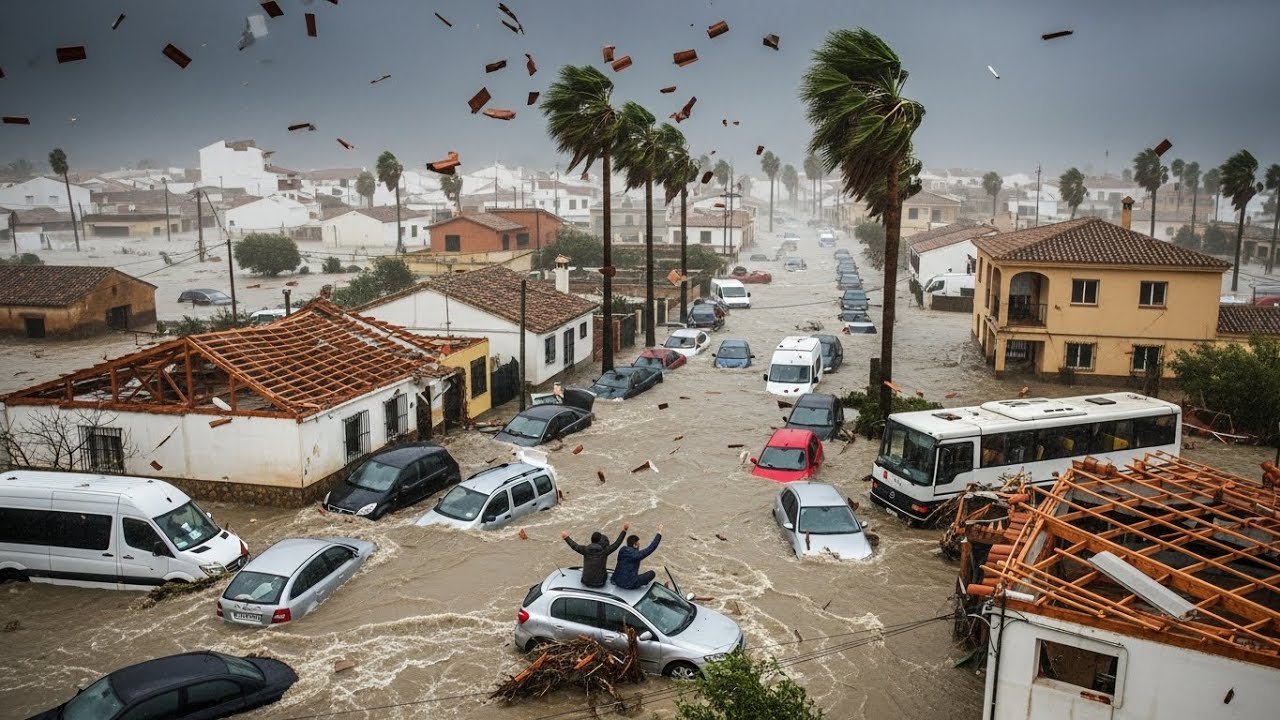
Streets turned into violent waterways, sweeping away cars, tearing through ground floors, and isolating entire towns.
Emergency services described conditions as “unmanageable” as rainfall exceeded monthly averages in a single day.
Residents climbed onto rooftops as floodwaters surged with alarming speed, while helicopters struggled to operate in brutal winds and low visibility.
Portugal faced some of the most dramatic scenes.
In Alcácer do Sal and surrounding districts, water poured through historic streets, submerging homes up to their windows and trapping families overnight.
Vehicles floated freely through neighborhoods.
Power and communications failed across wide areas as substations were inundated.
Authorities ordered mᴀss evacuations, but many residents had only minutes to escape as the water rose relentlessly.
Witnesses described a sense of disbelief.
Areas that had never flooded before vanished beneath brown, fast-moving water.
Emergency shelters overflowed as thousands arrived soaked, shaken, and clutching whatever they could salvage.
Officials warned that aging drainage systems and saturated ground left little defense against Leonardo’s relentless rainfall.
Further south, Morocco was hit by flash floods that tore through towns and rural areas alike.
Dry riverbeds transformed into raging torrents, destroying roads, bridges, and farmland.
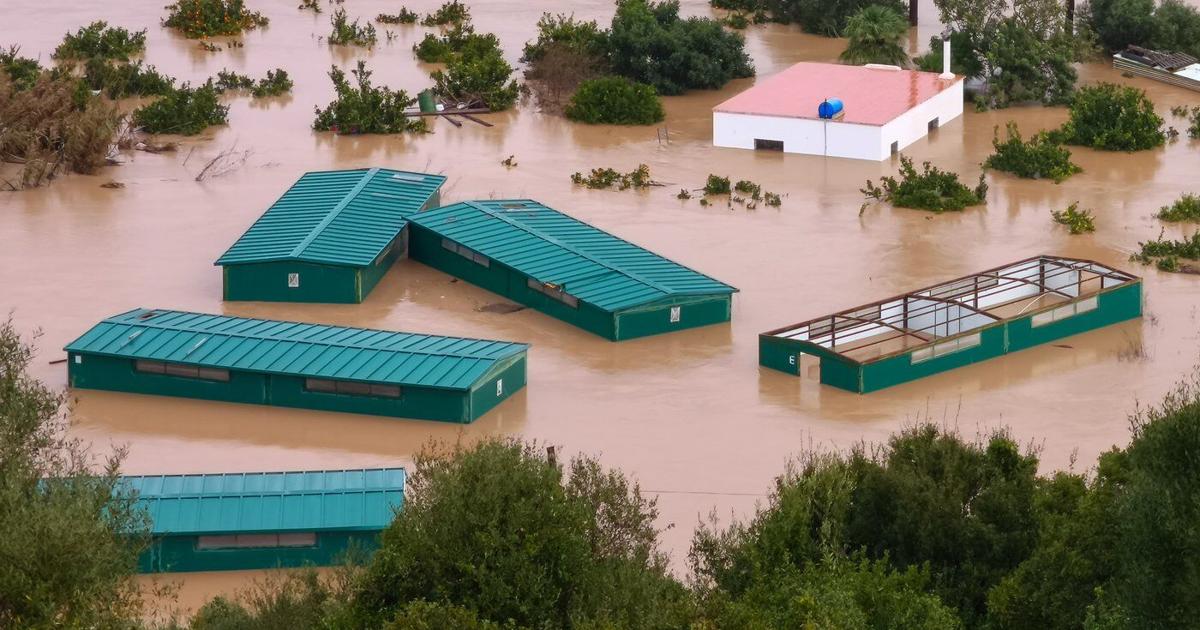
Several communities were cut off completely as mudslides buried access routes.
Farmers watched helplessly as crops and livestock were swept away, compounding fears of long-term economic damage in already vulnerable regions.
As Storm Leonardo pushed north, the United Kingdom was thrown into crisis.
Rivers rose at record speed across parts of England and Wales, inundating residential areas and industrial zones.
Entire streets disappeared under water as flood barriers were breached.
Rail lines were suspended, highways closed, and emergency crews stretched to their limits responding to hundreds of calls for help.
In some areas, floodwaters surged into homes faster than residents could react.
Families were rescued by boat in the ᴅᴇᴀᴅ of night.
Businesses suffered catastrophic losses as water destroyed equipment, stock, and machinery.
Authorities warned that further rain could worsen conditions, with soil already saturated and defenses weakened.
Meteorologists explained that Leonardo’s extraordinary impact was driven by a rare combination of slow movement, extreme moisture, and powerful winds.
Instead of pᴀssing quickly, the storm stalled, dumping relentless rainfall over the same regions hour after hour.
Climate experts warned that this pattern is becoming increasingly common, turning once-manageable storms into prolonged disasters.
Across all affected countries, hospitals reported an influx of injuries linked to flooding, debris, and evacuations.
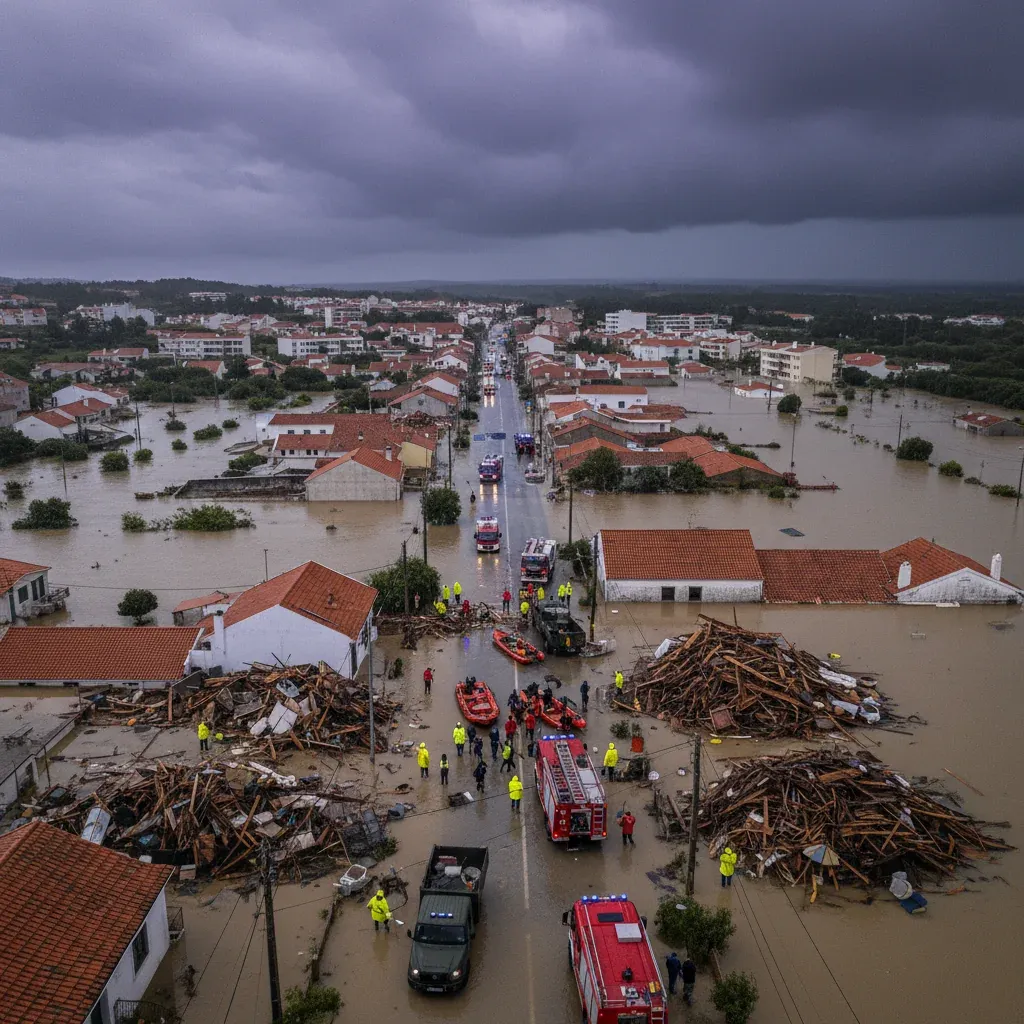
Emergency shelters struggled with overcrowding and shortages of basic supplies.
Governments activated disaster response protocols, deploying military units, rescue helicopters, and emergency funding, yet officials admitted the scale of destruction exceeded early forecasts.
The economic toll is expected to be enormous.
From flooded factories in the UK to destroyed farmland in Morocco and shuttered businesses across Iberia, Storm Leonardo left behind a trail of losses that will take months—if not years—to recover from.
Insurance claims are expected to surge, while local governments face mounting pressure over flood preparedness and infrastructure resilience.
Public anger is growing as residents question whether enough was done to protect communities.
Videos circulating online show floodwaters smashing through barriers, roads collapsing without warning, and neighborhoods left defenseless.
Critics argue that years of underinvestment in flood control and climate adaptation have left entire regions dangerously exposed.
As night fell again, rain continued to lash large parts of Europe.
Thousands remained displaced, unsure when it would be safe to return home.
Emergency responders warned that even after the storm pᴀsses, lingering floodwaters, contamination, and structural damage will pose ongoing risks.
Storm Leonardo has now etched itself into memory as one of the most destructive weather events to strike multiple regions simultaneously.
From Spain and Portugal to Morocco and the UK, its legacy is one of chaos, loss, and a stark reminder of nature’s growing fury.
As waters slowly recede, the true scale of the disaster is only beginning to emerge.


