“Storm Leonardo Unleashes Chaos Across Spain and Portugal — Flash Floods Force Mᴀss Evacuations”
What began as a powerful Atlantic storm quickly escalated into a cross-border catastrophe as Storm Leonardo tore through Spain and Portugal, unleashing flash floods, violent winds, and chaos that forced mᴀss evacuations in multiple regions.
Within hours, communities on both sides of the Iberian Peninsula found themselves overwhelmed by a disaster that moved faster than warnings, preparations, or infrastructure could handle.
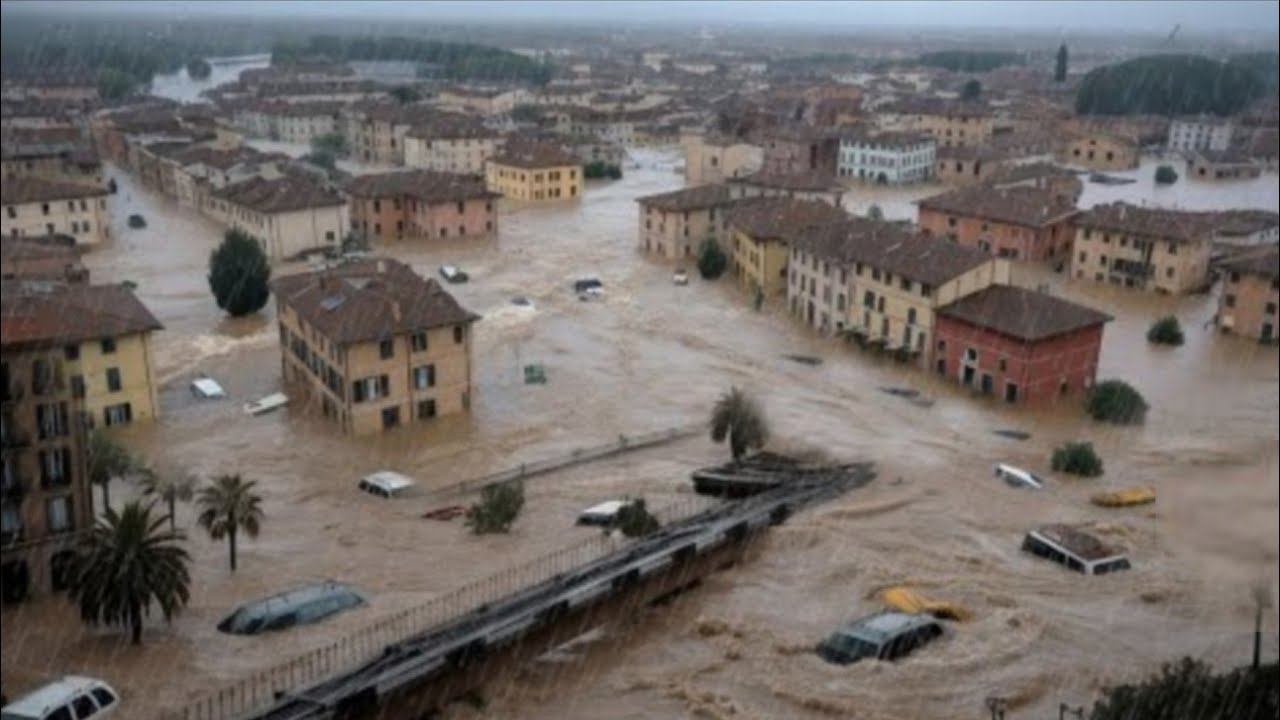
In southern Spain, torrents of rain slammed into already saturated ground, turning roads into rivers and valleys into flood channels.
Municipalities across Andalucía reported sudden inundations that trapped vehicles, cut off towns, and left residents scrambling for higher ground.
Emergency sirens echoed through the night as authorities urged people to abandon homes with little more than what they could carry.

Portugal faced an equally brutal ᴀssault.
Leonardo stalled over key regions, dumping extraordinary volumes of rain in short periods of time.
In towns such as Alcácer do Sal, Setúbal, and surrounding districts, flash floods surged through streets with terrifying speed.
Cars were lifted and swept away.
Ground floors filled with muddy water within minutes.
Families were forced to flee upstairs or onto rooftops as darkness and rain erased any sense of direction.
Eyewitnesses described the moment the storm turned from dangerous to catastrophic.
One minute, rain hammered windows.
The next, water burst through doors, drains erupted from below, and the sound of cracking walls filled the air.
Some residents had barely enough time to wake children before the escape routes disappeared under floodwater.
Emergency services across Spain and Portugal were stretched to the limit.
Firefighters and rescue teams conducted dozens of high-risk operations, pulling people from submerged vehicles and flooded homes.
Inflatable boats replaced ambulances in low-lying areas.
Helicopters hovered above neighborhoods that had become lakes, searching for signs of life amid debris and darkness.
Authorities confirmed that thousands were evacuated as a precaution, fearing further collapses, landslides, and river overflows.
Several regions declared states of emergency, closing schools, suspending transport, and warning residents to stay indoors.
Yet even as officials tried to contain the situation, Leonardo continued to deliver wave after wave of rain.
Infrastructure failures compounded the crisis.
Power outages spread as substations flooded and lines were torn down by wind.
Communication networks faltered at critical moments.
Highways and rural roads were blocked by mudslides, isolating entire communities.
In some areas, bridges were deemed unsafe, cutting off access to medical care and supplies.
The economic damage began mounting almost immediately.
Shops and small businesses were left underwater, their inventories destroyed.
Agricultural zones suffered heavy losses as fields were submerged and livestock displaced or killed.
Farmers watched a year’s work vanish in a single night, unsure how or when recovery might begin.
Meteorologists explained that Storm Leonardo’s destructive power came not just from its intensity, but from its behavior.
The system slowed dramatically, locking moisture over the region and producing rainfall totals far beyond normal seasonal expectations.
Climate experts warned that this kind of slow-moving, water-heavy storm is becoming more frequent, increasing the risk of sudden, ᴅᴇᴀᴅly flooding across southern Europe.
As daylight broke, the full scale of devastation emerged.
Streets were coated in thick layers of mud and debris.

Vehicles lay piled against buildings.
Furniture, appliances, and personal belongings were scattered far from where they once stood.
In many towns, the silence after the storm was broken only by the hum of generators and the sound of people digging through what remained of their homes.
Health officials raised alarms about contaminated water, mold exposure, and the psychological impact on displaced residents.
Temporary shelters filled quickly, housing families who had lost everything overnight.
Children clutched blankets as parents tried to explain a disaster they themselves barely understood.
Government leaders in both Spain and Portugal pledged emergency funding, rapid ᴀssessments, and long-term rebuilding plans.
But for those standing in waterlogged ruins, promises felt distant.
The immediate reality was loss, uncertainty, and the knowledge that rebuilding would take months—if not years.
Storm Leonardo will not be remembered as just another severe weather event.
It will be remembered as the moment when entire regions realized how vulnerable they are to sudden extremes, and how thin the line is between normal life and disaster.
As floodwaters slowly recede, one question lingers across the Iberian Peninsula: when the next storm arrives, will anyone be ready?


