“Spain Drowning Again: Storm Marta Floods Andalusia, Triggers Mᴀss Evacuations” ⚠️🇪🇸
Storm Marta has plunged southern Spain into chaos, forcing the evacuation of more than 11,000 people as floodwaters swallowed streets, neighborhoods, and entire communities across Andalusia.
Relentless rain battered the region for hours, turning once-familiar roads into fast-moving rivers and leaving residents scrambling to escape rising water.
What began as heavy rainfall quickly escalated into a full-scale emergency, overwhelming drainage systems and pushing rivers beyond their limits.
In city after city, water surged through streets with terrifying speed.
Cars were left half-submerged or carried away entirely.

Ground-floor homes filled with muddy water in minutes, giving families little time to gather belongings before fleeing.
Emergency sirens echoed through flooded districts as authorities ordered mᴀss evacuations in some of the hardest-hit areas.
Regional officials confirmed that more than 11,000 residents were forced to leave their homes as Storm Marta unleashed record-breaking rainfall across Andalusia.
Evacuation orders were issued overnight in low-lying neighborhoods near rivers and reservoirs, where water levels rose dangerously fast.
In Seville province, swollen rivers burst their banks, inundating nearby towns and cutting off access routes.
Emergency crews went door to door, urging residents to leave immediately as water crept toward doorsteps and staircases.
In some areas, people escaped using tractors, boats, or improvised rafts as streets became impᴀssable.
Málaga and Cádiz also faced severe flooding, with underground garages filling completely and public transport grinding to a halt.
Several major roads were closed after being submerged or damaged by rushing water, isolating communities and complicating rescue efforts.
Authorities described the situation as “critical and evolving.”
Storm Marta arrived after weeks of persistent rainfall, leaving the ground fully saturated and unable to absorb more water.
As a result, each new downpour translated almost instantly into runoff, overwhelming rivers and drainage channels that were already at capacity.
Emergency services were stretched to their limits.
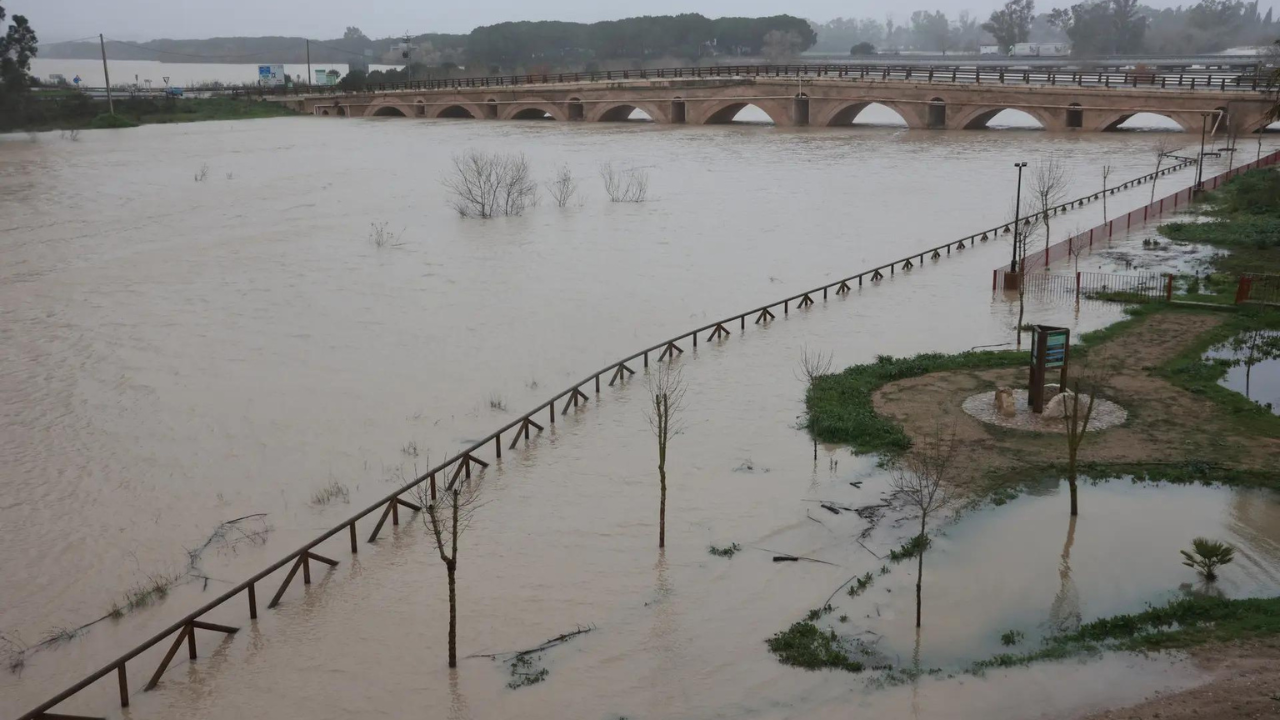
Firefighters, police, and civil protection units worked through the night, responding to hundreds of calls for help.
In some cases, rescue teams were forced to retreat when flood currents became too strong to operate safely.
Helicopters were deployed to ᴀssess damage and ᴀssist stranded residents in areas cut off by floodwaters.
Power outages added another layer of danger.
Entire neighborhoods were plunged into darkness as electricity failed, leaving residents without lighting or heating while water continued to rise.
Mobile networks struggled under heavy use, making it difficult for families to contact loved ones or receive emergency updates.
Temporary shelters were set up in schools, sports centers, and public buildings to accommodate evacuees.
Many arrived soaked, exhausted, and visibly shaken, carrying only what they could grab in the rush to escape.
For some, this was the second or third evacuation in recent months, deepening a sense of fatigue and despair.
Local residents described scenes of panic and disbelief.
“We watched the water come in like a wall,” one resident said.
“In less than ten minutes, the street was gone. We didn’t think it would get this bad.”
Farmers across Andalusia reported devastating losses as floodwaters swept through fields, drowning crops and damaging equipment.
With planting seasons disrupted and livestock threatened, the economic impact of Storm Marta is expected to be severe.

Meteorologists warned that the storm system responsible for the flooding was part of a broader pattern of extreme weather affecting southern Europe.
Instead of a single burst of rain, Storm Marta delivered repeated waves of intense precipitation, preventing rivers from stabilizing and prolonging the crisis.
Authorities urged residents to remain vigilant even as rainfall showed signs of easing in some areas.
Officials warned that rivers could continue rising for hours—or even days—due to upstream runoff, and that additional evacuations could still be necessary.
Regional leaders called for calm but acknowledged the scale of the disaster.
“This is one of the most serious flooding events Andalusia has faced in years,” an official said.
“Our priority is saving lives. Property can be replaced, but people cannot.”
As daylight revealed the extent of the damage, images of submerged streets, destroyed vehicles, and waterlogged homes spread rapidly across social media, amplifying national concern.
Many questioned whether existing flood defenses and infrastructure were adequate for the increasingly extreme weather patterns facing the region.
Experts warned that storms like Marta may no longer be rare.
Warmer atmospheric conditions can hold more moisture, increasing the risk of sudden, intense rainfall events.
Combined with urban expansion into flood-prone areas and aging infrastructure, the consequences can be catastrophic.
For now, thousands of Andalusians remain displaced, waiting anxiously for news of when it will be safe to return home.
Some fear that even when the water recedes, the damage left behind will take months—or years—to repair.
Storm Marta has transformed daily life into a fight for safety, leaving streets underwater, communities fractured, and a region once again confronting the brutal force of nature.
And as the clouds linger overhead, the question many are asking is painfully simple: is the worst truly over?


