From Wildlife Haven to Disaster Zone 🐘 Kruger Faces Unprecedented Flood Crisis
Northern South Africa is facing a catastrophe that is growing more severe by the hour.
What began as steady seasonal rainfall has escalated into one of the most destructive flood disasters the region has witnessed in decades.
Rivers are still rising.
Entire communities are cut off.
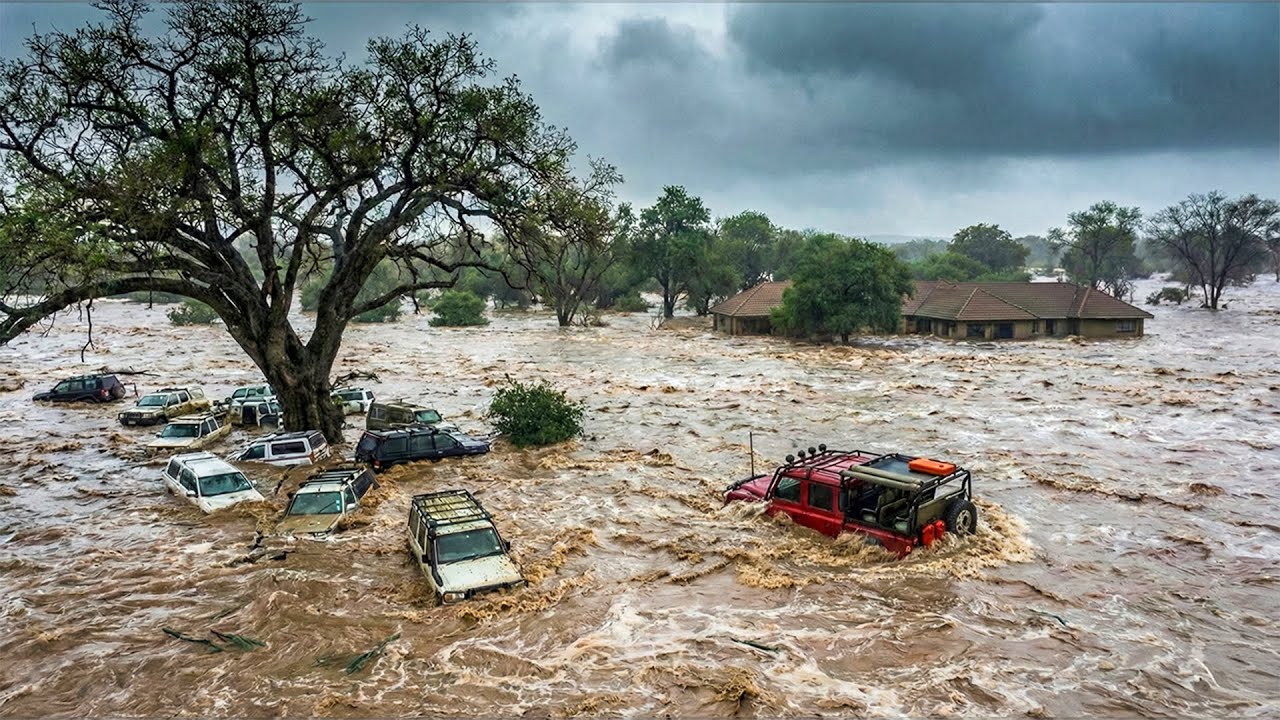
Emergency teams are stretched to their limits across multiple provinces as the scale of devastation becomes clearer with every pᴀssing moment.
Days of relentless rain saturated the soil across Limpopo and Mpumalanga, leaving the land unable to absorb a single additional drop.
Then came the intense downpours.
Water fell faster than the earth could handle, transforming swollen rivers into violent torrents.
The Limpopo, Levubu, and Lataba rivers surged beyond their banks, unleashing fast-moving currents that swallowed villages, farmland, and major transport routes in minutes.
Residents describe scenes of panic as muddy waters rushed through streets with terrifying speed.
Roads vanished beneath brown torrents.
Vehicles were swept aside.
Families scrambled for higher ground, grabbing children and essentials as homes began to fill with water.
In low-lying areas, entire neighborhoods were overtaken before residents fully grasped what was happening.
Tragically, fatalities have already been reported.
Emergency responders confirm that several victims were caught attempting to cross flooded bridges, underestimating the depth and force of the water.
Others perished when houses built on vulnerable terrain collapsed as foundations were eroded from beneath.
The destructive power of water has left little room for error.
The South African National Defense Force has deployed air units to ᴀssist in rescue operations.
Helicopters have been dispatched to reach isolated communities surrounded by water.
In some regions, boats are the only means of transport.
Yet even with these efforts, the sheer intensity of the flooding has overwhelmed local capacity.
Inside Kruger National Park, a place globally recognized for its wildlife and sweeping savannah landscapes, the crisis has taken a dramatic turn.
The Lataba River has surged to levels surpᴀssing the historic flood mark set in 2000.
Video footage shows water climbing higher than a well-known flood indicator board, a sobering symbol that this event is rewriting history.

Park officials and visitors alike express disbelief.
Entire river channels have shifted.
Vegetation has been stripped away along miles of corridors.
Camps and roads inside the park have suffered damage, and access routes are being ᴀssessed for safety.
Wildlife is also under pressure as habitats are disrupted by sudden water surges.
Beyond the park boundaries, the humanitarian emergency deepens.
In Mopani and Capricorn districts, thousands have been displaced.
Community halls, schools, and churches have been converted into temporary shelters as families seek refuge.
Aid organizations are distributing food parcels, clean water, blankets, and hygiene kits.
Supplies are moving as fast as possible, but demand is growing.
Public health officials are raising alarms about potential outbreaks of waterborne diseases.
Flooded sewage systems and compromised water treatment facilities increase the risk of contamination.
Warnings about cholera and other illnesses are circulating as authorities urge residents to avoid drinking untreated water.
Infrastructure damage is mounting rapidly.
More than 40 bridges across Limpopo province have either been washed away or declared structurally unsafe.
The N1 highway, a vital route linking South Africa to neighboring countries, has experienced intermittent closures due to sinkholes, debris, and submerged sections.
Transport disruptions are isolating rural communities from clinics, markets, and emergency services.
Power outages are widespread.
Electrical substations and transmission lines have been submerged, leaving thousands without electricity.
Repair crews face dangerous conditions as unstable ground and ongoing floodwaters limit access.
Without power, communication becomes more difficult, compounding the crisis.
To the south in Mpumalanga province, parallel devastation is unfolding.
Rivers including the Crocodile, Komati, and Sabie have exceeded historic flood thresholds.
Entire valleys resemble vast inland seas.
Roads and rail lines critical for trade between South Africa and Mozambique have been inundated or damaged.
The N4 corridor, a key economic artery, has faced repeated closures due to rockfalls, erosion, and flood destruction.
The economic impact is immediate and severe.
Agriculture has been hit hard as crops are submerged and livestock swept away.
Farmers are ᴀssessing losses that could ripple through local markets for months.
Businesses along transport corridors are experiencing supply chain disruptions, affecting trade flows across the region.
Downstream, Mozambique is now feeling the cascading effects.
Heavy local rainfall combined with runoff from upstream river systems has pushed water levels toward critical thresholds.
Evacuation orders have been issued in low-lying districts as authorities warn that flood peaks may not yet have pᴀssed.
Tens of thousands of people across borders are affected, turning this into a regional emergency.
Meteorologists attribute the disaster to a persistent low-pressure system drawing deep tropical moisture into southern Africa’s interior.
The South African Weather Service has issued its highest-level warnings for continued heavy rainfall.
Even short bursts of additional rain could trigger renewed flooding because the ground remains fully saturated.
Forecast models indicate that while rainfall may ease in some western areas, river basins are still rising.
Communities downstream face delayed impacts as upstream waters continue to flow toward them.
Authorities emphasize that the coming days are critical.
Climate researchers are closely monitoring the event.
Warmer ocean temperatures can increase the amount of moisture available to weather systems, intensifying rainfall.
While no single storm can be directly attributed to climate change alone, scientists note that southern Africa has experienced more frequent extreme rainfall events in recent years.
Infrastructure built for past climate patterns is being tested beyond its limits.
Local officials are urging residents to heed evacuation orders and avoid flooded roads under any circumstances.
Water depth can be deceptive, and fast-moving currents can overturn vehicles in seconds.
The message is clear: do not attempt to cross submerged bridges or roads.
Emergency shelters are nearing capacity as displacement numbers climb.
Municipal services are under strain, struggling to maintain sanitation and water access.
Volunteer groups and community leaders are mobilizing to support those affected, but resources are stretched thin.
Across social media, residents share videos capturing the overwhelming force of the floods.
Pavements are submerged.
Water levels creep closer to homes.
People express disbelief at witnessing such unprecedented conditions.
Many describe this as a once-in-a-lifetime event, though climate trends suggest extremes may become more common.
For families who have lost homes, livestock, or loved ones, the recovery process will be long and painful.
ᴀssessing damage alone will take time as waters recede.
Rebuilding infrastructure, restoring power, and ensuring safe water supplies could take weeks or longer.
This disaster stands as a stark reminder of nature’s immense power.
Rivers that normally provide life and livelihood have transformed into destructive forces.
Entire landscapes have changed in a matter of days.
As South Africa and neighboring countries confront the aftermath, one reality is undeniable.
The floodwaters may eventually retreat, but the scars left behind will endure.
Communities will rebuild.
Aid will arrive.
But the memory of rivers surging beyond historic levels and reshaping lives overnight will not soon fade.


