Southern Spain in Crisis ⚠️🔥 Storm Marta Sparks Dramatic Rescues
Southern Spain is grappling with a surge of destructive floodwaters after Storm Marta unleashed relentless rainfall across the region of Andalusia, transforming once-busy streets into raging rivers and forcing emergency crews into urgent action.
What began as steady rainfall quickly escalated into a full-scale weather emergency, with flash floods swallowing vehicles, isolating neighborhoods, and leaving communities bracing for further impact.
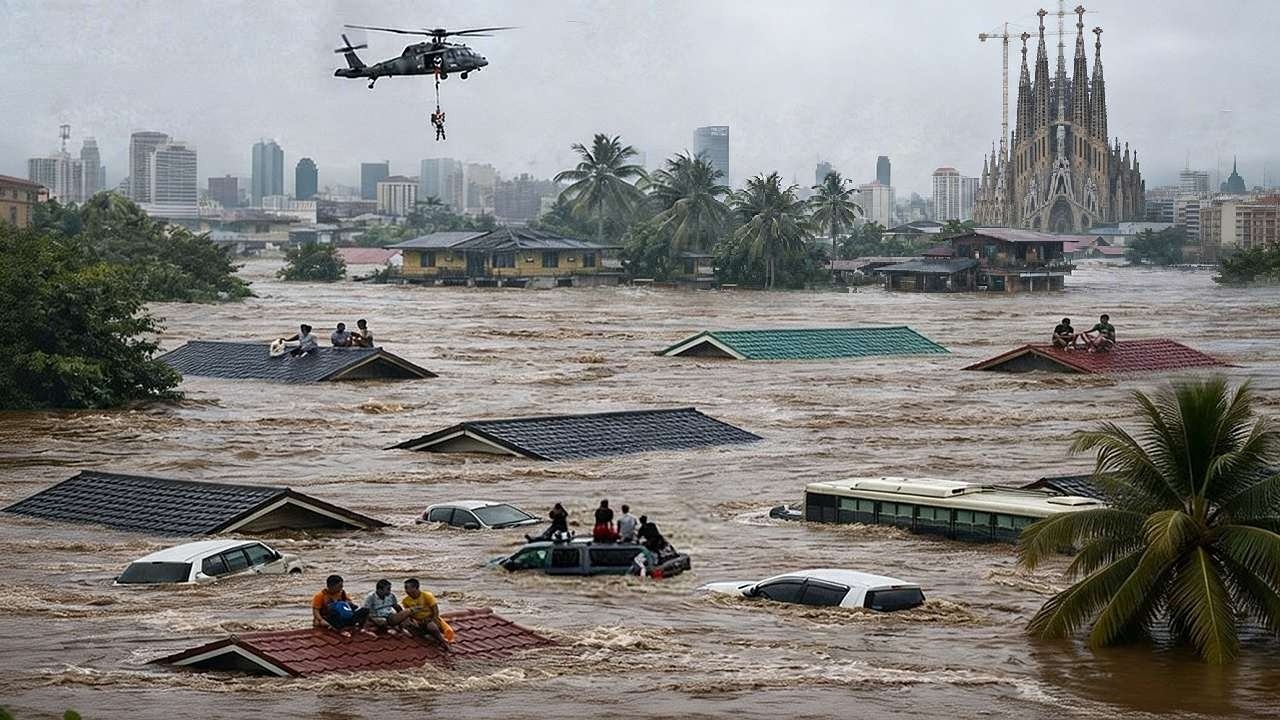
From the coastal stretches near Málaga to inland provinces, the storm’s intensity caught many residents off guard.
Torrential rain poured down in sheets, overwhelming drainage systems and sending water cascading down hillsides and into urban centers.
Within hours, familiar avenues were submerged beneath fast-moving currents thick with mud and debris.
Authorities issued weather alerts as river levels climbed at alarming speed.
Meteorologists warned that the volume of rain falling in such a compressed timeframe posed a serious flood risk.
Emergency services were placed on high alert as radar imagery showed dense storm bands repeatedly crossing the same areas, a phenomenon that dramatically increases flood potential.
Residents described scenes of chaos.
Drivers were forced to abandon cars as water levels surged around them.
Shopkeepers scrambled to move merchandise to higher ground.
In several towns, floodwaters entered homes, soaking furniture and leaving families to salvage what they could.
The force of the water stunned onlookers.
In certain districts, torrents rushed down narrow streets like uncontrolled waterfalls.
Video circulating online shows vehicles partially submerged and debris floating through intersections that normally bustle with traffic.
Firefighters and civil protection teams worked tirelessly, responding to distress calls and rescuing individuals trapped by rising waters.
Officials in Andalusia activated emergency protocols to coordinate response efforts across affected municipalities.
Road closures were implemented to prevent additional motorists from entering flooded zones.
Residents were urged to remain indoors unless evacuation orders were issued.
Hydrologists monitoring regional rivers noted that several tributaries approached critical levels.
Flash flooding, they emphasized, can occur with little warning, particularly when rainfall intensity exceeds soil absorption capacity.
Once ground becomes saturated, additional precipitation rapidly transforms into runoff, funneling into streams and urban drainage systems.
The agricultural sector is also feeling the storm’s impact.
Fields across parts of Andalusia were inundated, raising concerns about crop damage and economic losses.
Farmers surveyed submerged groves and vineyards, uncertain how long standing water would linger.
Emergency shelters were prepared in select municipalities for residents displaced by flooding.
Local authorities worked with humanitarian groups to distribute supplies and provide temporary accommodation.
The speed of the storm’s escalation left little time for preparation, underscoring the unpredictable nature of severe weather events.
Meteorological experts explain that Storm Marta’s strength was fueled by a convergence of moist air mᴀsses over southern Spain.
Warm sea surface temperatures in the nearby Mediterranean provided additional energy, intensifying rainfall as the system stalled over the region.
Infrastructure strain became evident as reports of power outages surfaced in several areas.
Utility crews began ᴀssessing damaged lines and substations affected by flooding.
Public transportation routes were disrupted, and rail services in certain corridors were temporarily suspended for safety.
As the storm continued, authorities stressed the importance of heeding official warnings.
Floodwaters can conceal hazards such as open manholes, submerged debris, and weakened road surfaces.
Residents were reminded that even shallow water can sweep away vehicles if currents are strong enough.
Comparisons are already emerging to previous significant flood events in southern Spain, though officials caution that full damage ᴀssessments are still underway.
What is clear is that the storm’s rapid onset and widespread reach have created one of the most dramatic weather crises the region has faced in recent years.
Local leaders held emergency briefings, outlining ongoing rescue operations and recovery plans.
Coordination between regional and national agencies is underway to ensure adequate resources are deployed where needed most.
For many residents, the emotional toll is just beginning.
The sight of homes filled with muddy water and cherished belongings destroyed is devastating.
Yet stories of solidarity are also surfacing.
Neighbors are ᴀssisting one another with cleanup efforts, offering shelter, and sharing supplies.
Meteorologists forecast that while the heaviest rain bands may begin to shift eastward, residual instability could produce additional showers.
The saturated condition of the ground means that even moderate rainfall could prolong flood risks.
Climate specialists highlight that extreme rainfall episodes have shown variability in recent years, with certain Mediterranean regions experiencing intense bursts of precipitation.
Whether Storm Marta represents an anomaly or part of a broader pattern will require further analysis.
As the waters slowly recede in some districts, cleanup operations are beginning.
Streets are coated in layers of mud and debris.
Municipal crews are clearing blocked drains and inspecting damaged infrastructure.
Tourism, a cornerstone of Andalusia’s economy, may also feel the ripple effects.
Coastal businesses ᴀssessing water damage face uncertainty as they work to reopen.
Authorities are emphasizing that safety remains the immediate priority over commercial concerns.
The days ahead will focus on recovery, support for affected families, and evaluation of long-term resilience measures.
Engineers are examining flood defenses and drainage systems to identify potential improvements.
Storm Marta has once again demonstrated how quickly natural forces can disrupt daily life.
In Andalusia, the line between routine rain and raging rivers was crossed in mere hours.
For now, vigilance remains essential.
Officials continue monitoring water levels and weather developments.
Residents are urged to follow guidance and avoid unnecessary travel.
The images of submerged streets and dramatic rescues will linger long after the skies clear.
Andalusia faces the task of rebuilding and reinforcing against future storms.
What remains undeniable is the resilience of communities determined to recover.
As emergency crews press on and families begin the arduous process of cleanup, the region stands united against the aftermath of one of the most intense flood events in recent memory.


