“No Warning, No Escape: How the 1991 Ormoc Flood Swallowed an Entire City” ⚠️🌧️
Do you remember the day an entire city disappeared under water?
On November 5, 1991, Ormoc City was not expecting a disaster.
There was no typhoon warning.
No mᴀss evacuation.
No sense that anything out of the ordinary was coming.
The rain that morning felt familiar, almost routine, the kind that people in Leyte had lived with their entire lives.

But by the afternoon, Ormoc would become the symbol of one of the ᴅᴇᴀᴅliest flash floods in Philippine history.
What happened next unfolded with terrifying speed.
Heavy rainfall from Tropical Storm Thelma, known locally as Uring, had been pounding the mountains surrounding Ormoc.
Unbeknownst to many residents below, the rain was accumulating at catastrophic levels upstream.
Rivers and creeks swelled silently, hidden by hills and dense vegetation, until the water could no longer be contained.
Then it broke loose.
Without warning, a mᴀssive wall of water surged down from the highlands and slammed into Ormoc City.
Streets instantly turned into rivers.
Homes were ripped from their foundations.
Vehicles were lifted and carried like debris.
People who had been going about their day were suddenly fighting to stay above the flood.
There was no time to run.
Witnesses later described a roaring sound, like a freight train, moments before the flood struck.
Within minutes, entire neighborhoods were submerged.
The Anilao and Malbasag rivers overflowed with unstoppable force, converging into the heart of the city.
The water rose so fast that many were trapped where they stood.
Darkness came early.
Power lines collapsed.
Communication failed.
The city was plunged into chaos as rain continued to fall and floodwaters showed no mercy.
Families were separated in seconds.
Screams were swallowed by the noise of rushing water and collapsing structures.
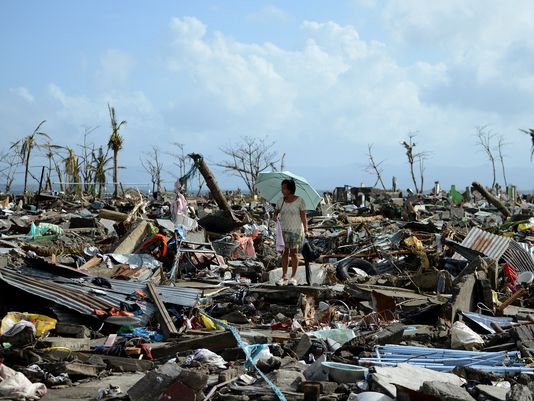
By the time the flood began to recede, Ormoc was unrecognizable.
Mud covered everything.
Cars were stacked on top of each other.
Houses lay flattened or missing entirely.
What had been busy streets hours earlier were now silent channels of debris and destruction.
Thousands were displaced, wandering in shock, searching for loved ones.
The scale of the tragedy stunned the nation.
Official figures later confirmed that thousands of lives were lost, making the Ormoc flash flood one of the ᴅᴇᴀᴅliest natural disasters in Philippine history.
Entire families were wiped out.
Survivors spoke of the unbearable silence that followed, broken only by cries and the sound of desperate searching.
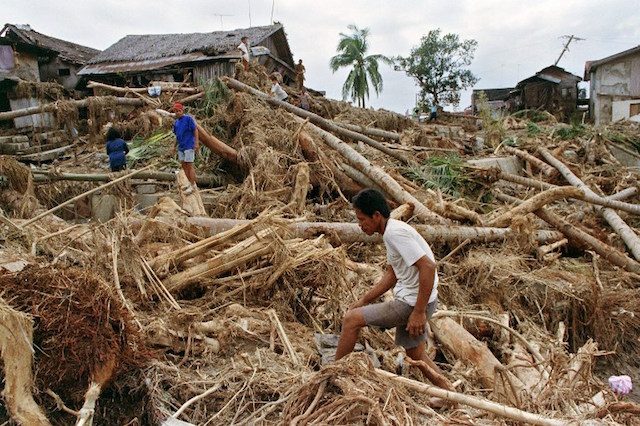
Rescue efforts began immediately, but the damage was overwhelming.
Soldiers, volunteers, and emergency responders worked through mud and wreckage, pulling survivors from debris and providing aid to those who had lost everything.
Hospitals were overcrowded.
Makeshift shelters sprang up overnight.
The city struggled not only with physical destruction but with collective trauma.
As the country mourned, questions began to surface.
How could this have happened without warning? Why was the flooding so severe? Investigations later revealed a combination of factors that turned heavy rain into a ᴅᴇᴀᴅly catastrophe.
Deforestation in the surrounding mountains had stripped the land of its natural defenses, allowing rainwater to rush downstream unchecked.
Poor land management and inadequate drainage worsened the impact.
Ormoc had become a tragic lesson.
The flood exposed how vulnerable cities can be when environmental degradation meets extreme weather.
It also highlighted the ᴅᴇᴀᴅly consequences of underestimating so-called “ordinary” storms.
Uring was not a typhoon, yet its impact surpᴀssed many far stronger systems.
For survivors, the memories never faded.
Decades later, those who lived through the flood still recall the smell of mud, the fear in the air, and the haunting realization that life had changed forever in a single afternoon.
Many rebuilt their homes.
Some moved away.
All carried the weight of that day with them.
The Ormoc flood reshaped disaster preparedness in the Philippines.
Early warning systems were strengthened.
Environmental policies were reexamined.
The disaster became a reference point, cited whenever new storms threatened vulnerable regions.
“Never again Ormoc” became both a warning and a promise.
Yet the lesson remains painfully relevant.
As extreme weather events become more frequent, the story of Ormoc echoes across the country and beyond.
It reminds us that disasters are not only the result of nature’s fury, but of human choices—how land is used, how warnings are issued, and how seriously risk is taken.
Ormoc City eventually rose again.
New buildings replaced the ruins.
Streets were rebuilt.
Life returned.
But beneath the surface, the memory of 1991 remains embedded in the city’s idenтιтy.
Every heavy rain carries a quiet fear.
Every swollen river is watched closely.
Because the people of Ormoc know something the rest of the world sometimes forgets.
A city does not need a super typhoon to be destroyed.
Sometimes, all it takes is one afternoon of rain, one overlooked warning, and one moment when the water comes faster than anyone ever imagined.


